The Best 3D Movies
From the 1950s stereoscopic wave to Avatar's digital second age: films released in 3D in their original run — native or converted, but never a later re-release — ranked by our composite canon score.
Mad Max: Fury Road (2015) leads with a composite score of 2.96.
- 1Mad Max: Fury Road2015 · George Miller · Australia / United States · action, adventure, sci-fi2.96
Kinema Junpo Best Ten (International) 2015 #1 · Film Comment year-end poll 2015 #3 · Rolling Stone 100 Best of the 21st Century #7
- 2Gravity2013 · Alfonso Cuarón · United States / United Kingdom · drama, thriller, adventure1.96
Kinema Junpo Best Ten (International) 2013 #2 · Oscar Best Picture nominee 2013 · Cahiers du Cinéma annual top 10 2013 #4
- 3Hugo2011 · Martin Scorsese · United States / United Kingdom · drama, adventure, mystery1.47
Kinema Junpo Best Ten (International) 2012 #3 · Oscar Best Picture nominee 2011 · Film Comment year-end poll 2011 #9
- 4Life of Pi2012 · Ang Lee · United States · fantasy, drama, adventure1.30
Oscar Best Picture nominee 2012 · Kinema Junpo Best Ten (International) 2013 #7 · Ebert's annual top 10 2012 #2
- 5Goodbye to Language2014 · Jean-Luc Godard · France / Switzerland · drama1.26
Cahiers du Cinéma annual top 10 2014 #2 · Film Comment year-end poll 2014 #2
- 6Toy Story 32010 · Lee Unkrich · United States · comedy, drama, animation1.15
Oscar Best Picture nominee 2010 · Cahiers du Cinéma annual top 10 2010 #4 · Film Comment year-end poll 2010 #12
- 7Black Panther2018 · Ryan Coogler · United States · action, adventure, sci-fi0.71
Oscar Best Picture nominee 2018 · Rolling Stone 100 Best of the 21st Century #52
- 8Up2009 · Pete Docter, Bob Peterson · United States · adventure, comedy, fantasy0.67
Oscar Best Picture nominee 2009 · Film Comment year-end poll 2009 #23
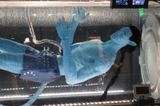
- 9Avatar2009 · James Cameron · United States · sci-fi, action, adventure0.45
Oscar Best Picture nominee 2009
- 10The Martian2015 · Ridley Scott · United States / United Kingdom · sci-fi, adventure, drama0.45
Oscar Best Picture nominee 2015
- 11Dune2021 · Denis Villeneuve · United States / Hungary / Jordan · sci-fi, action, adventure0.45
Oscar Best Picture nominee 2021
- 12Avatar: The Way of Water2022 · James Cameron · United States · sci-fi, action, adventure0.45
Oscar Best Picture nominee 2022
- 13Coraline2009 · Henry Selick · United States · horror, fantasy, thriller0.34
Film Comment year-end poll 2009 #19 · Edgar Wright's 1,000 favorite movies
- 14Pina2011 · Wim Wenders · Germany / France · musical, documentary0.34
Film Comment year-end poll 2011 #50 · Criterion Collection spine #644
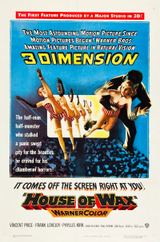
- 15House of Wax1953 · André de Toth · United States · horror0.34
National Film Registry (inducted 2014) · Edgar Wright's 1,000 favorite movies
- 16Inside Out2015 · Pete Docter, Ronnie del Carmen · United States · comedy, fantasy, adventure0.30
Film Comment year-end poll 2015 #9
- 17Flashback Memories 3D2012 · Matsue Tetsuaki · Japan · documentary0.29
Kinema Junpo Best Ten (Japanese) 2013 #10
- 18Billy Lynn's Long Halftime Walk2016 · Ang Lee · United States / United Kingdom · war, drama0.29
Cahiers du Cinéma annual top 10 2017 #10
- 19Flesh for Frankenstein1973 · Paul Morrissey, Antonio Margheriti, Andy Warhol · France / United States / Italy · horror, sci-fi0.27
Criterion Collection spine #27 · Edgar Wright's 1,000 favorite movies
- 20Long Day's Journey into Night2018 · Bi Gan · China / France · romance, drama0.26
Film Comment year-end poll 2019 #14
- 21Spider-Man: Into the Spider-Verse2018 · Peter Ramsey, Rodney Rothman, Bob Persichetti · United States · action, adventure, sci-fi0.24
Letterboxd Top 250 #71
- 22Chainsaw Man – The Movie: Reze Arc2025 · Tatsuya Yoshihara · Japan · action, drama, romance0.22
Letterboxd Top 250 #110
- 23Cave of Forgotten Dreams2010 · Werner Herzog · France / Canada / United States · documentary0.22
Film Comment year-end poll 2011 #23
- 24The Polar Express2004 · Robert Zemeckis · United States / Canada / United Kingdom · fantasy, adventure, animation0.22
Kehr's annual top 10 2004 #4
- 25Guardians of the Galaxy2014 · James Gunn · United States · sci-fi, action0.18
Film Comment year-end poll 2014 #44
- 26Ratatouille2007 · Brad Bird, Jan Pinkava · United States · comedy, drama, animation0.17
Empire 500 (2008) #379
- 27
- 28Dial M for Murder1954 · Alfred Hitchcock · United States · crime, mystery, thriller0.17
NYT Best 1,000 Movies
- 29Monster House2006 · Gil Kenan · United States · horror, comedy, fantasy0.14
Kehr's annual top 10 2006 #null
- 30Harry Potter and the Deathly Hallows – Part 22011 · David Yates · United Kingdom / United States · fantasy, adventure0.12
Ebert's annual top 10 2011 #16
- 31Kiss Me Kate1953 · George Sidney · United States · comedy, romance, musical0.11
Rosenbaum's Essential Cinema
- 32The Cabin in the Woods2012 · Drew Goddard · United States · sci-fi, comedy, drama0.11
Edgar Wright's 1,000 favorite movies
- 33Mission: Impossible – Fallout2018 · Christopher McQuarrie · United States / France / China · action, thriller, adventure0.11
Edgar Wright's 1,000 favorite movies
- 34They Shall Not Grow Old2018 · Peter Jackson · United Kingdom / New Zealand · documentary, war0.11
Edgar Wright's 1,000 favorite movies










Two waves, half a century apart
3D arrived twice. The first stereoscopic wave (1952–1955) was an exhibition gimmick that burned out in about two seasons — but it left behind a handful of films that outlived the glasses, made by directors who treated depth as composition rather than a projectile: House of Wax put Vincent Price on the horror A-list, and Hitchcock shot Dial M for Murder in 3D even though most audiences first saw it flat. The second wave was digital: Avatar (2009) re-equipped the world's theaters almost single-handedly, and for a few years afterward 3D was where the medium's most ambitious technical filmmaking happened — Scorsese's Hugo, Ang Lee's Life of Pi, Cuarón's Gravity, and even art-house experiments like Godard's Goodbye to Language and Wenders' dance documentary Pina.
Our inclusion rule is strict about one thing: a film counts as 3D only if it was released in 3D in its original run — native photography or a contemporaneous conversion both qualify, but a 3D re-release decades later (Titanic 3D, Jurassic Park 3D) does not make the original a 3D movie. Within that rule, the ranking is the same as everywhere else on this site: our composite canon score across 20+ authoritative lists, awards and polls — which is why a two-year gimmick wave and the post-Avatar decade can sit in one honest list. For where 3D fits in the longer story of the medium, see the technology thread on the movie history timeline.