The Best Technicolor Films
The three-strip era, when color itself was the star: every feature here was shot in Technicolor's three-strip process, ranked by our composite score across 20+ authoritative lists, awards and polls.
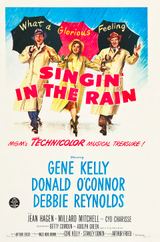
Singin' in the Rain (1952) leads with a composite score of 4.30.
- 1Singin' in the Rain1952 · Gene Kelly, Stanley Donen · United States · comedy, romance, musical4.30
Sight & Sound 2022 critics' poll #10 · AFI 100 (2007) #5 · Sight & Sound 2022 directors' poll #52
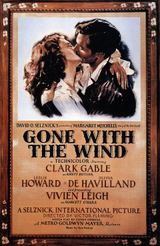
- 2Gone with the Wind1939 · Victor Fleming, George Cukor, Sam Wood · United States · romance, drama, war3.68
Oscar Best Picture winner 1939 · AFI 100 (2007) #6 · AFI 100 (1998) #4
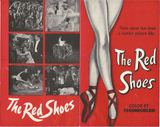
- 3The Red Shoes1948 · Emeric Pressburger, Michael Powell · United Kingdom · romance, drama, musical3.41
Sight & Sound 2022 critics' poll #67 · Sight & Sound 2022 directors' poll #72 · BFI Top 100 British films #9
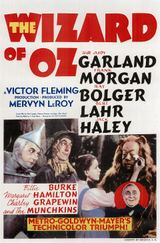
- 4The Wizard of Oz1939 · Victor Fleming, King Vidor · United States · fantasy, musical, adventure3.17
AFI 100 (2007) #10 · AFI 100 (1998) #6 · Oscar Best Picture nominee 1939
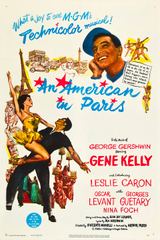
- 5An American in Paris1951 · Vincente Minnelli · United States · musical2.25
Oscar Best Picture winner 1951 · AFI 100 (1998) #68 · National Film Registry (inducted 1993)
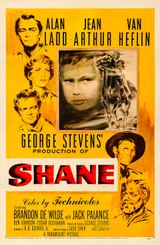
- 6Shane1953 · George Stevens · United States · western, romance, drama2.22
Oscar Best Picture nominee 1953 · AFI 100 (2007) #45 · Kinema Junpo Best Ten (International) 1953 #7
- 7A Matter of Life and Death1946 · Michael Powell, Emeric Pressburger · United Kingdom · fantasy, drama, comedy2.16
Sight & Sound 2022 critics' poll #78 · Kinema Junpo Best Ten (International) 1950 #6 · BFI Top 100 British films #20
- 8Henry V1944 · Laurence Olivier · United Kingdom · drama2.13
Kinema Junpo Best Ten (International) 1948 #1 · Oscar Best Picture nominee 1946 · BFI Top 100 British films #18
- 9The River1951 · Jean Renoir · United States / France · drama, romance2.12
Cahiers du Cinéma annual top 10 1951 #1 · Kinema Junpo Best Ten (International) 1952 #4 · Sight & Sound 2022 critics' poll #185
- 10Dumbo1941 · Ben Sharpsteen, Norm Ferguson, Wilfred Jackson, Bill Roberts, Jack Kinney, Samuel Armstrong · United States · musical, fantasy, drama2.00
Palme d'Or winner 1947 · National Film Registry (inducted 2017) · NYT Best 1,000 Movies
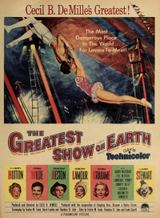
- 11The Greatest Show on Earth1952 · Cecil B. DeMille · United States · drama1.67
Oscar Best Picture winner 1952 · NYT Best 1,000 Movies
- 12Black Narcissus1947 · Emeric Pressburger, Michael Powell · United Kingdom · drama1.60
Sight & Sound 2022 critics' poll #169 · Kinema Junpo Best Ten (International) 1951 #10 · BFI Top 100 British films #44
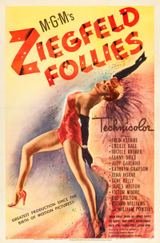
- 13Ziegfeld Follies1945 · Roy Del Ruth, Vincente Minnelli, George Sidney, Charles Walters, Robert Lewis, Merrill Pye, Norman Taurog · United States · musical1.50
Palme d'Or winner 1947
- 14Romeo and Juliet1954 · Renato Castellani · United Kingdom / Italy · drama, romance1.50
Venice Golden Lion winner 1954 · Kinema Junpo Best Ten (International) 1954 #3
- 15The Life and Death of Colonel Blimp1943 · Michael Powell, Emeric Pressburger · United Kingdom · romance, war, drama1.47
Sight & Sound 2022 critics' poll #196 · BFI Top 100 British films #45 · Empire 500 (2008) #80
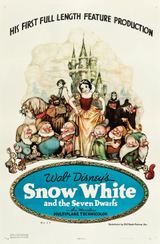
- 16Snow White and the Seven Dwarfs1937 · David Hand, William Cottrell, Wilfred Jackson, Larry Morey, Percival C. Pearce, Ben Sharpsteen · United States · romance, fantasy, musical1.39
AFI 100 (2007) #34 · AFI 100 (1998) #49 · National Film Registry (inducted 1989)
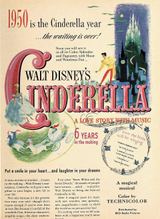
- 17Cinderella1950 · Wilfred Jackson, Hamilton Luske, Clyde Geronimi · United States · romance, fantasy, musical1.34
Berlin Golden Bear winner 1951 · National Film Registry (inducted 2018) · Rosenbaum's Essential Cinema
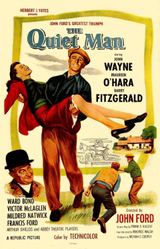
- 18The Quiet Man1952 · John Ford · United States · comedy, romance, drama1.20
Oscar Best Picture nominee 1952 · Kinema Junpo Best Ten (International) 1953 #6 · National Film Registry (inducted 2013)
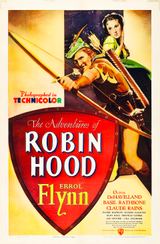
- 19The Adventures of Robin Hood1938 · Michael Curtiz, William Keighley · United States · action, adventure, drama1.09
Oscar Best Picture nominee 1938 · National Film Registry (inducted 1995) · NYT Best 1,000 Movies
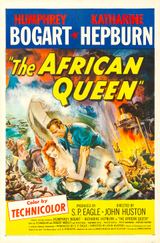
- 20The African Queen1951 · John Huston · United States / United Kingdom · drama, comedy, romance1.08
AFI 100 (1998) #17 · AFI 100 (2007) #65 · National Film Registry (inducted 1994)
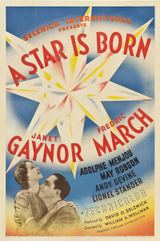
- 21A Star Is Born1937 · William A. Wellman · United States · drama, romance, musical1.00
Oscar Best Picture nominee 1937 · Kinema Junpo Best Ten (International) 1938 #5 · NYT Best 1,000 Movies
- 22Invitation to the Dance1956 · Gene Kelly · United States · musical, fantasy1.00
Berlin Golden Bear winner 1956
- 23Pinocchio1940 · Ben Sharpsteen, Hamilton Luske, Norm Ferguson, T. Hee, Wilfred Jackson, Jack Kinney, Bill Roberts · United States · fantasy, musical, animation0.90
TIME All-TIME 100 · National Film Registry (inducted 1994) · NYT Best 1,000 Movies
- 24Fantasia1940 · James Algar, Samuel Armstrong, Ford Beebe Jr., Norm Ferguson, Jim Handley, T. Hee, Wilfred Jackson, Hamilton Luske, Bill Roberts, Paul Satterfield, Ford Beebe, Ben Sharpsteen · United States · musical, fantasy, action0.87
AFI 100 (1998) #58 · National Film Registry (inducted 1990) · Vatican film list
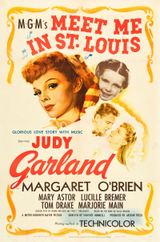
- 25Meet Me in St. Louis1944 · Vincente Minnelli · United States · musical, drama0.77
TIME All-TIME 100 · National Film Registry (inducted 1994) · NYT Best 1,000 Movies
- 26The Yearling1946 · Clarence Brown · United States · drama0.75
Oscar Best Picture nominee 1946 · Kinema Junpo Best Ten (International) 1949 #9
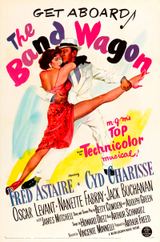
- 27The Band Wagon1953 · Vincente Minnelli · United States · comedy, romance, musical0.75
National Film Registry (inducted 1995) · NYT Best 1,000 Movies · Roger Ebert's Great Movies
- 28Bambi1942 · David Hand, James Algar, Bill Roberts, Norman Wright, Samuel Armstrong, Paul Satterfield, Graham Heid · United States · musical, fantasy, drama0.73
Kinema Junpo Best Ten (International) 1951 #7 · National Film Registry (inducted 2011) · NYT Best 1,000 Movies
- 29Heaven Can Wait1943 · Ernst Lubitsch · United States · fantasy, comedy, drama0.72
Oscar Best Picture nominee 1943 · Criterion Collection spine #291 · Rosenbaum's Essential Cinema
- 30The Thief of Bagdad1940 · Michael Powell, Tim Whelan, Alexander Korda, Zoltan Korda, William Cameron Menzies, Ludwig Berger · United Kingdom · fantasy, adventure0.68
NYT Best 1,000 Movies · Criterion Collection spine #431 · Roger Ebert's Great Movies
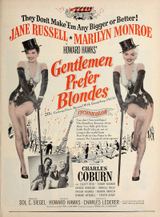
- 31Gentlemen Prefer Blondes1953 · Howard Hawks · United States · comedy, romance, musical0.67
Cahiers du Cinéma annual top 10 1954 #5 · NYT Best 1,000 Movies · Rosenbaum's Essential Cinema
- 32French Cancan1955 · Jean Renoir · France / Italy · musical0.63
Kinema Junpo Best Ten (International) 1955 #7 · Criterion Collection spine #243 · Roger Ebert's Great Movies
- 33For Whom the Bell Tolls1942 · Sam Wood · United States · war, romance, drama0.62
Oscar Best Picture nominee 1943 · NYT Best 1,000 Movies
- 34Wilson1944 · Henry King · United States · biography, drama0.62
Oscar Best Picture nominee 1944 · NYT Best 1,000 Movies
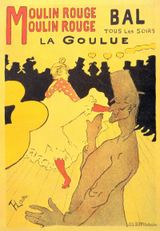
- 35Moulin Rouge1952 · John Huston · United Kingdom / United States · drama, romance, biography0.62
Oscar Best Picture nominee 1952 · NYT Best 1,000 Movies
- 36The Caine Mutiny1954 · Edward Dmytryk · United States · war, drama0.62
Oscar Best Picture nominee 1954 · NYT Best 1,000 Movies
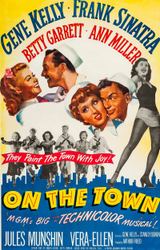
- 37On the Town1949 · Gene Kelly, Stanley Donen · United States · musical0.58
National Film Registry (inducted 2018) · Empire 500 (2008) #277 · NYT Best 1,000 Movies
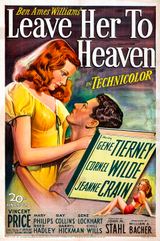
- 38Leave Her to Heaven1945 · John M. Stahl · United States · drama, film-noir0.56
National Film Registry (inducted 2018) · Empire 500 (2008) #346 · Criterion Collection spine #1020
- 39The Conquest of Everest1953 · George Lowe · United Kingdom · documentary0.55
Kinema Junpo Best Ten (International) 1954 #5 · NYT Best 1,000 Movies
- 40The Ladykillers1955 · Alexander Mackendrick · United Kingdom · crime0.51
BFI Top 100 British films #13 · Edgar Wright's 1,000 favorite movies
- 41The Secret Life of Walter Mitty1947 · Norman Z. McLeod · United States · comedy, romance, musical0.48
Kinema Junpo Best Ten (International) 1950 #8 · Empire 500 (2008) #479
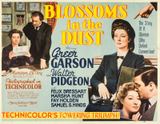
- 42Blossoms in the Dust1941 · Mervyn LeRoy · United States · drama, biography, romance0.45
Oscar Best Picture nominee 1941
- 43Anchors Aweigh1945 · George Sidney · United States · musical, comedy, romance0.45
Oscar Best Picture nominee 1945
- 44King Solomon's Mines1950 · Compton Bennett, Andrew Marton · United States · adventure, action, romance0.45
Oscar Best Picture nominee 1950
- 45
- 46
- 47The Naked Spur1953 · Anthony Mann · United States · western0.45
National Film Registry (inducted 1997) · Edgar Wright's 1,000 favorite movies · Rosenbaum's Essential Cinema
- 48The Barefoot Contessa1954 · Joseph L. Mankiewicz · United States / Italy · romance, drama0.43
Cahiers du Cinéma annual top 10 1955 #8 · Rosenbaum's Essential Cinema
- 49Genevieve1953 · Henry Cornelius · United Kingdom · comedy0.40
BFI Top 100 British films #86 · NYT Best 1,000 Movies
- 50National Velvet1944 · Clarence Brown · United States · drama0.39
National Film Registry (inducted 2003) · NYT Best 1,000 Movies
- 51The War of the Worlds1953 · Byron Haskin · United States / West Germany · sci-fi, adventure, drama0.39
National Film Registry (inducted 2011) · Criterion Collection spine #1037
- 52
- 53The Golden Coach1952 · Jean Renoir · France / Italy · drama0.27
Criterion Collection spine #242 · Rosenbaum's Essential Cinema
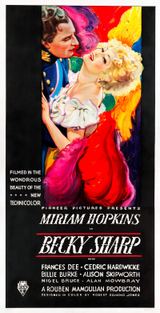
- 54Becky Sharp1935 · Rouben Mamoulian, Lowell Sherman · United States · drama0.23
National Film Registry (inducted 2019)
- 55Down Argentine Way1940 · Irving Cummings · United States · musical, comedy, romance0.23
National Film Registry (inducted 2014)
- 56Lassie Come Home1943 · Fred M. Wilcox · United States · drama0.23
National Film Registry (inducted 1993)
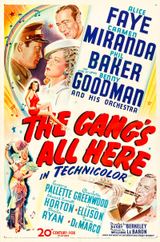
- 57The Gang's All Here1943 · Busby Berkeley · United States · musical0.23
National Film Registry (inducted 2014)
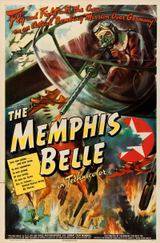
- 58The Memphis Belle: A Story of a Flying Fortress1944 · William Wyler · United States · documentary0.23
National Film Registry (inducted 2001)
- 59Rope1948 · Alfred Hitchcock · United States · thriller, crime, drama0.22
Edgar Wright's 1,000 favorite movies · Rosenbaum's Essential Cinema
- 60
- 61
- 62The Four Feathers1939 · Zoltan Korda · United Kingdom · adventure, drama0.16
Criterion Collection spine #583
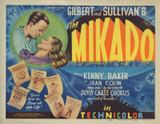
- 63The Mikado1939 · Victor Schertzinger · United Kingdom · musical, romance, comedy0.16
Criterion Collection spine #559
- 64
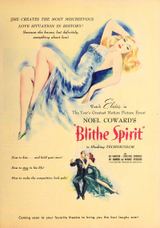
- 65Blithe Spirit1945 · David Lean · United Kingdom · comedy, romance, fantasy0.16
Criterion Collection spine #606
- 66The Tales of Hoffmann1951 · Michael Powell, Emeric Pressburger · United Kingdom · fantasy, musical, drama0.16
Criterion Collection spine #317
- 67The Importance of Being Earnest1952 · Anthony Asquith · United Kingdom · comedy, romance0.16
Criterion Collection spine #158
- 68The Three Caballeros1944 · Norm Ferguson, Clyde Geronimi, Jack Kinney, Bill Roberts, Harold Young · United States · musical, fantasy, comedy0.11
Rosenbaum's Essential Cinema
- 69
- 70The Pirate1948 · Vincente Minnelli · United States · musical, adventure0.11
Rosenbaum's Essential Cinema
- 71Annie Get Your Gun1950 · George Sidney, Busby Berkeley, Charles Walters · United States · musical, comedy, biography0.11
Rosenbaum's Essential Cinema
- 72
- 73The Flame and the Arrow1950 · Jacques Tourneur · United States · action, adventure0.11
Rosenbaum's Essential Cinema
- 74Alice in Wonderland1951 · Clyde Geronimi, Wilfred Jackson, Hamilton Luske · United States · fantasy, musical, adventure0.11
Rosenbaum's Essential Cinema
- 75Pandora and the Flying Dutchman1951 · Albert Lewin · United Kingdom · fantasy, mystery, drama0.11
Rosenbaum's Essential Cinema
- 76Son of Paleface1952 · Frank Tashlin · United States · comedy, western0.11
Rosenbaum's Essential Cinema
- 77Dangerous When Wet1953 · Charles Walters · United States · musical, action, animation0.11
Rosenbaum's Essential Cinema
- 78
- 79The 5,000 Fingers of Dr. T.1953 · Roy Rowland · United States · fantasy, musical, comedy0.11
Rosenbaum's Essential Cinema
- 80The Story of Three Loves1953 · Vincente Minnelli, Gottfried Reinhardt · United States · drama, romance, fantasy0.11
Rosenbaum's Essential Cinema








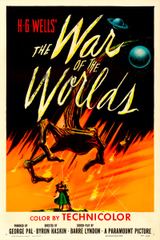

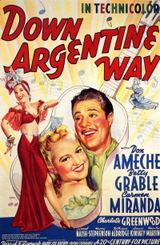
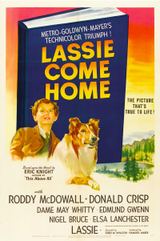



Why three-strip Technicolor was a different kind of color
Three-strip Technicolor wasn't just "color film" — it was a whole industrial regime. The camera exposed three separate black-and-white negatives behind a beam-splitting prism, the prints were made by physically transferring dye onto blank stock, and the studio had to rent the camera, the crew and a "Technicolor color consultant" (for most of the era, Natalie Kalmus, whose name is on nearly every film on this list) from the Technicolor corporation itself. The result was a palette no other process has quite reproduced: the saturated reds of The Adventures of Robin Hood, the hallucinatory ballet of The Red Shoes, the Kansas-to-Oz cut in The Wizard of Oz that turned the switch to color into the most famous single effect in movie history.
The era is bounded almost exactly by two decades. Becky Sharp (1935) was the first three-strip feature; by the mid-1950s, single-strip Eastmancolor was cheaper and good enough, and the beam-splitter cameras were retired. Everything on this page was shot inside that window, in that process — classified against the three-strip Technicolor filmography, then ranked by our composite canon score like every list on this site. The technology thread of our movie history timeline shows where this era sits in the longer story of how movies got color, sound, widescreen and everything since.