Movie History Timeline: Cinema by Era
The history of movies, measured: thirteen eras from the 1900s to the 2020s, each with its highest-scoring films — plus the technology thread, from silent to sound to color to widescreen to 3D to digital to streaming, that changed what a movie could be.
1900s — Invention & attractions
- 1
- 2
- 3

1910s — The feature film emerges
- 1
- 2
- 3

1920s — Silent cinema's high summer
- 1
- 2
- 3
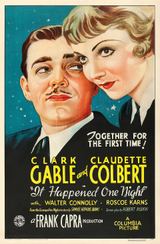
1930s — Sound & the studio system
- 1
- 2
- 3
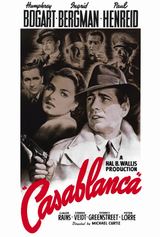
1940s — War, noir & neorealism
- 1
- 2
- 3
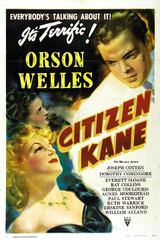
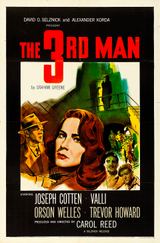
1950s — Widescreen & world cinema
- 1
- 2
- 3
1960s — New waves break
- 1
- 2
- 3



1970s — New Hollywood
- 1
- 2
- 3


1980s — Blockbusters & body horror
- 1
- 2
- 3


1990s — Independents & digital dawn
- 1
- 2
- 3

2000s — Global canon, new masters
- 1
- 2
- 3

2010s — Streaming & the world stage
- 1
- 2
- 3

2020s — The canon in progress
- 1
- 2
- 3
The technology thread
A second way through the same history: seven turning points where the medium itself changed — and the films in our library that carry each one.
Silent cinema
The medium's entire visual grammar — editing, the close-up, montage — was invented before movies could speak.
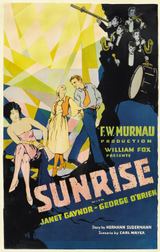
Sunrise: A Song of Two Humans (1927) · The General (1926) · The Best Silent Films →
Synchronized sound
The Jazz Singer's part-talkie premiere ends the silent era within three seasons; Singin' in the Rain is Hollywood remembering that panic, fondly.
The Jazz Singer (1927) · Singin' in the Rain (1952)
Three-strip Technicolor
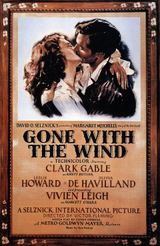
Becky Sharp is the first feature in full three-strip color; by 1939 Oz and Gone with the Wind make color the language of spectacle — though black-and-white stays the default for two more decades.
Becky Sharp (1935) · The Wizard of Oz (1939) · Gone with the Wind (1939) · The Best Technicolor Films →
Widescreen
Television steals the living room, and cinema answers with sheer size: CinemaScope debuts with The Robe, and the 65/70mm epic becomes the decade's prestige format.
The Robe (1953) · Ben-Hur (1959) · Lawrence of Arabia (1962)
3D, twice
The first stereoscopic wave burns out in about two years of gimmicks; Avatar's digital second wave is the one that re-equipped theaters worldwide.
House of Wax (1953) · Avatar (2009) · The Best 3D Movies →
Digital imagery
Jurassic Park makes computer-generated images photoreal, Toy Story removes the camera entirely, and The Matrix bends time with them — within a decade, digital capture and projection retire film stock itself.
Jurassic Park (1993) · Toy Story (1995) · The Matrix (1999)
Streaming
Distribution changes faster than the films: Roma takes the Golden Lion for Netflix, and CODA becomes the first streaming release to win Best Picture.
Roma (2018) · The Irishman (2019) · CODA (2021)
How to read this timeline
Film history is short enough to hold in one view — about 130 years from the Lumière brothers' first paid screening in a Paris basement (December 1895) to now — and structured enough that a decade strip is a genuinely useful map. Each era above shows its highest-scoring films in our library, measured by the composite score that cross-references 20+ authoritative lists, awards and polls; each links deeper into the canon, to the decade's full ranking or to the movement that defined it. The strip is not a lineup of equal segments: canonical density varies enormously by era, and that variance is itself the history.
The broad arc runs in five movements. Invention (1895–1927): cinema works out what it is — Méliès discovers effects and fantasy, Griffith consolidates editing grammar, and the 1920s bring the form to a first perfection in Germany, the Soviet Union and Hollywood just before sound resets everything. The studio age (1927–1959): sound, color and vertical integration industrialize the art; Hollywood's Golden Age runs parallel to France's poetic realism and, after the war, Italy's neorealism and Japan's golden age — the first era when the canon becomes truly global. The rupture (1958–1979): the French New Wave breaks the classical grammar, new waves cascade across every national cinema, the American studio system collapses and is refounded by the film-school generation. The market era (1980–1999): blockbuster economics, home video, independents and Asian cinema's rise redistribute the canon away from the old centers. The global/streaming era (2000–now): festivals become the canon's front door, East Asia moves to the center, and distribution changes faster than the films themselves.
A note on the recent decades: canon formation runs on a lag. Awards data is complete within a year, but the decennial polls, registries and retrospective lists that anchor our scoring take ten to thirty years to process an era — so the 2010s and 2020s sections of this timeline are provisional by construction, and will thicken with every data refresh. That lag is not a flaw in the measurement; it is the measurement, watching the canon decide in real time.