Italian Neorealism: Essential Films
Shot in the rubble of postwar Italy with non-actors and real streets, 1943–1954: the essential neorealist films, ranked by our composite score across the world's canons.
Italian Neorealism was the film movement born in the ruins of postwar Italy, running from wartime precursors in 1943 to the early 1950s. With the Cinecittà studios damaged, directors like Roberto Rossellini, Vittorio De Sica and Luchino Visconti shot on real streets with available light and non-professional actors, telling stories of the poor and working class trying to get through the day. Rossellini's Rome, Open City (1945) took the Grand Prize at Cannes and made the method a movement; its influence runs through the French New Wave, Cinema Novo and Satyajit Ray to every low-budget realist cinema since.
Bicycle Thieves (1948) leads with a composite score of 4.94.
- 1Bicycle Thieves1948 · Vittorio De Sica · Italy · drama4.94
BAFTA Best Film winner 1950 · Kinema Junpo Best Ten (International) 1950 #1 · Sight & Sound 2022 directors' poll #20
- 2Rome, Open City1945 · Roberto Rossellini · Kingdom of Italy · drama2.82
Palme d'Or winner 1946 · Kinema Junpo Best Ten (International) 1950 #4 · Scorsese's 39 essential foreign films
- 3Miracle in Milan1951 · Vittorio De Sica · Italy · fantasy, drama, comedy2.55
Palme d'Or winner 1951 · Cahiers du Cinéma annual top 10 1951 #3 · Kinema Junpo Best Ten (International) 1952 #5
- 4Paisà1946 · Roberto Rossellini · Italy · drama, war2.17
Kinema Junpo Best Ten (International) 1949 #1 · Sight & Sound 2022 critics' poll #196 · Scorsese's 39 essential foreign films
- 5Journey to Italy1954 · Roberto Rossellini · France / Italy · drama1.82
Cahiers du Cinéma annual top 10 1955 #1 · Sight & Sound 2022 critics' poll #72 · Kurosawa's 100 favorite films
- 6Umberto D.1952 · Vittorio De Sica · Italy · drama1.70
Kinema Junpo Best Ten (International) 1962 #7 · TIME All-TIME 100 · Scorsese's 39 essential foreign films
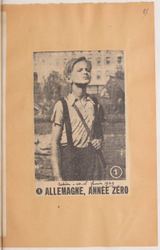
- 7Germany, Year Zero1948 · Roberto Rossellini · Italy / Germany / France · drama1.02
Locarno Golden Leopard winner 1948 · Criterion Collection spine #499 · Rosenbaum's Essential Cinema
- 8Shoeshine1946 · Vittorio De Sica · Italy · crime, drama0.77
Kinema Junpo Best Ten (International) 1950 #7 · NYT Best 1,000 Movies · Criterion Collection spine #1272
- 9Days of Love1954 · Giuseppe De Santis, Leopoldo Savona · Italy · drama, comedy0.75
San Sebastián Golden Shell winner 1955
- 10The Flowers of St. Francis1950 · Roberto Rossellini · Italy · drama0.67
Cahiers du Cinéma annual top 10 1951 #10 · Vatican film list · Criterion Collection spine #293
- 11Europe '511952 · Roberto Rossellini · Italy · drama0.66
Sight & Sound 2022 critics' poll #225 · Criterion Collection spine #674 · Rosenbaum's Essential Cinema
- 12Terminal Station1953 · Vittorio De Sica · Italy / United States · drama, romance0.55
Kinema Junpo Best Ten (International) 1953 #5 · Criterion Collection spine #202
- 13La Terra Trema1948 · Luchino Visconti, Francesco Rosi, Franco Zeffirelli · Italy · drama0.51
Scorsese's 39 essential foreign films · NYT Best 1,000 Movies · Rosenbaum's Essential Cinema
- 14L'Amore1948 · Roberto Rossellini · Italy · drama, romance0.32
Cahiers du Cinéma annual top 10 1956 #8
- 15Fear1954 · Roberto Rossellini · Italy / Germany · drama, romance0.29
Cahiers du Cinéma annual top 10 1956 #10
- 16Stromboli1950 · Roberto Rossellini · Italy / United States · drama0.27
Criterion Collection spine #673 · Rosenbaum's Essential Cinema
- 17
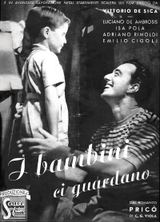
- 18The Children Are Watching Us1944 · Vittorio De Sica · Italy · drama0.16
Criterion Collection spine #323
- 19
- 20
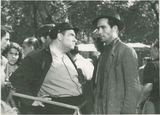
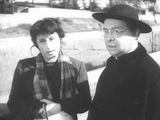
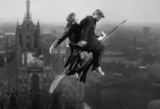
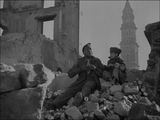


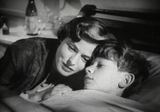
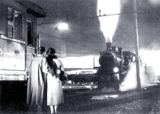
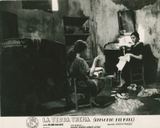
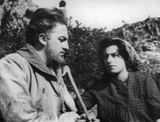

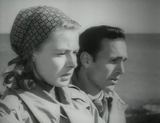
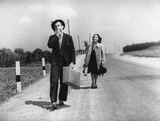

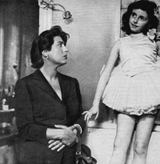
Cinema from the rubble
Neorealism was what happened when a national film industry lost everything except reality. Its founders were critics before they were directors — Visconti, De Santis and the theorist-screenwriter Cesare Zavattini circled the magazine Cinema, where, barred from writing about politics (the editor-in-chief was Mussolini's son Vittorio), they attacked the escapist "white telephone" films of the Fascist era instead. When the war ended, the Cinecittà studios stood damaged, so the movement's aesthetic was partly an inventory of what remained: real streets, available light, non-professional actors, stories of the poor and working class trying to get through the day. Rossellini's Rome, Open City (1945) took the Grand Prize at Cannes as the first major film out of postwar Italy and made the method a movement.
A decade that rewired world cinema
The movement's core run was short — from the wartime precursors to Umberto D. (1952), whose hostile official reception is where many historians date the end. Italy's government wanted no part of it: Giulio Andreotti famously dismissed neorealism as "dirty laundry that shouldn't be washed and hung to dry in the open," and as the economic miracle lifted incomes, Italian audiences themselves drifted toward American optimism. But the aftershocks never stopped: the French New Wave, the Polish Film School, Brazil's Cinema Novo and Satyajit Ray's Apu Trilogy all descend from it — Bicycle Thieves (1948) alone, our top-ranked film of the movement at #24 in the whole library, is arguably the most imitated film ever made. A movement about people who couldn't afford bus fare became the founding charter of every low-budget realist cinema since.
How to read our list
The ranking below is our composite canon score across 20+ authoritative lists, awards and polls — not any historian's syllabus. Membership comes from a documented recipe: films by the core directors (Rossellini, De Sica, Visconti, De Santis) made in Italy between 1943 and 1954, plus explicit movement claims recorded on Wikidata — a window we run two years past the textbook end-date so that Rossellini's early-1950s chamber dramas (Stromboli, Europe '51, Journey to Italy), which turned the method inward, stay in the frame. One editorial call worth knowing: Visconti's Senso (1954) — Technicolor costume melodrama, to our eye already a departure from the movement — is excluded by hand. The essay explains the list — the scores decide it.