The French New Wave: Essential Films
The movement that reinvented cinema, 1958–1968: essential Nouvelle Vague films ranked by our composite score.
The French New Wave (Nouvelle Vague) is the only major film movement that began as film criticism: the young critics of Cahiers du Cinéma — Truffaut, Godard, Chabrol, Rohmer, Rivette — spent the 1950s inventing auteur theory in print, then picked up cameras and turned the polemic into a production method of real locations, natural light, jump cuts and budgets far below industry norm. Truffaut's The 400 Blows (1959) and Godard's Breathless (1960) are the founding works, with the parallel Left Bank films of Resnais, Varda and Demy equally radical alongside — and every national new wave and independent cinema since descends from them.
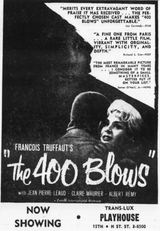
The 400 Blows (1959) leads with a composite score of 4.04.
- 1The 400 Blows1959 · François Truffaut · France · drama, crime4.04
Sight & Sound 2022 directors' poll #33 · Sight & Sound 2022 critics' poll #50 · Cahiers du Cinéma annual top 10 1959 #5
- 2Breathless1960 · Jean-Luc Godard · France · drama, crime3.95
Sight & Sound 2022 directors' poll #14 · Sight & Sound 2022 critics' poll #38 · Cahiers du Cinéma annual top 10 1960 #3
- 3Contempt1963 · Jean-Luc Godard · France / Italy · drama3.00
Cahiers du Cinéma annual top 10 1963 #1 · Sight & Sound 2022 directors' poll #46 · Sight & Sound 2022 critics' poll #54
- 4Last Year at Marienbad1961 · Alain Resnais · France / Italy / Germany · drama2.91
Venice Golden Lion winner 1961 · Kinema Junpo Best Ten (International) 1964 #3 · Sight & Sound 2022 critics' poll #169
- 5My Life to Live1962 · Jean-Luc Godard · France · drama2.32
Cahiers du Cinéma annual top 10 1962 #1 · Sight & Sound 2022 critics' poll #157 · Kinema Junpo Best Ten (International) 1963 #5
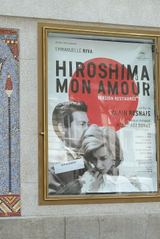
- 6Hiroshima mon amour1959 · Alain Resnais · France / Japan · drama, romance2.31
Cahiers du Cinéma annual top 10 1959 #2 · Sarris's annual top 10 1960 #1 · Sight & Sound 2022 critics' poll #169
- 7The Umbrellas of Cherbourg1964 · Jacques Demy · France / West Germany · musical, romance, drama2.20
Palme d'Or winner 1964 · Sight & Sound 2022 critics' poll #122 · Criterion Collection spine #716
- 8The Cousins1959 · Claude Chabrol, Philippe de Broca · France · drama2.15
Berlin Golden Bear winner 1959 · Kinema Junpo Best Ten (International) 1959 #4 · Sarris's annual top 10 1959 #4
- 9Pierrot le Fou1965 · Jean-Luc Godard · France / Italy · romance, drama, comedy2.13
Cahiers du Cinéma annual top 10 1965 #1 · Sight & Sound 2022 critics' poll #85 · Kinema Junpo Best Ten (International) 1967 #5
- 10Bande à part1964 · Jean-Luc Godard · France · crime, romance, drama2.05
Cahiers du Cinéma annual top 10 1964 #1 · TIME All-TIME 100 · Scorsese's 39 essential foreign films
- 11Jules and Jim1962 · François Truffaut · France · romance, drama2.01
Cahiers du Cinéma annual top 10 1962 #2 · Kinema Junpo Best Ten (International) 1964 #2 · Empire 500 (2008) #338
- 12Weekend1967 · Jean-Luc Godard · France / Italy · comedy, drama1.96
Cahiers du Cinéma annual top 10 1967 #3 · Kinema Junpo Best Ten (International) 1969 #4 · Ebert's annual top 10 1969 #3
- 13Cléo from 5 to 71962 · Agnès Varda · France / Italy · drama1.81
Sight & Sound 2022 critics' poll #14 · Sight & Sound 2022 directors' poll #52 · Criterion Collection spine #73
- 14Shoot the Piano Player1960 · François Truffaut · France · film-noir, drama, crime1.70
Cahiers du Cinéma annual top 10 1960 #4 · Kinema Junpo Best Ten (International) 1963 #9 · Scorsese's 39 essential foreign films
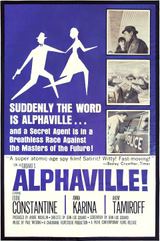
- 15Alphaville1965 · Jean-Luc Godard · France / Italy · sci-fi, drama, crime1.66
Berlin Golden Bear winner 1965 · Cahiers du Cinéma annual top 10 1965 #5 · Criterion Collection spine #25
- 16Lola1961 · Jacques Demy · France / Italy · drama, romance1.38
Cahiers du Cinéma annual top 10 1961 #1 · Criterion Collection spine #714 · Edgar Wright's 1,000 favorite movies
- 17Happiness1965 · Agnès Varda · France · drama1.36
Kinema Junpo Best Ten (International) 1966 #3 · Sight & Sound 2022 critics' poll #152 · Cahiers du Cinéma annual top 10 1965 #10
- 18Masculin Féminin1966 · Jean-Luc Godard · France / Sweden · comedy, drama1.19
Cahiers du Cinéma annual top 10 1966 #4 · Kinema Junpo Best Ten (International) 1968 #7 · Criterion Collection spine #308
- 19La Jetée1962 · Chris Marker · France · sci-fi1.18
Sight & Sound 2022 directors' poll #35 · Sight & Sound 2022 critics' poll #67 · Rosenbaum's Essential Cinema
- 20Zazie in the Metro1960 · Louis Malle · France · comedy1.04
Kinema Junpo Best Ten (International) 1961 #7 · Kurosawa's 100 favorite films · Criterion Collection spine #570
- 21The Young Girls of Rochefort1967 · Jacques Demy · France · musical0.99
Sight & Sound 2022 critics' poll #185 · Letterboxd Top 250 #140 · Criterion Collection spine #717
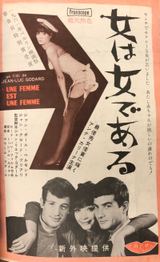
- 22A Woman Is a Woman1961 · Jean-Luc Godard · France / Italy · comedy, romance, musical0.94
Cahiers du Cinéma annual top 10 1961 #2 · Criterion Collection spine #238 · Sarris's annual top 10 1964 #10
- 23Stolen Kisses1968 · François Truffaut · France · comedy, romance, drama0.92
Cahiers du Cinéma annual top 10 1968 #8 · NYT Best 1,000 Movies · Sarris's annual top 10 1969 #7
- 24Muriel1963 · Alain Resnais, Brett Kelly · France / Italy · drama0.82
Cahiers du Cinéma annual top 10 1963 #6 · Sarris's annual top 10 1963 #5 · Criterion Collection spine #824
- 25Paris Belongs to Us1961 · Jacques Rivette · France · drama0.77
Cahiers du Cinéma annual top 10 1961 #3 · Criterion Collection spine #802 · Rosenbaum's Essential Cinema
- 26The Lovers1958 · Louis Malle · France · drama, romance0.72
Kinema Junpo Best Ten (International) 1959 #5 · NYT Best 1,000 Movies · Criterion Collection spine #429
- 27The Soft Skin1964 · François Truffaut · France / Portugal · drama0.70
Kinema Junpo Best Ten (International) 1965 #4 · Criterion Collection spine #749 · Rosenbaum's Essential Cinema
- 28The Fire Within1963 · Louis Malle · France / Italy · drama0.66
Kinema Junpo Best Ten (International) 1977 #3 · Criterion Collection spine #430
- 29Les Bonnes Femmes1960 · Claude Chabrol · France / Italy · drama, comedy0.66
Cahiers du Cinéma annual top 10 1960 #6 · Sarris's annual top 10 1966 #5 · Rosenbaum's Essential Cinema
- 30La Chinoise1967 · Jean-Luc Godard · France · drama0.65
Cahiers du Cinéma annual top 10 1967 #10 · Sarris's annual top 10 1968 #3 · Rosenbaum's Essential Cinema
- 31The Bride Wore Black1968 · François Truffaut · France / Italy · drama, crime, mystery0.63
Cahiers du Cinéma annual top 10 1968 #10 · Sarris's annual top 10 1968 #6 · NYT Best 1,000 Movies
- 32Elevator to the Gallows1958 · Louis Malle · France · film-noir, drama0.63
Kinema Junpo Best Ten (International) 1958 #6 · Criterion Collection spine #335 · Edgar Wright's 1,000 favorite movies
- 33Two or Three Things I Know About Her1967 · Jean-Luc Godard · France / Italy · comedy, drama0.57
Cahiers du Cinéma annual top 10 1967 #9 · Criterion Collection spine #482 · Rosenbaum's Essential Cinema
- 34The Nun1966 · Jacques Rivette · France · drama0.53
Cahiers du Cinéma annual top 10 1967 #7 · Sarris's annual top 10 1971 #5
- 35
- 36Six in Paris1965 · Claude Chabrol, Jean-Luc Godard, Jean Douchet, Jean Rouch, Jean-Daniel Pollet, Éric Rohmer · France · comedy, drama0.43
Cahiers du Cinéma annual top 10 1965 #4
- 37
- 38The Carabineers1963 · Jean-Luc Godard · France / Italy · comedy, drama0.32
Cahiers du Cinéma annual top 10 1963 #8
- 39Far from Vietnam1967 · Jean-Luc Godard, Joris Ivens, William Klein, Claude Lelouch, Agnès Varda, Chris Marker, Alain Resnais · France · documentary, drama0.30
Kinema Junpo Best Ten (International) 1968 #9
- 40La Collectionneuse1967 · Éric Rohmer · France · drama, comedy0.29
Criterion Collection spine #346 · Roger Ebert's Great Movies
- 41Made in U.S.A1966 · Jean-Luc Godard · France · crime0.27
Criterion Collection spine #481 · Rosenbaum's Essential Cinema
- 42
- 43The Eye of Evil1962 · Claude Chabrol · France / Italy / Germany · drama, crime0.18
Sarris's annual top 10 1963 #6
- 44Le Beau Serge1958 · Claude Chabrol, Philippe de Broca, Claude de Givray · France · drama0.16
Criterion Collection spine #580
- 45The Bakery Girl of Monceau1962 · Éric Rohmer · France · drama, comedy0.16
Criterion Collection spine #343
- 46Bay of Angels1963 · Jacques Demy · France / Monaco · drama, romance0.16
Criterion Collection spine #715
- 47
- 48
- 49Web of Passion1959 · Claude Chabrol, Philippe de Broca · France / Italy · crime, drama0.16
Sarris's annual top 10 1961 #8
- 50Bluebeard1963 · Claude Chabrol · France / Italy · biography, drama, crime0.15
Sarris's annual top 10 1963 #9
- 51
- 52Fahrenheit 4511966 · François Truffaut · France / United Kingdom · sci-fi, drama0.14
Sarris's annual top 10 1966 #10
- 53
- 54



Critics with cameras
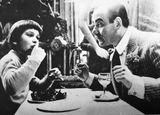
The French New Wave is the only major film movement that began as film criticism. Its core members — Truffaut, Godard, Chabrol, Rohmer, Rivette — spent the 1950s at Cahiers du Cinéma under André Bazin, inventing auteur theory and demolishing the respectable French "cinema of quality" in print before ever exposing a frame. When they picked up cameras, the polemic became a production method: real locations, natural light, portable Éclair cameras, direct sound, jump cuts, non-professional actors, budgets an order of magnitude below industry norm. Truffaut's The 400 Blows (1959) — autobiography shot in the streets of Paris, ending on cinema's most famous freeze-frame — won Best Director at Cannes one year after the festival had refused Truffaut a press credential for his attacks on French film.
Breathless (1960) radicalized the grammar itself: Godard cut within continuous shots because the film was too long, discovered the jump cut as expression, and made improvisation, quotation and self-awareness the movement's house style. Around the two founding films spreads the constellation this page ranks: Resnais' Hiroshima Mon Amour (1959, from the parallel "Left Bank" group — older, more literary, equally radical), Varda's Cléo from 5 to 7 (1962), whose real-time portrait of a woman waiting for a diagnosis has risen faster in recent critics' polls than almost any film of the era, and Demy's The Umbrellas of Cherbourg (1964), the movement's tenderest experiment — a working-class romance sung through entirely, Palme d'Or attached.
The longest afterlife in film history
The Wave's direct output was brief — the standard periodization runs 1958 to about 1968 — but its consequences never stopped compounding. It established the director as author (the intellectual foundation of every national new wave since, and of American film school culture), proved that cheapness could be an aesthetic rather than a limitation (the founding charter of independent cinema), and made film history itself a working material — Godard and Truffaut's habit of quoting Hitchcock and Hollywood B-pictures is the ancestor of every cine-literate filmmaker from Scorsese to Tarantino. Our whitelist for this page follows the historians' consensus: the Cahiers five plus the Left Bank's Varda, Resnais and Demy, within the French industry of the long 1960s. The ranking, as everywhere on this site, is by composite canonical weight — and few pages demonstrate better how a movement's cheapest films became its most expensive legacies.