The Best 80s Horror Movies
The decade practical effects made monstrous flesh: 1980s horror ranked by our composite score, not by nostalgia.
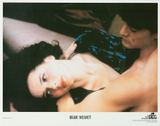
Blue Velvet (1986) leads with a composite score of 3.12.
Part of The Best Horror Movies of All Time — the 1980s →
Masters of the genre
- David Cronenberg
5 films · Dead Ringers
- James Cameron
2 films · Aliens
- John Carpenter
3 films · The Thing
- Brian De Palma
2 films · Dressed to Kill
- George A. Romero
3 films · Day of the Dead
- Sam Raimi
2 films · Evil Dead II





- 1Blue Velvet1986 · David Lynch · United States · mystery, thriller, drama3.12
Hoberman's annual top 10 1986 #1 · Sight & Sound 2022 directors' poll #72 · Sight & Sound 2022 critics' poll #85
- 2Zigeunerweisen1980 · Seijun Suzuki · Japan · horror1.75
Kinema Junpo Best Ten (Japanese) 1980 #1 · Japan Academy Prize winner 1981
- 3The Shining1980 · Stanley Kubrick · United Kingdom / United States · horror, drama, mystery1.59
Sight & Sound 2022 critics' poll #88 · Empire 500 (2008) #52 · National Film Registry (inducted 2018)
- 4Dead Ringers1988 · David Cronenberg · Canada · drama, horror, thriller1.41
Cahiers du Cinéma annual top 10 1989 #3 · Hoberman's annual top 10 1988 #3 · Kehr's annual top 10 1988 #4
- 5White Dog1982 · Samuel Fuller · United States · drama, horror1.20
Hoberman's annual top 10 1991 #1 · Cahiers du Cinéma annual top 10 1982 #4 · Criterion Collection spine #455
- 6The Thing1982 · John Carpenter · United States / Canada · horror, sci-fi, mystery1.18
Sight & Sound 2022 critics' poll #118 · National Film Registry (inducted 2025) · Letterboxd Top 250 #109
- 7Blood Simple1984 · Joel Coen, Ethan Coen · United States · crime, film-noir, drama1.17
Sundance Grand Jury Prize winner 1985 · Criterion Collection spine #834 · Ebert's annual top 10 1985 #10
- 8Aliens1986 · James Cameron · United States · action, horror, thriller0.88
Empire 500 (2008) #30 · Kinema Junpo Best Ten (International) 1986 #9 · NYT Best 1,000 Movies
- 9The Fly1986 · David Cronenberg · United States / Canada · horror, sci-fi, drama0.87
TIME All-TIME 100 · Kehr's annual top 10 1986 #5 · Sarris's annual top 10 1986 #8
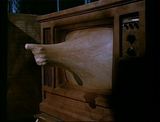
- 10Videodrome1983 · David Cronenberg · Canada / United States · horror, sci-fi, fantasy0.82
Sight & Sound 2022 critics' poll #243 · NYT Best 1,000 Movies · Criterion Collection spine #248
- 11A Nightmare on Elm Street1984 · Wes Craven · United States · horror, thriller, crime0.71
National Film Registry (inducted 2021) · Empire 500 (2008) #162 · NYT Best 1,000 Movies
- 12Santa Sangre1989 · Alejandro Jodorowsky · Mexico · horror, drama0.59
Ebert's annual top 10 1990 #6 · Empire 500 (2008) #476 · Roger Ebert's Great Movies
- 13Dressed to Kill1980 · Brian De Palma · United States · film-noir, horror, thriller0.58
NYT Best 1,000 Movies · Criterion Collection spine #770 · Hoberman's annual top 10 1980 #10
- 14Ghostbusters1984 · Ivan Reitman · United States · fantasy, horror, comedy0.54
National Film Registry (inducted 2015) · Empire 500 (2008) #189 · Edgar Wright's 1,000 favorite movies
- 15The Terminator1984 · James Cameron · United States / United Kingdom · action, sci-fi, thriller0.52
National Film Registry (inducted 2008) · Empire 500 (2008) #308 · Edgar Wright's 1,000 favorite movies
- 16The Discarnates1988 · Nobuhiko Obayashi · Japan · horror0.50
Kinema Junpo Best Ten (Japanese) 1988 #3
- 17Day of the Dead1985 · George A. Romero · United States · horror, sci-fi, action0.40
Kehr's annual top 10 1985 #6 · Edgar Wright's 1,000 favorite movies · Rosenbaum's Essential Cinema
- 18Possession1981 · Andrzej Żuławski · France / West Germany · horror, drama0.38
Sight & Sound 2022 critics' poll #243
- 19Evil Dead II1987 · Sam Raimi · United States · horror, comedy0.38
Empire 500 (2008) #49 · Edgar Wright's 1,000 favorite movies
- 20Altered States1980 · Ken Russell · United States · horror, sci-fi, thriller0.38
Sarris's annual top 10 1980 #4 · Criterion Collection spine #1284
- 21An American Werewolf in London1981 · John Landis · United Kingdom / United States / Australia · horror, comedy0.33
Empire 500 (2008) #107 · Edgar Wright's 1,000 favorite movies
- 22Scanners1981 · David Cronenberg · Canada · thriller, sci-fi, mystery0.32
Criterion Collection spine #712 · Sarris's annual top 10 1981 #8
- 23
- 24
- 25The Living Koheiji1982 · Nobuo Nakagawa · Japan · horror0.29
Kinema Junpo Best Ten (Japanese) 1982 #10
- 26The Name of the Rose1986 · Jean-Jacques Annaud · France / Italy / Germany · crime, thriller, mystery0.29
Kinema Junpo Best Ten (International) 1987 #10
- 27Poltergeist1982 · Tobe Hooper · United States · horror, thriller, fantasy0.28
NYT Best 1,000 Movies · Edgar Wright's 1,000 favorite movies
- 28Re-Animator1985 · Stuart Gordon · United States · sci-fi, horror, comedy0.28
NYT Best 1,000 Movies · Edgar Wright's 1,000 favorite movies
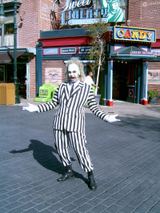
- 29Beetlejuice1988 · Tim Burton · United States · horror, comedy, fantasy0.28
NYT Best 1,000 Movies · Edgar Wright's 1,000 favorite movies
- 30Henry: Portrait of a Serial Killer1986 · John McNaughton · United States · horror, thriller, crime0.28
Kehr's annual top 10 1989 #7 · Edgar Wright's 1,000 favorite movies
- 31Near Dark1987 · Kathryn Bigelow · United States · horror, western0.28
Kehr's annual top 10 1987 #7 · Edgar Wright's 1,000 favorite movies
- 32The Dead Zone1983 · David Cronenberg · United States · horror, sci-fi, thriller0.25
Sarris's annual top 10 1983 #11 · Edgar Wright's 1,000 favorite movies
- 33The Man with Two Brains1983 · Carl Reiner · United States · comedy, sci-fi, horror0.25
Sarris's annual top 10 1983 #12 · Edgar Wright's 1,000 favorite movies
- 34Tightrope1984 · Richard Tuggle · United States · crime, thriller, action0.18
Hoberman's annual top 10 1984 #6
- 35Monkey Shines1988 · George A. Romero · United States · horror, sci-fi, drama0.18
Kehr's annual top 10 1988 #6
- 36Predator1987 · John McTiernan · United States / Mexico · action, sci-fi, horror0.18
Empire 500 (2008) #366
- 37
- 38
- 39
- 40Tetsuo: The Iron Man1989 · Shinya Tsukamoto · Japan · horror, sci-fi, drama0.14
Hoberman's annual top 10 1992 #10
- 41The Changeling1980 · Peter Medak · Canada · horror, thriller, mystery0.11
Edgar Wright's 1,000 favorite movies
- 42The Fog1980 · John Carpenter · United States · horror, mystery, thriller0.11
Edgar Wright's 1,000 favorite movies
- 43The Ninth Configuration1980 · William Peter Blatty · United States · horror, comedy0.11
Edgar Wright's 1,000 favorite movies
- 44Ms. 451981 · Abel Ferrara · United States · horror, drama, thriller0.11
Edgar Wright's 1,000 favorite movies
- 45Roadgames1981 · Richard Franklin · Australia · horror, thriller0.11
Edgar Wright's 1,000 favorite movies
- 46The Evil Dead1981 · Sam Raimi · United States · horror, drama, fantasy0.11
Edgar Wright's 1,000 favorite movies
- 47
- 48Creepshow1982 · George A. Romero · United States · horror, sci-fi, comedy0.11
Edgar Wright's 1,000 favorite movies
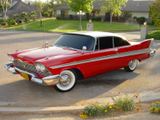
- 49Christine1983 · John Carpenter · United States · horror, mystery, drama0.11
Edgar Wright's 1,000 favorite movies
- 50Body Double1984 · Brian De Palma · United States · mystery, thriller, horror0.11
Edgar Wright's 1,000 favorite movies
- 51The Company of Wolves1984 · Neil Jordan · United Kingdom / Australia · horror, fantasy0.11
Edgar Wright's 1,000 favorite movies
- 52Manhunter1986 · Michael Mann · United States · film-noir, thriller, crime0.11
Edgar Wright's 1,000 favorite movies
- 53A Chinese Ghost Story1987 · Ching Siu-tung · Hong Kong, China · romance, fantasy, horror0.11
Edgar Wright's 1,000 favorite movies
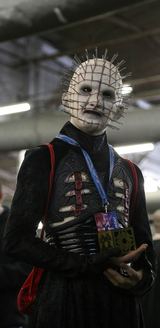
- 54Hellraiser1987 · Clive Barker · United Kingdom / United States · horror0.11
Edgar Wright's 1,000 favorite movies




The practical-effects golden age
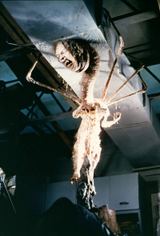
Horror in the 1980s was built by hand. Latex, foam rubber, air bladders and animatronics — the decade between The Shining (1980) and the arrival of digital effects was the high-water mark of practical creature work, and it produced images no computer has improved on. Rob Bottin was twenty-two when he built the transformations for John Carpenter's The Thing (1982); Chris Walas won an Oscar for turning Jeff Goldblum inside out in Cronenberg's The Fly (1986). The craft mattered because the era's best horror was body horror: films about flesh betraying its owner, made in years when AIDS, biotech anxiety and Cold War dread gave that betrayal cultural weight.
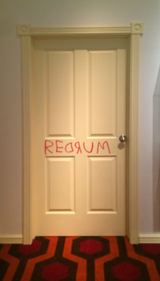
The canonical arc of eighties horror is the genre's usual story told at maximum amplitude: contempt first, canonization later. The Shining opened to mixed reviews and a pair of Razzie nominations — for Kubrick and Shelley Duvall — and now sits in the Sight & Sound critics' top 100 and the National Film Registry. The Thing was a genuine catastrophe in summer 1982, buried two weeks after E.T. by an audience that wanted its aliens friendly; it is now, by community-canon measures, among the most beloved horror films ever made, and its ambiguous final scene is a seminar staple. No genre's films travel further between release and canon, which makes horror the best argument for cross-list measurement: a single source — the 1982 box office, say, or the 1980 critics — gets this list completely wrong.
What the decade seeded
Beyond its top rank, the eighties built horror's modern infrastructure: the slasher franchise economy (Halloween's sequels, Friday the 13th, A Nightmare on Elm Street) that taught studios horror was annuity income; the VHS horror section that raised the next generation of directors; and the genre's habit of smuggling social argument inside genre packaging, which the prestige horror wave of the 2010s (Get Out, Hereditary) inherited directly. The three films at the top of this page are the ones the institutions and communities eventually agreed on — but the decade's whole disreputable shelf is upstream of half of what horror does today.