Charlie Chaplin
English actor and filmmaker (1889–1977)
A director's score is the sum of their films' composite canon scores — methodology.
- Born
- April 16, 1889 · Walworth
- Died
- December 25, 1977 · Corsier-sur-Vevey
- Nationality
- United Kingdom of Great Britain and Ireland, United Kingdom
- Directing career
- 76 directorial credits, 1914–1967 · last: A Countess from Hong Kong (1967)
- Work
- film director, composer, film actor, screenwriter
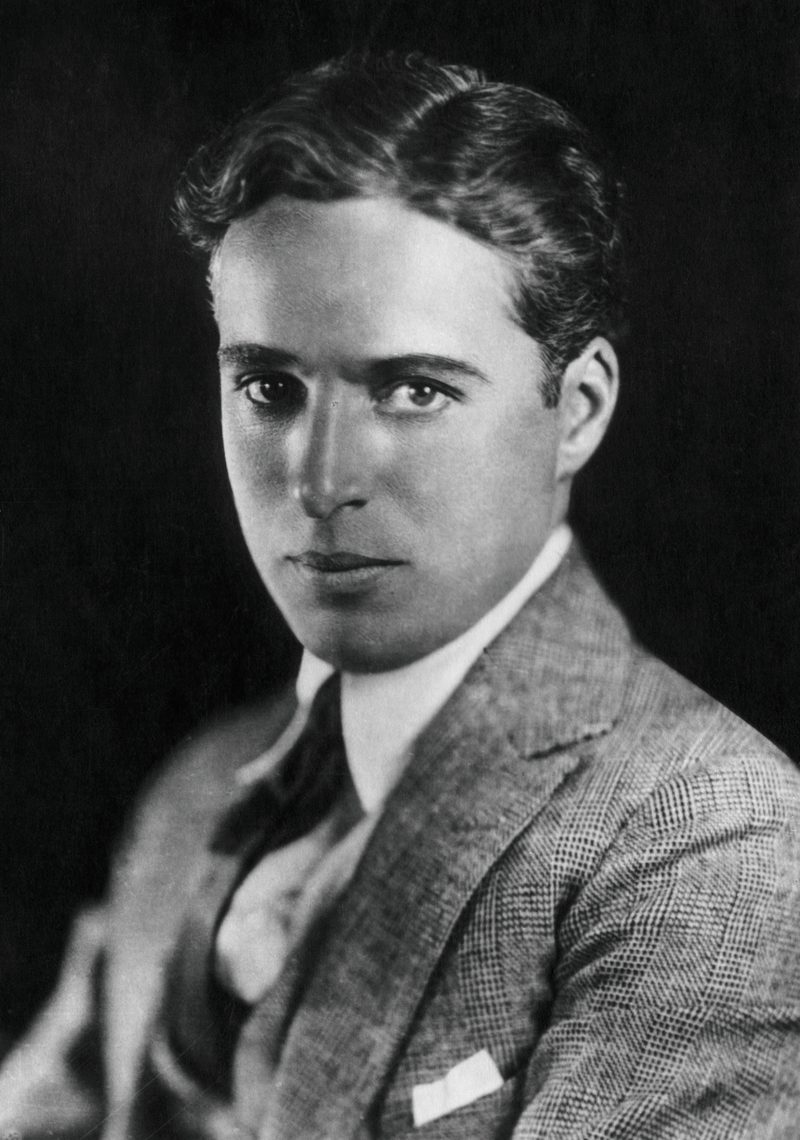
The Tramp as an argument
Chaplin is the rare filmmaker whose importance is a matter of arithmetic before it is a matter of taste: for a stretch of the 1910s and 1920s he was, by any honest measure, the most recognized human being on the planet, and he got there in a medium barely twenty years old. The temptation is to treat the Tramp — the derby, the cane, the splayed walk — as a sentimental relic. I read it the other way. The little man was a piece of pure engineering, a persona legible across every language barrier at once, and Chaplin spent a whole career using that legibility to smuggle in grief, politics, and unfashionable tenderness. He is not important despite the pathos; the pathos is the proposition.
Workhouse to United Artists
Born in London on April 16, 1889, he grew up in Victorian poverty severe enough to land him in the Lambeth workhouse at seven; his mother was committed to an asylum in 1898. The stage was the escape — Fred Karno's celebrated comedy troupe, which he joined in February 1908, carried him on tour across North American vaudeville. Keystone signed him in 1913; his Tramp first appeared on screen in 1914, and within a year the studios were in a bidding war, from Essanay to Mutual to a million-dollar contract with First National. In 1919 he did the thing that still defines the auteur's dream: he co-founded United Artists with Douglas Fairbanks, Mary Pickford, and D. W. Griffith, buying his freedom from the studios. What followed is the run everyone remembers — The Kid (1921), The Gold Rush (1925), The Circus (1928), City Lights (1931), and Modern Times (1936), the last silent feature he made while the rest of Hollywood had long since started talking.
The man who refused the microphone
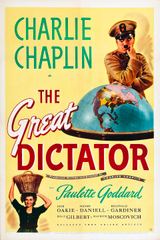
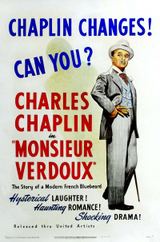
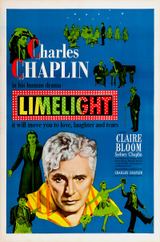
His great gamble was against sound. Long after the talkies won, he kept the Tramp mute, betting pantomime was more universal than dialogue — and City Lights and Modern Times prove he was, artistically, right. When he finally spoke it was to indict: The Great Dictator (1940) turned the Hitler mustache back on its owner, and Monsieur Verdoux (1947) traded charm for a black comedy of murder that audiences hated. Forced out of the United States in 1952, he settled in Switzerland, made Limelight (1952), A King in New York (1957), and A Countess from Hong Kong (1967) in Europe, and returned only in 1972 for an Honorary Academy Award. He died in Corsier-sur-Vevey on December 25, 1977.
What the numbers say
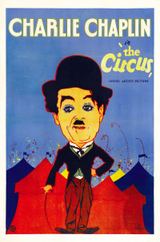
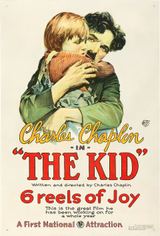
Our library ranks Chaplin #24 among all directors, composite 18.72 across fourteen films — far above his silent peers Buster Keaton (#229) and Griffith (#254). The internal order is the interesting part. City Lights leads him at #106 (3.40) and draws the most citations of any Chaplin film, appearing on 12 of our source lists — the aggregate quietly agreeing with Chaplin, who called it his own favorite. Modern Times follows at #164 (2.97), The Gold Rush — for many the quintessential Chaplin film — at #232 (2.55), and The Great Dictator fourth at #243 (2.46). Then the drop is steep: The Circus, which won him a special Academy Award in 1928, sits at #1502 (0.79), and The Kid at #2580. The composite honours the two great silent talkies and treats the rest as history rather than canon.
Where to start
City Lights for the ending Chaplin bet his whole aesthetic on and won; Modern Times for the Tramp against the machine; The Great Dictator for the moment the silence broke. Save Monsieur Verdoux for when you want to see how strange he was willing to get.
Films in our library, ranked
Ranked by composite canon score across 20+ authoritative lists, awards and polls — our ordering, with every placement citing its evidence on the film's page.
- 1
1931 · United States · comedy, romance, drama
Sight & Sound 2022 critics' poll #36 · AFI 100 (2007) #11 · Sight & Sound 2022 directors' poll #52
3.4012 citations - 2
1936 · United States · comedy, romance, drama
Sight & Sound 2022 directors' poll #72 · Sight & Sound 2022 critics' poll #78 · Kinema Junpo Best Ten (International) 1938 #4
2.9711 citations - 3
1925 · United States · silent, comedy, romance
Kinema Junpo Best Ten (International) 1926 #1 · AFI 100 (2007) #58 · AFI 100 (1998) #74
2.559 citations - 4
1940 · United States · comedy, drama, war
Kinema Junpo Best Ten (International) 1960 #1 · Oscar Best Picture nominee 1940 · National Film Registry (inducted 1997)
2.468 citations - 5
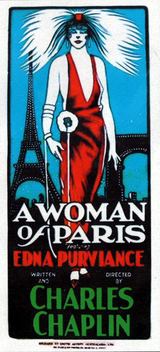
1923 · United States · drama, silent, romance
Kinema Junpo Best Ten (International) 1924 #1 · Sarris's annual top 10 1976 #1 · Criterion Collection spine #1253
1.663 citations - 6
1947 · United States · comedy, drama
Kinema Junpo Best Ten (International) 1952 #1 · NYT Best 1,000 Movies · Criterion Collection spine #652
1.444 citations - 7
1957 · United Kingdom / United States · comedy, drama
Cahiers du Cinéma annual top 10 1957 #1 · Sarris's annual top 10 1973 #2 · Rosenbaum's Essential Cinema
1.433 citations - 8
1952 · United States · comedy, drama, musical
Kinema Junpo Best Ten (International) 1953 #2 · Criterion Collection spine #756 · Rosenbaum's Essential Cinema
0.903 citations - 9
1928 · United States · comedy, silent, drama
Kinema Junpo Best Ten (International) 1928 #3 · Criterion Collection spine #996 · Roger Ebert's Great Movies
0.793 citations - 10
1921 · United States · comedy, drama, silent
National Film Registry (inducted 2011) · Criterion Collection spine #799 · Rosenbaum's Essential Cinema
0.503 citations - 110.231 citation
- 12
1967 · United Kingdom / United States · comedy, romance
Sarris's annual top 10 1967 #7
0.171 citation - 130.111 citation
- 140.111 citation
Complete filmography
All 76 directorial credits recorded on Wikidata, in chronological order; films in our library link to their canon-score page.
- 1914A Busy Day
- 1914Caught in the Rain
- 1914Dough and Dynamite
- 1914Gentlemen of Nerve
- 1914Getting Acquainted
- 1914Her Friend the Bandit
- 1914His Musical Career
- 1914His New Profession
- 1914His Prehistoric Past
- 1914His Trysting Place
- 1914Laughing Gas
- 1914Mabel's Busy Day
- 1914Mabel's Married Life
- 1914Recreation
- 1914The Face on the Bar Room Floor
- 1914The Masquerader
- 1914The New Janitor
- 1914The Property Man
- 1914The Rounders
- 1914Those Love Pangs
- 1914Twenty Minutes of Love
- 1915A Jitney Elopement
- 1915A Night in the Show
- 1915A Night Out
- 1915A Woman
- 1915Burlesque on Carmen
- 1915By the Sea
- 1915His New Job
- 1915In the Park
- 1915Mixed Up
- 1915Shanghaied
- 1915The Bank
- 1915The Champion
- 1915The Tramp
- 1915Work
- 1916Behind the Screen
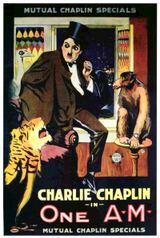
- 1916One A.M.
- 1916Police
- 1916The Count
- 1916The Essanay-Chaplin Revue of 1916
- 1916The Fireman
- 1916The Floorwalker
- 1916The Pawnshop
- 1916The Rink
- 1916The Vagabond
- 1917Easy Street
- 1917The Adventurer
- 1917The Cure
- 1917The Immigrant
- 1918A Dog's Life
- 1918Chase Me Charlie
- 1918How to Make Movies
- 1918Shoulder Arms
- 1918The Bond
- 1918Triple Trouble
- 1919A Day's Pleasure
- 1919Sunnyside
- 1919The Professor
- 1921The Idle Class
- 1921The Kid
- 1922Nice and Friendly
- 1922Pay Day
- 1923A Woman of Paris
- 1923The Pilgrim
- 1925The Gold Rush
- 1928The Circus
- 1931City Lights
- 1936Modern Times
- 1940The Great Dictator
- 1941The Chaplin Cavalcade
- 1946Charlie Chaplin Festival
- 1947Monsieur Verdoux
- 1952Limelight
- 1957A King in New York
- 1959The Chaplin Revue
- 1967A Countess from Hong Kong