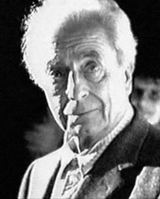
Michelangelo Antonioni
Italian film director and screenwriter (1912–2007)
A director's score is the sum of their films' composite canon scores — methodology.
- Born
- September 29, 1912 · Ferrara
- Died
- July 30, 2007 · Rome
- Nationality
- Italy, Kingdom of Italy
- Directing career
- 28 directorial credits, 1947–2004 · first: People of the Po Valley (1947)
- Work
- film director, screenwriter, film editor, film producer
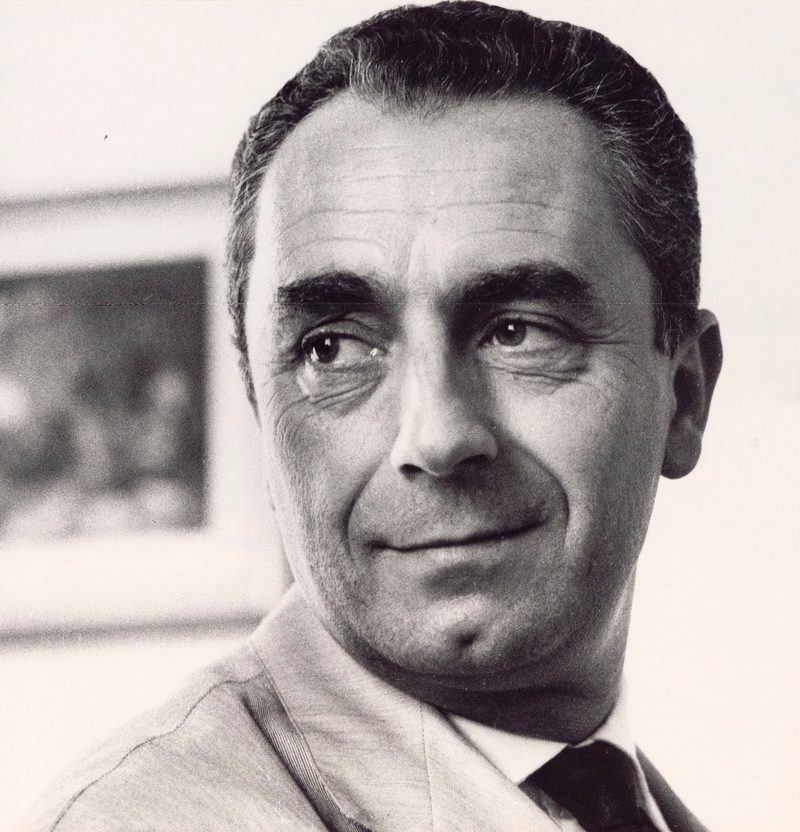
The director who filmed the pause
Antonioni is the filmmaker who decided that what happens between events is the event. Where his neorealist elders pointed the camera at work, hunger, and the street, he turned it on the boredom of people who had everything and felt nothing — and in doing so invented a grammar of dead time, architecture, and unresolved glances that world art cinema has been paraphrasing ever since. His films were called, in the phrase Wikipedia reaches for, enigmatic mood pieces; the standard complaint is that nothing happens in them. That is precisely the argument. He is the origin point critics reach for when they name the slow-cinema lineage, and to my eye the boredom is not a flaw he failed to edit out but the subject he built the whole method to hold.
Ferrara to Swinging London
Born in Ferrara on 29 September 1912 into a prosperous family, he was a childhood violinist who took an economics degree at the University of Bologna and drifted into film through journalism, writing for the local paper from 1935 before moving to Rome in 1940. He co-wrote and assisted on wartime productions, made semi-documentary shorts about the Po valley, and broke with neorealism in his first feature, Story of a Love Affair (1950), which trades workers for the guilty bourgeoisie. International fame arrived with the so-called alienation trilogy — L'Avventura (1960), jeered and cheered at Cannes before taking the Jury Prize; La Notte (1961), which won the Golden Bear at Berlin; and Eclipse (1962) — extended by his first color film, Red Desert (1964), which won the Golden Lion at Venice. Monica Vitti, his partner through the decade, is the face of all four. Then Carlo Ponti and MGM sent him to make English-language films: Blowup (1966), a Swinging-London hit that won the 1967 Palme d'Or; the commercial disaster Zabriskie Point (1970); and The Passenger (1975). A 1985 stroke left him aphasic, yet he directed again; the Academy gave him an Honorary Award in 1995, and he died in Rome on 30 July 2007.
What the numbers say
Our library ranks Antonioni #26 among all directors, composite 18.30 across 12 films — and the internal order picks the argument the canon usually loses. The top film is not the landmark L'Avventura but Blowup at #63 (3.93), the English-language outlier, ahead of L'Avventura itself at #115 (3.35), Red Desert at #175 (2.83), and La Notte at #216. Note the twist: L'Avventura appears on more of our source lists than any other Antonioni film — 11 to Blowup's 10 — yet scores lower. Breadth of citation and height of regard are different currencies, and the composite pays out in the second. Eclipse at #915 and The Passenger at #959 sit far down the curve, which reads less like neglect than like a body of work the aggregate has sorted by intensity rather than reputation.
Where to start
L'Avventura for the film that broke narrative open, Blowup for the one our sources rate highest and the easiest door in, Red Desert for the color. Save The Passenger for when the emptiness has started to look like the point.
Films in our library, ranked
Ranked by composite canon score across 20+ authoritative lists, awards and polls — our ordering, with every placement citing its evidence on the film's page.
- 1
1966 · United Kingdom / Italy · mystery, thriller, drama
Palme d'Or winner 1967 · Kinema Junpo Best Ten (International) 1967 #2 · Sarris's annual top 10 1966 #1
3.9310 citations - 2
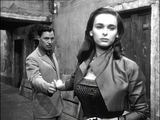
1960 · France / Italy · drama
Cahiers du Cinéma annual top 10 1960 #2 · Sight & Sound 2022 directors' poll #38 · Sight & Sound 2022 critics' poll #72
3.3511 citations - 3
1964 · France / Italy · drama, romance
Venice Golden Lion winner 1964 · Sight & Sound 2022 critics' poll #169 · Cahiers du Cinéma annual top 10 1964 #6
2.839 citations - 4
1961 · France / Italy · drama
Berlin Golden Bear winner 1961 · Sight & Sound 2022 directors' poll #52 · Cahiers du Cinéma annual top 10 1961 #7
2.657 citations - 5
1957 · Italy · drama
Locarno Golden Leopard winner 1957 · Kinema Junpo Best Ten (International) 1959 #3 · Cahiers du Cinéma annual top 10 1958 #4
1.683 citations - 6EclipseL'eclisse
1962 · France / Italy · drama
Sight & Sound 2022 critics' poll #196 · Kinema Junpo Best Ten (International) 1962 #5 · Criterion Collection spine #278
1.165 citations - 7
1975 · France / United States / Italy · drama
Sarris's annual top 10 1975 #2 · Siskel's annual top 10 1975 #2 · Kehr's annual top 10 1975 #4
1.145 citations - 8Identification of a WomanIdentificazione di una donna
1982 · Italy / France · drama
Cahiers du Cinéma annual top 10 1982 #5 · Criterion Collection spine #585
0.552 citations - 9Story of a Love AffairCronaca di un amore
1950 · Italy · drama
Cahiers du Cinéma annual top 10 1951 #7
0.331 citation - 10The Lady Without CameliasLa signora senza camelie
1953 · Italy / France · drama
Sarris's annual top 10 1981 #6 · Rosenbaum's Essential Cinema
0.292 citations - 11
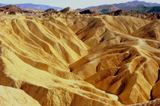
1970 · United States · drama
Edgar Wright's 1,000 favorite movies · Rosenbaum's Essential Cinema
0.222 citations - 120.161 citation




Complete filmography
All 28 directorial credits recorded on Wikidata, in chronological order; films in our library link to their canon-score page.
- 1947People of the Po Valley
- 1948N.U.
- 1949Lies of Love
- 1950Chronicle Of A Love
- 1950La funivia del Faloria
- 1950Sette canne, un vestito
- 1950Story of a Love Affair
- 1953I Vinti
- 1953Love in the City
- 1953The Lady Without Camelias
- 1955Le Amiche
- 1957Il Grido
- 1958Nel Segno di Roma
- 1960L'Avventura
- 1961La Notte
- 1962Eclipse
- 1964Red Desert
- 1965The Three Faces
- 1966Blowup
- 1970Zabriskie Point
- 1972Chung Kuo, Cina
- 1975The Passenger
- 1981The Mystery of Oberwald
- 1982Identification of a Woman
- 198912 registi per 12 città
- 1995Beyond the Clouds
- 2004Eros
- 2004Lo sguardo di Michelangelo