William Wyler
Swiss-German-American director and producer (1902–1981)
A director's score is the sum of their films' composite canon scores — methodology.
- Born
- July 1, 1902 · Mulhouse
- Died
- July 27, 1981 · Los Angeles
- Nationality
- United States, Switzerland
- Directing career
- 50 directorial credits, 1926–1970 · last: The Liberation of L.B. Jones (1970)
- Work
- screenwriter, film producer, film actor, film director
The invisible master
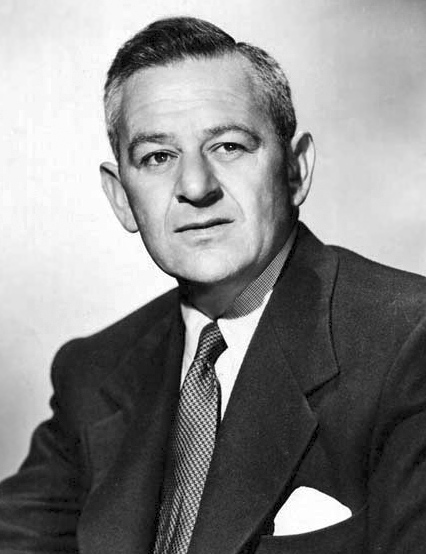
Wyler is the great test case for whether craft counts as authorship. He had no signature the way Hitchcock or Ford had one — no recurring landscape, no pet obsession you could name in a sentence — and for that the auteurist generation filed him under studio professional. The record says otherwise. He holds the most Academy Award nominations for Best Director of anyone, twelve, and won three; thirteen of his films were nominated for Best Picture. Thirty-six actors earned Oscar nominations under his direction, and fourteen won. That is not luck distributed over five decades. That is a method.
Mulhouse to Universal
He was born Willi Wyler on July 1, 1902 in Mulhouse, then in the German Empire, to a Jewish family; his German-born mother was a cousin of Carl Laemmle. Laemmle met him in Europe in 1921 and put him to work at Universal in New York; he reached Los Angeles in 1923 as a third assistant director and by 1925 was the studio's youngest director, grinding out silent westerns. He naturalized in 1928. The apprenticeship shows: nobody who came up shooting two-reelers mistakes a shot for an idea.
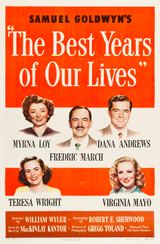
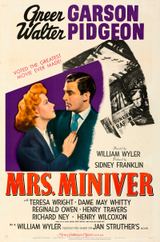
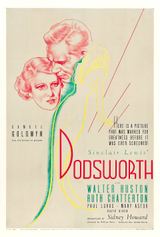
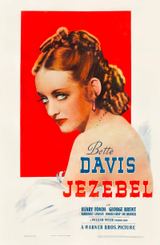
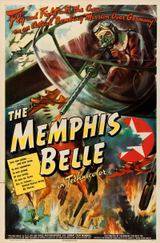
The mature run begins with Dodsworth (1936) and hardly slackens for twenty-five years — Dead End (1937), Jezebel (1938), Wuthering Heights (1939), The Letter (1940), The Little Foxes (1941). Then the war interrupted him more literally than most: he served in the Army Air Forces, flew combat missions to shoot The Memphis Belle: A Story of a Flying Fortress (1944), came home a disabled veteran with permanent hearing loss in one ear, and won his first Best Director Oscar for Mrs. Miniver (1942) while still in uniform — a film Churchill reportedly rated worth a hundred battleships. The Best Years of Our Lives (1946), made straight afterward, is the returning-veteran picture by someone who had returned.
Forty takes
His working legend was the retake: "40-take Wyler," actors exhausted into truthfulness rather than coached toward it. Charlton Heston's verdict — that working for Wyler was "like getting the works in a Turkish bath. You come out smelling like a rose" — is the method in one joke. Bette Davis credited him with helping her realize her full potential; Laurence Olivier said Wyler taught him screen acting. The visual half came from six collaborations with Gregg Toland, whose deep focus let Wyler stage a whole room in one unbroken plane and let the audience choose where to look. That refusal to dictate attention is, to my eye, the closest thing he has to a style — a moral position as much as a technique.
What the numbers say
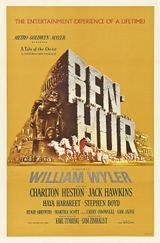
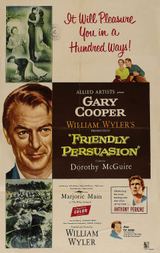
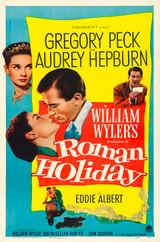
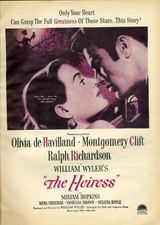
Our library holds 23 Wyler films and ranks him #10 among all directors at a composite 26.06, ahead of Lean and Fellini. But look at the distribution: The Best Years of Our Lives at #39 and Ben-Hur (1959) at #80 carry him, then the curve falls hard — Friendly Persuasion (1956), a Palme d'Or winner, sits at #251, Mrs. Miniver at #386, Roman Holiday (1953), the film that made Audrey Hepburn a star and won her an Oscar, down at #711, and The Heiress (1949) at #796. Ben-Hur swept eleven Academy Awards, a record since only equalled. Polls reward vision; Wyler traded in reliability, and reliability doesn't spike.
Where to start
The Best Years of Our Lives, without hesitation — the most quietly devastating film Hollywood made about its own audience. Then The Letter or The Little Foxes for what he and Bette Davis could do to a room, and Roman Holiday to see that the same man could be weightless. Save Ben-Hur for when you want the machine at full throttle.
Films in our library, ranked
Ranked by composite canon score across 20+ authoritative lists, awards and polls — our ordering, with every placement citing its evidence on the film's page.
- 1
1946 · United States · war, drama
Oscar Best Picture winner 1946 · BAFTA Best Film winner 1948 · Kinema Junpo Best Ten (International) 1948 #2
4.3111 citations - 2
1959 · United States · drama, action
Oscar Best Picture winner 1959 · BAFTA Best Film winner 1960 · AFI 100 (2007) #100
3.6110 citations - 3
1956 · United States · drama, war
Palme d'Or winner 1957 · Oscar Best Picture nominee 1956 · Kinema Junpo Best Ten (International) 1957 #9
2.424 citations - 4
1942 · United States · war, drama, romance
Oscar Best Picture winner 1942 · National Film Registry (inducted 2009) · NYT Best 1,000 Movies
2.004 citations - 5
1936 · United States · drama, romance
Oscar Best Picture nominee 1936 · Kinema Junpo Best Ten (International) 1937 #4 · TIME All-TIME 100
1.545 citations - 6
1953 · United States · comedy, romance, drama
Oscar Best Picture nominee 1953 · Kinema Junpo Best Ten (International) 1954 #6 · National Film Registry (inducted 1999)
1.395 citations - 7
1949 · United States · drama, romance
Oscar Best Picture nominee 1949 · Kinema Junpo Best Ten (International) 1950 #10 · National Film Registry (inducted 1996)
1.295 citations - 8
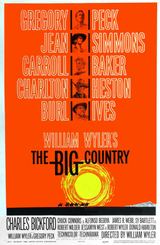
1958 · United States · western, drama
Kinema Junpo Best Ten (International) 1958 #1 · Empire 500 (2008) #187
1.202 citations - 9
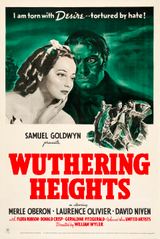
1939 · United States · drama, romance
Oscar Best Picture nominee 1939 · AFI 100 (1998) #73 · National Film Registry (inducted 2007)
1.084 citations - 10
1968 · United States · comedy, romance, musical
Oscar Best Picture nominee 1968 · National Film Registry (inducted 2016) · NYT Best 1,000 Movies
1.004 citations - 11
1937 · United States · drama, crime
Oscar Best Picture nominee 1937 · Kinema Junpo Best Ten (International) 1939 #5 · NYT Best 1,000 Movies
1.003 citations - 12
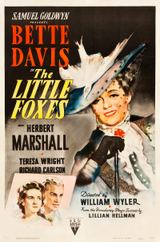
1941 · United States · drama, romance
Oscar Best Picture nominee 1941 · Kinema Junpo Best Ten (International) 1954 #10 · NYT Best 1,000 Movies
0.913 citations - 13
1938 · United States · romance, drama
Oscar Best Picture nominee 1938 · National Film Registry (inducted 2009)
0.682 citations - 14
1955 · United States · drama, crime, action
Kinema Junpo Best Ten (International) 1956 #2
0.631 citation - 15
1965 · United States / United Kingdom · thriller, crime, drama
Kinema Junpo Best Ten (International) 1965 #6 · Sarris's annual top 10 1965 #10 · Edgar Wright's 1,000 favorite movies
0.613 citations - 16
1951 · United States · crime, drama, film-noir
Kinema Junpo Best Ten (International) 1953 #3
0.501 citation - 170.451 citation
- 180.331 citation
- 190.301 citation
- 20
1970 · United States · drama, crime
Kinema Junpo Best Ten (International) 1973 #9
0.301 citation - 21
1944 · United States · documentary
National Film Registry (inducted 2001)
0.231 citation - 220.171 citation
- 230.111 citation





Complete filmography
All 50 directorial credits recorded on Wikidata, in chronological order; films in our library link to their canon-score page.
- 1926Lazy Lightning
- 1926The Stolen Ranch
- 1927Blazing Days
- 1927Desert Dust
- 1927Hard Fists
- 1927Straight Shootin'
- 1927The Border Cavalier
- 1927The Phantom Outlaw
- 1928Anybody Here Seen Kelly?
- 1928Thunder Riders
- 1929Hell's Heroes
- 1929The Love Trap
- 1929The Shakedown
- 1930The Storm
- 1931A House Divided
- 1932Tom Brown of Culver
- 1933Counsellor at Law
- 1933Her First Mate
- 1934Glamour
- 1935Barbary Coast
- 1935The Gay Deception
- 1935The Good Fairy
- 1936Come and Get It
- 1936Dodsworth
- 1936These Three
- 1937Dead End
- 1938Jezebel
- 1938The Cowboy and the Lady
- 1939Wuthering Heights
- 1940The Letter
- 1940The Westerner
- 1941The Little Foxes
- 1942Mrs. Miniver
- 1944The Fighting Lady
- 1944The Memphis Belle: A Story of a Flying Fortress
- 1946The Best Years of Our Lives
- 1947Thunderbolt!
- 1949The Heiress
- 1951Detective Story
- 1952Carrie
- 1953Roman Holiday
- 1955The Desperate Hours
- 1956Friendly Persuasion
- 1958The Big Country
- 1959Ben-Hur
- 1961The Children's Hour
- 1965The Collector
- 1966How to Steal a Million
- 1968Funny Girl
- 1970The Liberation of L.B. Jones