The Japanese New Wave: Essential Films
Sex, politics and formal revolt against the studio masters, 1956–1976: the essential Japanese New Wave films, ranked by our composite score.
The Japanese New Wave (Nūberu bāgu) was the generation that turned against the humanism of Ozu and Kurosawa from inside the studios themselves: beginning in the late 1950s, directors like Nagisa Oshima, Shohei Imamura and Masahiro Shinoda used sex, crime and radical politics to interrogate a Japan remade by defeat and the postwar boom. Unlike the French movement it was named after, it started within the studio system — Shochiku promoted its young assistants to direct — before its leaders broke away to independent production and the Art Theatre Guild, closing the arc with Oshima's In the Realm of the Senses (1976).
The Woman in the Dunes (1964) leads with a composite score of 1.88.
- 1The Woman in the Dunes1964 · Hiroshi Teshigahara · Japan · drama1.88
Kinema Junpo Best Ten (Japanese) 1964 #1 · Letterboxd Top 250 #28 · NYT Best 1,000 Movies
- 2The Insect Woman1963 · Shohei Imamura · Japan · drama1.16
Kinema Junpo Best Ten (Japanese) 1963 #1 · Criterion Collection spine #473
- 3Double Suicide1969 · Masahiro Shinoda · Japan · romance, drama1.16
Kinema Junpo Best Ten (Japanese) 1969 #1 · Criterion Collection spine #104
- 4Death by Hanging1968 · Nagisa Ōshima · Japan · drama1.00
Kinema Junpo Best Ten (Japanese) 1968 #3 · Scorsese's 39 essential foreign films · Criterion Collection spine #798
- 5
- 6The Profound Desire of the Gods1968 · Shohei Imamura · Japan · drama1.00
Kinema Junpo Best Ten (Japanese) 1968 #1
- 7
- 8In the Realm of the Senses1976 · Nagisa Ōshima · France / Japan · drama, romance, thriller0.84
Kinema Junpo Best Ten (International) 1976 #8 · Siskel's annual top 10 1977 #3 · Criterion Collection spine #466
- 9A Man Vanishes1967 · Shohei Imamura · Japan · documentary0.83
Kinema Junpo Best Ten (Japanese) 1967 #2 · Film Comment year-end poll 2012 #31
- 10The Face of Another1966 · Hiroshi Teshigahara · Japan · sci-fi, drama0.74
Kinema Junpo Best Ten (Japanese) 1966 #5 · Letterboxd Top 250 #219 · Criterion Collection spine #395
- 11Children Hand in Hand1963 · Susumu Hani · Japan · documentary0.63
Kinema Junpo Best Ten (Japanese) 1948 #2
- 12
- 13Boy1969 · Nagisa Ōshima · Japan · drama0.61
Kinema Junpo Best Ten (Japanese) 1969 #3 · Rosenbaum's Essential Cinema
- 14Night and Fog in Japan1960 · Nagisa Ōshima · Japan · drama0.60
Hoberman's annual top 10 1983 #2 · Kinema Junpo Best Ten (Japanese) 1960 #10
- 15Unholy Desire1964 · Shohei Imamura · Japan · drama0.59
Kinema Junpo Best Ten (Japanese) 1964 #4 · Criterion Collection spine #474
- 16
- 17Pigs and Battleships1961 · Shohei Imamura · Japan · drama, crime0.49
Kinema Junpo Best Ten (Japanese) 1960 #7 · Criterion Collection spine #472
- 18Pitfall1962 · Hiroshi Teshigahara · Japan · drama0.49
Kinema Junpo Best Ten (Japanese) 1962 #7 · Criterion Collection spine #393
- 19Eros Plus Massacre1969 · Yoshishige Yoshida · Japan · biography, drama0.43
Kinema Junpo Best Ten (Japanese) 1970 #4
- 20
- 21Hatsukoi Jigokuhen1968 · Susumu Hani · Japan · romance, drama0.36
Kinema Junpo Best Ten (Japanese) 1968 #6
- 22
- 23
- 24
- 25Diary of a Shinjuku Thief1968 · Nagisa Ōshima · Japan · drama0.32
Kinema Junpo Best Ten (Japanese) 1969 #8
- 26
- 27
- 28
- 29Pale Flower1964 · Masahiro Shinoda · Japan · drama, crime, film-noir0.29
Criterion Collection spine #564 · Roger Ebert's Great Movies
- 30Akitsu Springs1962 · Yoshishige Yoshida · Japan · drama0.29
Kinema Junpo Best Ten (Japanese) 1962 #10
- 31A Story Written with Water1965 · Yoshishige Yoshida · Japan · drama0.29
Kinema Junpo Best Ten (Japanese) 1965 #10
- 32
- 33Tokyo Drifter1966 · Seijun Suzuki · Japan · crime, film-noir, action0.27
Criterion Collection spine #39 · Edgar Wright's 1,000 favorite movies
- 34
- 35
- 36
- 37
- 38
- 39
- 40
- 41
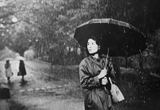
The Japanese New Wave is the rare movement that mutinied against its own employers. Where the great humanists of the studio era — Ozu and Kurosawa above all — had made suffering legible and finally consoling, the young directors who emerged in the late 1950s treated that consolation as a lie the postwar boom told about itself. They kept the studio's cameras and crews and turned them on sex, crime and radical politics, and the borrowed French name they were given, Nūberu bāgu, never quite fit a wave that started inside the machine it wanted to smash.
The studio mutiny, 1956–1976
The page runs 1956 to 1976, the span in which the movement was hatched, broke loose and burned out. It began, improbably, as a corporate bet: Shochiku promoted its young assistants to the director's chair hoping to catch the European art-house market, and got more than it bargained for. Nagisa Ōshima repaid the studio with Cruel Story of Youth (1960) and the incendiary Night and Fog in Japan (1960), whose politics were exactly the kind of content the studios would soon resist. By the mid-1960s the leading figures had left the majors for independent production, and the Art Theatre Guild became the movement's home — the place films too radical for a studio could be financed and shown. Ōshima closes the arc from there with In the Realm of the Senses (1976), which carried the New Wave's obsessions past the point any Japanese studio would follow.
What it broke
The break was thematic before it was formal. These films went straight at the material the studio tradition had kept off-screen — juvenile delinquency, uninhibited sexuality, the shifting position of women, the racism and ethnic exclusions of a nation eager to forget them. Shohei Imamura dug into the superstitions and appetites of Japan's rural underclass; Masahiro Shinoda and Yoshishige Yoshida pushed toward abstraction and the essay-film; Hiroshi Teshigahara made the movement's most hypnotic art object. Seijun Suzuki and Susumu Hani came at the same rebellion from the genre programmer and the documentary respectively — proof the wave had no single house style, only a shared refusal.
How to read our list
The order here is our composite score, not chronology or reputation, and it rewards accumulated critical weight over sensation. Teshigahara's The Woman in the Dunes (1964) sits far out in front at the top — the movement's one entry to become a settled world-cinema classic. Imamura's The Insect Woman (1963) and Shinoda's Double Suicide (1969) follow; In the Realm of the Senses, for all its notoriety, ranks below both. Membership is carried entirely by rule: with Wikidata's movement field unused for the Japanese New Wave, every film on the page is selected as the work of a canonical New Wave director shooting in Japan inside the 1956–1976 window. That is why Suzuki's lurid studio genre pieces — Tokyo Drifter (1966), Gate of Flesh (1964) — appear low on the list beside the political auteurs: the rule counts the director, and the score sorts out the rest.