New German Cinema: Essential Films
From the Oberhausen Manifesto to Fassbinder's death, 1962–1982: the essential New German Cinema films, ranked by our composite score.
New German Cinema was West Germany's answer to the French New Wave: in 1962 twenty-six young filmmakers signed the Oberhausen Manifesto declaring "Papa's cinema is dead," and a state-subsidized generation — Rainer Werner Fassbinder, Werner Herzog, Wim Wenders, Volker Schlöndorff, Margarethe von Trotta — spent two decades reckoning on screen with the country's unmastered past. Fassbinder's furious melodramas, Herzog's visionary expeditions and Schlöndorff's Palme-winning The Tin Drum carried German film back to the world stage; Fassbinder's death in 1982 conventionally closes the era.
The Tin Drum (1979) leads with a composite score of 2.99.
- 1The Tin Drum1979 · Volker Schlöndorff · France / Germany / Poland · war, drama2.99
Palme d'Or winner 1979 · Kinema Junpo Best Ten (International) 1981 #1 · NYT Best 1,000 Movies
- 2Ali: Fear Eats the Soul1974 · Rainer Werner Fassbinder · Germany · drama, romance2.17
Sight & Sound 2022 critics' poll #52 · Sight & Sound 2022 directors' poll #52 · Kehr's annual top 10 1974 #2
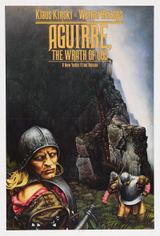
- 3Aguirre, the Wrath of God1972 · Werner Herzog · Germany / Mexico / Peru · drama, adventure1.92
Sight & Sound 2022 critics' poll #118 · Kinema Junpo Best Ten (International) 1983 #9 · TIME All-TIME 100
- 4The Marriage of Maria Braun1979 · Rainer Werner Fassbinder · Germany · drama1.69
Kinema Junpo Best Ten (International) 1980 #6 · Sarris's annual top 10 1979 #3 · Scorsese's 39 essential foreign films
- 5Fitzcarraldo1982 · Werner Herzog · Germany / Peru · drama, adventure1.41
Kinema Junpo Best Ten (International) 1983 #5 · Empire 500 (2008) #111 · Ebert's annual top 10 1982 #4
- 6Marianne and Juliane1981 · Margarethe von Trotta · Germany · drama1.32
Venice Golden Lion winner 1981 · Sarris's annual top 10 1982 #2
- 7Veronika Voss1982 · Rainer Werner Fassbinder · Germany · drama1.29
Berlin Golden Bear winner 1982 · Criterion Collection spine #205 · Roger Ebert's Great Movies
- 8The State of Things1982 · Wim Wenders · Portugal / Germany / United States · drama1.29
Venice Golden Lion winner 1982 · Kehr's annual top 10 1983 #6 · Rosenbaum's Essential Cinema
- 9The Enigma of Kaspar Hauser1974 · Werner Herzog · Germany · biography, drama1.28
Cannes Grand Prix winner 1975 · Scorsese's 39 essential foreign films · Empire 500 (2008) #428
- 10Artists Under the Big Top: Perplexed1968 · Alexander Kluge · Germany · drama1.00
Venice Golden Lion winner 1968
- 11The Merchant of Four Seasons1972 · Rainer Werner Fassbinder · Germany · drama0.89
Sarris's annual top 10 1973 #1 · Scorsese's 39 essential foreign films · Criterion Collection spine #758
- 12Parsifal1982 · Hans-Jürgen Syberberg, Bernard Sobel · France / Germany · musical, drama0.82
Hoberman's annual top 10 1983 #1 · Cahiers du Cinéma annual top 10 1982 #8
- 13The American Friend1977 · Wim Wenders · Germany / France · film-noir, drama, crime0.81
Kehr's annual top 10 1978 #3 · Scorsese's 39 essential foreign films · NYT Best 1,000 Movies
- 14Lola1981 · Rainer Werner Fassbinder · Germany · drama, comedy0.67
Siskel's annual top 10 1982 #6 · NYT Best 1,000 Movies · Sarris's annual top 10 1982 #7
- 15Stroszek1977 · Werner Herzog · Germany · drama, comedy0.66
Ebert's annual top 10 1978 #4 · NYT Best 1,000 Movies · Sarris's annual top 10 1977 #10
- 16Kings of the Road1976 · Wim Wenders · Germany · drama0.65
Scorsese's 39 essential foreign films · Criterion Collection spine #816 · Ebert's annual top 10 1978 #9
- 17Katzelmacher1969 · Rainer Werner Fassbinder · Germany · drama, romance0.61
Hoberman's annual top 10 1977 #1 · Rosenbaum's Essential Cinema
- 18Effi Briest1974 · Rainer Werner Fassbinder · Germany · drama0.48
Sarris's annual top 10 1977 #2 · NYT Best 1,000 Movies
- 19Nosferatu the Vampyre1979 · Werner Herzog · France / Germany · drama0.45
Siskel's annual top 10 1979 #7 · Ebert's annual top 10 1979 #9 · Roger Ebert's Great Movies
- 20Hitler: A Film from Germany1977 · Hans-Jürgen Syberberg · Germany / France / United Kingdom · drama0.43
Hoberman's annual top 10 1980 #2 · Rosenbaum's Essential Cinema
- 21Germany, Pale Mother1980 · Helma Sanders-Brahms · Germany · drama, war0.39
Cahiers du Cinéma annual top 10 1981 #5
- 22Alice in the Cities1974 · Wim Wenders · Germany · drama0.38
Criterion Collection spine #814 · Edgar Wright's 1,000 favorite movies · Rosenbaum's Essential Cinema
- 23Heart of Glass1976 · Werner Herzog · Germany · drama0.38
Ebert's annual top 10 1978 #3 · Roger Ebert's Great Movies
- 24In a Year of 13 Moons1978 · Rainer Werner Fassbinder · Germany · drama0.37
Sarris's annual top 10 1980 #4 · Hoberman's annual top 10 1979 #8
- 25The Third Generation1979 · Rainer Werner Fassbinder · West Germany · comedy, crime0.31
NYT Best 1,000 Movies · Sarris's annual top 10 1980 #10
- 26
- 27Beware of a Holy Whore1971 · Rainer Werner Fassbinder · Germany · drama0.17
Sarris's annual top 10 1976 #7
- 28
- 29Young Törless1966 · Volker Schlöndorff · Germany / France · drama0.16
Criterion Collection spine #279
- 30
- 31The Bitter Tears of Petra von Kant1972 · Rainer Werner Fassbinder · West Germany · drama0.16
Criterion Collection spine #740
- 32World on a Wire1973 · Rainer Werner Fassbinder · Germany · sci-fi, drama0.16
Criterion Collection spine #598
- 33Fox and His Friends1975 · Rainer Werner Fassbinder · Germany · drama0.16
Criterion Collection spine #851
- 34The Lost Honour of Katharina Blum1975 · Volker Schlöndorff, Margarethe von Trotta · Germany · drama, crime0.16
Criterion Collection spine #177
- 35
- 36Coup de Grâce1976 · Volker Schlöndorff · France / Germany · war, drama0.16
Criterion Collection spine #192
- 37Querelle1982 · Rainer Werner Fassbinder · France / Germany · drama0.16
Criterion Collection spine #1221
- 38Mother Küsters' Trip to Heaven1975 · Rainer Werner Fassbinder · Germany · drama0.16
Kehr's annual top 10 1976 #8
- 39
- 40
- 41
- 42Martha1974 · Rainer Werner Fassbinder · West Germany · drama, horror, thriller0.11
Rosenbaum's Essential Cinema
- 43Hammett1982 · Wim Wenders · United States · crime, biography, film-noir0.11
Rosenbaum's Essential Cinema



The Oberhausen window
The page runs 1962 to 1982, bracketed by two events rather than by a house style. On 28 February 1962, twenty-six young filmmakers signed the Oberhausen Manifesto, a one-page notice that the old German cinema was dead and that they intended to build a new one in its place. Twenty years later Rainer Werner Fassbinder died, and the era he had driven hardest is conventionally taken to close with him. Between those dates the list gathers the West German work of seven directors — Fassbinder, Werner Herzog, Wim Wenders, Volker Schlöndorff, Margarethe von Trotta, Alexander Kluge and Hans-Jürgen Syberberg — all working on the public and television money that sustained the movement.
What it set out to do
German Expressionism, the earlier German movement on this shelf, painted derangement directly onto the set; this generation aimed its camera at the country itself — the prosperous, forgetful Federal Republic and the recent past it declined to discuss. The results looked nothing alike from one director to the next: Herzog dragged his crews up rivers and mountains after obsessives and madmen, Fassbinder rebuilt Hollywood melodrama as a weapon against German respectability, and Schlöndorff mined the national literature for allegory. That last route paid off most visibly. Schlöndorff's The Tin Drum (1979) shared the 1979 Palme d'Or with Apocalypse Now and then took the 1980 Academy Award for Best Foreign Language Film — the first German film to win either — the kind of foreign endorsement that, for this movement, usually arrived before any at home.
How to read our list
The ranking is composite score, not chronology or reputation. The Tin Drum sits far out in front as the highest entry, #160 across the whole library at score 2.99, its double laurel showing plainly in the number. Below it the roster leans hard toward two men: Herzog's Aguirre, the Wrath of God (1972, #421) and Fassbinder's Ali: Fear Eats the Soul (1974, #317) and The Marriage of Maria Braun (1979, #501) anchor the middle, while von Trotta, Kluge and Syberberg each surface once or twice near the top. Fassbinder's sheer output tells in the tail — he carries more titles here than any other director on the page, so the lower ranks read almost as a filmography. Membership is set by a single rule rather than a database tag: these seven directors, inside Germany, inside the 1962–1982 window. That last bound is why the list stops short of Wenders' Paris, Texas (1984), the international breakthrough that came just after the door had closed.