Yasujirō Ozu
Japanese film director, screenwriter (1903–1963)
A director's score is the sum of their films' composite canon scores — methodology.
- Born
- December 12, 1903 · Fukagawa-ku
- Died
- December 12, 1963 · Institute of Science Tokyo Hospital
- Nationality
- Japan
- Directing career
- 54 directorial credits, 1927–1962 · first: Sword of Penitence (1927) · last: An Autumn Afternoon (1962)
- Work
- film director, screenwriter, production designer
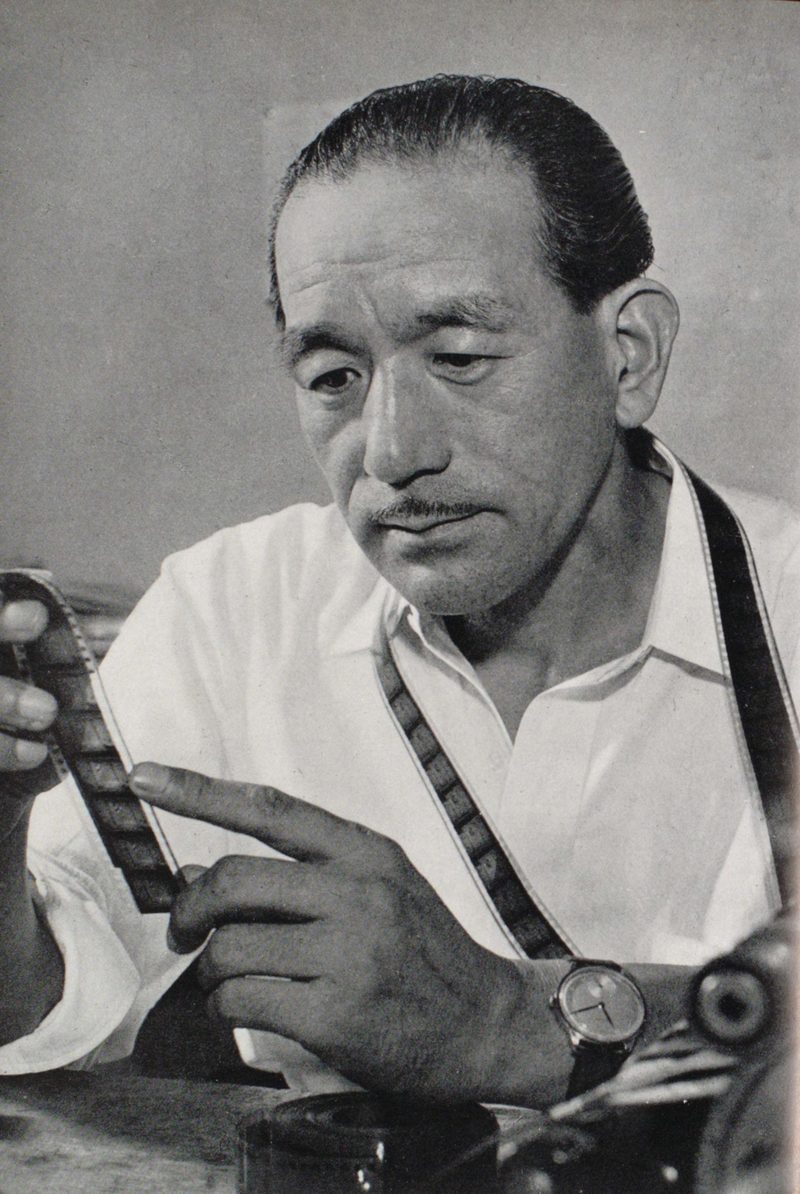
The most Japanese, and the most universal
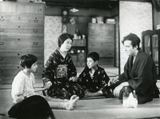
The standard line on Ozu is that he was "the most Japanese" of the great directors — too rooted in tatami mats and marriage negotiations to travel, which is why the West met him decades late. That reputation is exactly backwards. What Ozu built, film after film, is a machine for watching families come apart at the speed families actually come apart: a daughter married off, a parent quietly displaced, nobody raising their voice. Strip the kimono and the ritual and the mechanism is as legible in Ohio as in Onomichi. He is the most universal director who ever pretended to be provincial.
Shochiku, and one studio for life
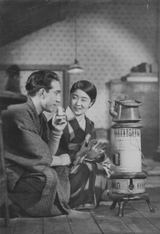
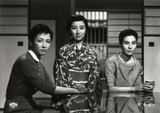
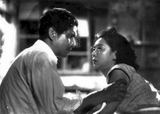
Born in Fukagawa, Tokyo on December 12, 1903, Ozu joined the Shochiku Film Company on August 1, 1923 as a cinematography assistant and never worked anywhere else. Promoted to director in September 1927, he spent the silent era grinding out comedies before turning to the shomin-geki, the drama of ordinary lower-middle-class life. His first sound film was The Only Son (1936), arriving five years after Japan's first talkie — Ozu was in no hurry to abandon anything. War interrupted him twice: conscripted to China in 1937, drafted again in 1943. The postwar run is where the reputation lives, most of it written with the screenwriter Kogo Noda and acted by Chishū Ryū and Setsuko Hara: Late Spring (1949), Early Summer (1951), Tokyo Story (1953). He never married, lived with his mother until she died in 1961, and died on his sixtieth birthday, December 12, 1963. His last film, An Autumn Afternoon (1962), reworks the same marriage he had filmed for thirty years.
The camera that refused to move
Ozu's style is the most disciplined refusal in cinema. The camera sits low — the "tatami shot," roughly at the eye level of someone kneeling on the floor — and simply does not move; he purged tracking shots and, later, dissolves, cutting instead to still images of a corridor or a hillside, the so-called pillow shots. A single 50mm lens, the whole career. It should be monotonous and is the opposite: by removing every rhetorical option, he forces all the drama into the faces and the intervals between them.
What the numbers say
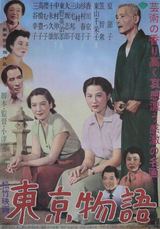
Our library ranks Ozu #17 among all directors, composite 21.76 across 25 films — respectable, and still below his countryman Akira Kurosawa at #4. But the internal spread is the real story, and it is brutal. Tokyo Story sits at #25 (4.91, cited by 12 of our sources) and Late Spring at #143 (3.08, nine citations) — and then the floor drops out. The next films, Early Summer and An Autumn Afternoon, land together down at #920 and #932 (1.16 each). His silent landmark I Was Born, But... (1932) scrapes in at #978; Floating Weeds (1959) sits at #4360. This is the aggregate telling a truth about reception: Ozu reached the West through two films, and everything the canon-makers left off their lists vanishes. His weakest work is merely very good, yet the score measures citations, not what's on the screen — and here the gap between the two is enormous.
Where to start
Tokyo Story, always — the aging parents, the ungrateful children, the daughter-in-law who is kinder than blood. Then Late Spring for the same devastation at closer range, a father and daughter and a marriage neither of them wants. Save the silent I Was Born, But... for when you want to see how funny he could be before the stillness set in.
Films in our library, ranked
Ranked by composite canon score across 20+ authoritative lists, awards and polls — our ordering, with every placement citing its evidence on the film's page.
- 1
1953 · Japan · drama
Sight & Sound 2022 critics' poll #4 · Sight & Sound 2022 directors' poll #4 · Kinema Junpo Best Ten (Japanese) 1953 #2
4.9112 citations - 2
1949 · Japan · drama
Kinema Junpo Best Ten (Japanese) 1949 #1 · Sight & Sound 2022 critics' poll #21 · Sight & Sound 2022 directors' poll #62
3.089 citations - 3
1951 · Japan · drama
Kinema Junpo Best Ten (Japanese) 1951 #1 · Criterion Collection spine #240
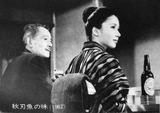
1.162 citations - 4An Autumn Afternoon秋刀魚の味
1962 · Japan · drama
Sight & Sound 2022 critics' poll #185 · Kinema Junpo Best Ten (Japanese) 1962 #8 · Criterion Collection spine #446
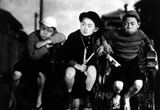
1.165 citations - 5I Was Born, But...大人の見る繪本 生れてはみたけれど
1932 · Japan · comedy, drama, silent
Kinema Junpo Best Ten (Japanese) 1932 #1 · Rosenbaum's Essential Cinema
1.112 citations - 6Passing Fancy出来ごころ
1933 · Japan · silent
Kinema Junpo Best Ten (Japanese) 1933 #1 · Rosenbaum's Essential Cinema
1.112 citations - 7
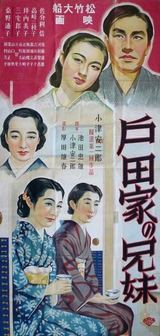
1941 · Japan · drama
Kinema Junpo Best Ten (Japanese) 1941 #1 · Rosenbaum's Essential Cinema
1.112 citations - 8
1934 · Empire of Japan · silent, drama
Kinema Junpo Best Ten (Japanese) 1934 #1
1.001 citation - 9The Only Son一人息子
1936 · Japan · drama
Kinema Junpo Best Ten (Japanese) 1936 #4 · Criterion Collection spine #525 · Roger Ebert's Great Movies
0.844 citations - 10
1942 · Japan · drama
Kinema Junpo Best Ten (Japanese) 1942 #2 · Criterion Collection spine #526
0.792 citations - 110.631 citation
- 120.501 citation
- 130.501 citation
- 140.501 citation
- 15A Hen in the Wind風の中の牝雞
1948 · Japan · drama
Kinema Junpo Best Ten (Japanese) 1948 #7 · Rosenbaum's Essential Cinema
0.442 citations - 160.431 citation
- 170.391 citation
- 180.361 citation
- 190.331 citation
- 200.321 citation
- 21An Inn in Tokyo東京の宿
1935 · Empire of Japan / Japan · drama, silent
Kinema Junpo Best Ten (Japanese) 1935 #9
0.301 citation - 22Good Morningお早よう
1959 · Japan · comedy, drama
Criterion Collection spine #84 · Rosenbaum's Essential Cinema
0.272 citations - 23
1959 · Japan · drama
Roger Ebert's Great Movies · Edgar Wright's 1,000 favorite movies
0.242 citations - 240.161 citation
- 250.111 citation
Complete filmography
All 54 directorial credits recorded on Wikidata, in chronological order; films in our library link to their canon-score page.
- 1927Sword of Penitence
- 1928A Couple on the Move
- 1928Body Beautiful
- 1928Dreams of Youth
- 1928Pumpkin
- 1928Wife Lost
- 1929A Straightforward Boy
- 1929Days of Youth
- 1929Fighting Friends Japanese Style
- 1929I Graduated, But...
- 1929The Life of an Office Worker
- 1929Treasure Mountain
- 1930An Introduction to Marriage
- 1930I Flunked, But...
- 1930That Night's Wife
- 1930The Luck Which Touched the Leg
- 1930The Revengeful Spirit of Eros
- 1930Walk Cheerfully
- 1930Young Miss
- 1931Beauty's Sorrows
- 1931The Lady and the Beard
- 1931Tokyo Chorus
- 1932I Was Born, But...
- 1932Spring Comes from the Ladies
- 1932Until the Day We Meet Again
- 1932Where Are the Dreams of Youth?
- 1933Dragnet Girl
- 1933Passing Fancy
- 1933Woman of Tokyo
- 1934A Mother Should be Loved
- 1934A Story of Floating Weeds
- 1935An Inn in Tokyo
- 1935An Innocent Maid
- 1936College is a Nice Place
- 1936Lion in the Mirror
- 1936The Only Son
- 1937What Did the Lady Forget?
- 1941Brothers and Sisters of the Toda Family
- 1942There Was a Father
- 1947The Record of a Tenement Gentleman
- 1948A Hen in the Wind
- 1949Late Spring
- 1950The Munekata Sisters
- 1951Early Summer
- 1952The Flavor of Green Tea over Rice
- 1953Tokyo Story
- 1956Early Spring
- 1957Tokyo Twilight
- 1958Equinox Flower
- 1959Floating Weeds
- 1959Good Morning
- 1960Late Autumn
- 1961The End of Summer
- 1962An Autumn Afternoon