Ang Lee
Taiwanese film director, screenwriter and producer (born 1954)
A director's score is the sum of their films' composite canon scores — methodology.
- Born
- October 23, 1954 · Chaojhou Township
- Nationality
- Taiwan
- Directing career
- 18 directorial credits, 1980–2019 · first: The Runner (1980) · latest: Gemini Man (2019)
- Work
- film director, screenwriter, writer, film producer
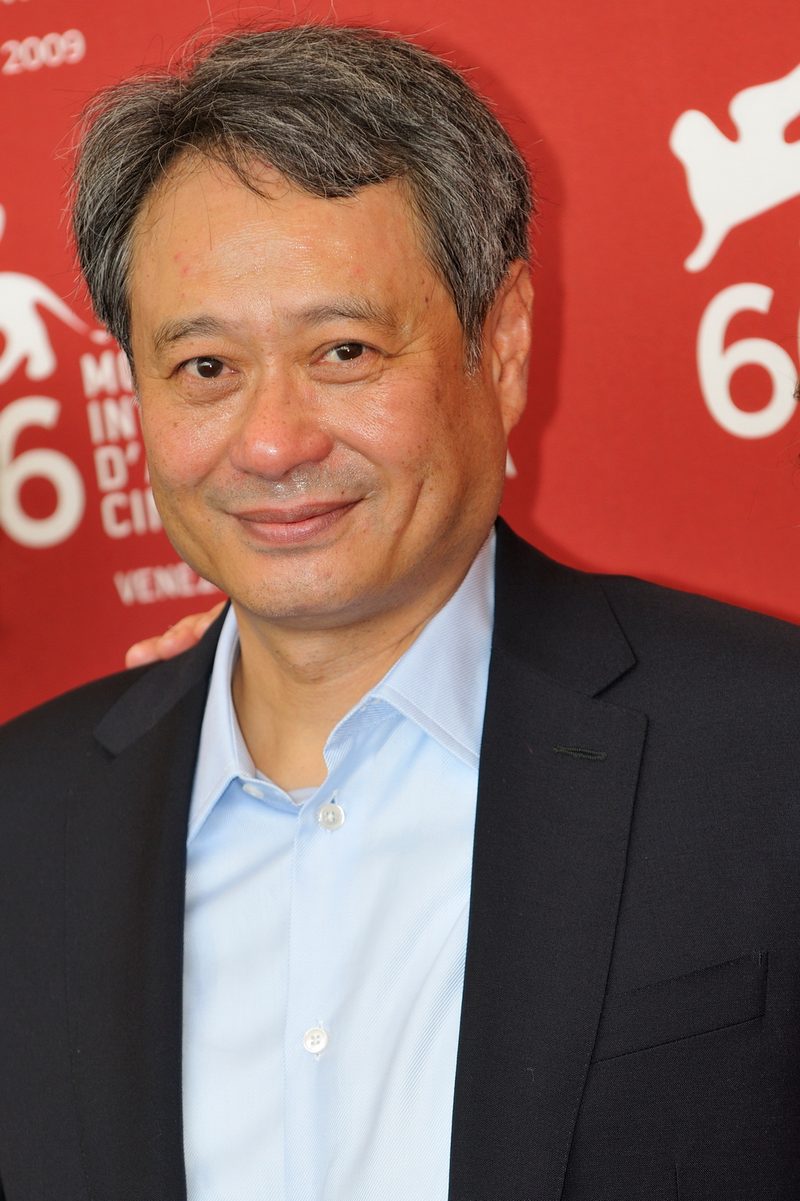
The shapeshifter with one subject
No major director changes costume as often as Ang Lee, and the habit has cost him a reputation. A Jane Austen adaptation, a wuxia epic, a Marvel monster, a gay Western, a 3-D shipwreck fable — the résumé looks like a working actor's rather than an auteur's, and critics have used its variety as evidence that there is no there there, only a superb technician for hire. That reading gets him exactly backwards. Underneath every genre he borrows sits the same subject, the one Wikipedia names as his signature: repressed and hidden emotion, the feeling that cannot be said in the room where it is felt. The genres are disguises for a single unwavering interest, and the discipline of wearing so many is itself the style.
Six years at the kitchen table
He was born on October 23, 1954 in Chaojhou Township, Taiwan, to mainlander parents who had crossed with the Nationalist retreat of 1949. He took an associate degree from what is now the National Taiwan University of Arts in 1975, then a BFA in theater from the University of Illinois at Urbana-Champaign in 1980, then an MFA in film production from NYU's Tisch school in 1985 — and then nothing, or close to it. For roughly six years he stayed home writing screenplays while his wife's salary carried the household, an unemployment so long it became part of the legend. The break came in 1990, when Taiwan's Government Information Office awarded prizes to two of his scripts, funding Pushing Hands (1991) and launching the run of family dramas — The Wedding Banquet (1993), Eat Drink Man Woman (1994) — that made his name. The producer and co-writer James Schamus became a career-long collaborator across the border-crossings that followed: Sense and Sensibility (1995), his first English-language film; Crouching Tiger, Hidden Dragon (2000), which became the highest-grossing foreign-language film released in the United States; Brokeback Mountain (2005) and Life of Pi (2012), each winning him the Academy Award for Best Director. He is the only filmmaker to win the Berlin Golden Bear twice, and among only four to take the Venice Golden Lion twice — and, with Brokeback Mountain, the first person of color to win the directing Oscar.
What the numbers say
Our library ranks Lee #44 among all directors at a composite 14.36 across ten films — a total built on two clear peaks rather than a deep bench. Brokeback Mountain leads at #96 (3.49, on nine of our source lists) and Sense and Sensibility follows at #144 (3.08). Then the floor drops away fast: Crouching Tiger, Hidden Dragon, a box-office phenomenon and a genre revolution, sits only at #247 (2.44), and Life of Pi, an eleven-nomination Oscar heavyweight, lands all the way down at #786 (1.30). The aggregate, in other words, treats Lee as an English-language prestige director first and the Chinese-language master second — the exact inverse of how much of his home audience would rank him. The later frame-rate experiment Billy Lynn's Long Halftime Walk (2016) barely registers at #4106. The score is honest about which of his disguises the critics have loved.
Where to start
Brokeback Mountain for the fullest statement of the one subject — a whole film about the sentence never spoken. Then Sense and Sensibility to watch an outsider read Austen's manners better than the natives, and Crouching Tiger, Hidden Dragon for the weightless, gravity-defying grief underneath the swordplay. Save Life of Pi for the spectacle.
Films in our library, ranked
Ranked by composite canon score across 20+ authoritative lists, awards and polls — our ordering, with every placement citing its evidence on the film's page.
- 1
2005 · United States · romance, drama
BAFTA Best Film winner 2006 · Venice Golden Lion winner 2005 · Oscar Best Picture nominee 2005
3.499 citations - 2
1995 · United Kingdom / United States · drama, romance, comedy
BAFTA Best Film winner 1996 · Berlin Golden Bear winner 1996 · Oscar Best Picture nominee 1995
3.088 citations - 3
2000 · United States / Taiwan, China / Hong Kong, China · romance, fantasy, action
TIFF People's Choice winner 2000 · Oscar Best Picture nominee 2000 · Film Comment year-end poll 2000 #6
2.448 citations - 4
2007 · China / Taiwan, China / United States · crime, thriller, drama
Venice Golden Lion winner 2007 · Kinema Junpo Best Ten (International) 2008 #4
1.432 citations - 5
2012 · United States · fantasy, drama, adventure
Oscar Best Picture nominee 2012 · Kinema Junpo Best Ten (International) 2013 #7 · Ebert's annual top 10 2012 #2
1.304 citations - 6
1993 · United States / Taiwan, China · comedy, romance, drama
Berlin Golden Bear winner 1993 · National Film Registry (inducted 2023)
1.232 citations - 7
1997 · United States · drama
Siskel's annual top 10 1997 #1 · Criterion Collection spine #426 · Edgar Wright's 1,000 favorite movies
0.773 citations - 8
2016 · United States / United Kingdom · war, drama
Cahiers du Cinéma annual top 10 2017 #10
0.291 citation - 90.171 citation
- 100.161 citation
Complete filmography
All 18 directorial credits recorded on Wikidata, in chronological order; films in our library link to their canon-score page.
- 1980The Runner
- 1982Shades of the Lake
- 1984Fine Line
- 1991Pushing Hands
- 1993The Wedding Banquet
- 1994Eat Drink Man Woman
- 1995Sense and Sensibility
- 1997The Ice Storm
- 1999Ride with the Devil
- 2000Crouching Tiger, Hidden Dragon
- 2001Chosen
- 2003Hulk
- 2005Brokeback Mountain
- 2007Lust, Caution
- 2009Taking Woodstock
- 2012Life of Pi
- 2016Billy Lynn's Long Halftime Walk
- 2019Gemini Man