Film Movements: A Field Guide to Cinema's Schools
The great film movements, from German Expressionism to the Iranian New Wave — the schools, waves and styles that changed how movies look and mean, each dated to the decade it broke and led by its highest-scoring films.
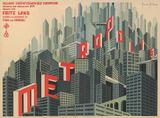
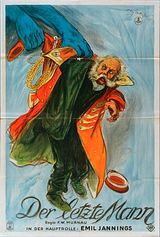
German Expressionism 1919–1933
See all →- 1
- 2
- 3

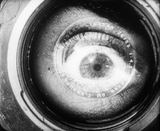
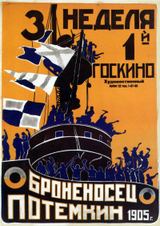
Soviet Montage 1924–1935
See all →- 1
- 2
- 3

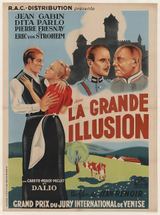
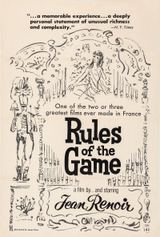
French Poetic Realism 1934–1946
See all →- 1
- 2
- 3
Italian Neorealism 1943–1954
See all →- 1
- 2
- 3

Indian Parallel Cinema 1955–1985
See all →- 1
- 2
- 3

The Japanese New Wave 1956–1976
See all →- 1
- 2
- 3


The British New Wave 1958–1965
See all →- 1
- 2
- 3


The French New Wave 1958–1968
See all →- 1
- 2
- 3

New German Cinema 1962–1982
See all →- 1
- 2
- 3
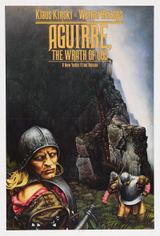
The Czechoslovak New Wave 1963–1969
See all →- 1
- 2
- 3
New Hollywood 1967–1980
See all →- 1
- 2
- 3


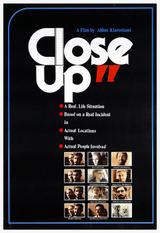
The Iranian New Wave 1969–2000
See all →- 1
- 2
- 3

The Hong Kong New Wave 1979–2000
See all →- 1
- 2
- 3
Taiwan New Cinema 1982–2001
See all →- 1
- 2
- 3
The Chinese Fifth Generation 1984–1996
See all →- 1
- 2
- 3
Reading film history sideways
The movie history timeline reads cinema down the calendar, decade by decade. This page reads it across — by school, wave and style, the way film historians actually argue about it. A film movement is a cluster of filmmakers, usually bound by a place and a short span of years, who share not just a subject but a method: a way of shooting, cutting and thinking that they push far enough to change what the medium can do. The thirteen movements ranked above are the ones with the strongest claim to that definition, each dated to its conventional window and led by its highest-scoring films.
They do not tile the decades neatly, and that is the point. Movements overlap, quarrel and inherit from one another. German Expressionism (1919–1933) carved emotion into painted shadow and, when the Nazi era scattered its talent, exported that vocabulary straight into Hollywood horror and film noir. Soviet Montage (1924–1935) discovered in the same silent years that meaning lives in the cut — Battleship Potemkin (1925) and Man with a Movie Camera (1929) are studied as pure theory a century on. France answered twice: first the fog and fatalism of Poetic Realism (1934–1946), whose designed lighting fed American noir, then the movement that rewired everything after it.
The new waves, and the ones that followed
Italian Neorealism (1943–1954) shot the postwar rubble with non-actors and available light — Bicycle Thieves (1948) tops its list — and its influence became the through-line of the whole second half of the century. It taught the French New Wave (1958–1968), the critics-with-cameras generation whose The 400 Blows (1959) and Breathless (1960) made the director an author and cheapness an aesthetic; and from that charter the new waves multiply across the map. The British (1958–1965) pointed the camera at northern factory towns; the Czechoslovak (1963–1969) slipped absurdism past the censors until Soviet tanks ended the Prague Spring; the Japanese (1956–1976) turned sex and radical politics against the studio masters; New German Cinema (1962–1982) declared "Papa's cinema is dead" and spent two decades reckoning with an unmastered past.
The wave reaches the New World and the Pacific rim last. New Hollywood (1967–1980) is the commercial giant of the set — The Godfather (1972) carries by far the heaviest composite weight of any film here — the decade the studios handed the keys to film-school directors before their own children, Jaws and Star Wars, invented the economics that closed it. Then the Hong Kong New Wave (1979–2000) rewired genre cinema from inside; the Taiwan New Cinema (1982–2001) of Hou Hsiao-hsien and Edward Yang answered with long static takes and a century of memory; and the Iranian New Wave (1969–2000), uniquely, survived the revolution that should have ended it — Abbas Kiarostami's Taste of Cherry (1997) dissolving the line between document and fiction.
How to browse by movement
Each page above is a full ranked list, ordered — like everything on this site — by our composite score across 20-plus critics' polls, institutional canons and awards, never by any one source's order. Membership follows the historians' consensus recipe for each movement, not textbook memory, so a film earns its place by documented association with the school, then takes its rank by measured weight. Pick a movement to see its complete essential list, the directors who defined it, and where the canon agrees or disagrees with its reputation. Two closures deliberately sit elsewhere: the American studio era and cinema's silent founding decades are periods rather than movements, and they anchor the timeline and genre shelves instead.