Vittorio De Sica
Italian film director (1901-1974)
A director's score is the sum of their films' composite canon scores — methodology.
- Born
- July 7, 1901 · Sora
- Died
- November 13, 1974 · Neuilly-sur-Seine
- Nationality
- Italy, Kingdom of Italy, France
- Directing career
- 36 directorial credits, 1940–1974 · last: The Voyage (1974)
- Work
- film director, screenwriter, stage actor, film actor
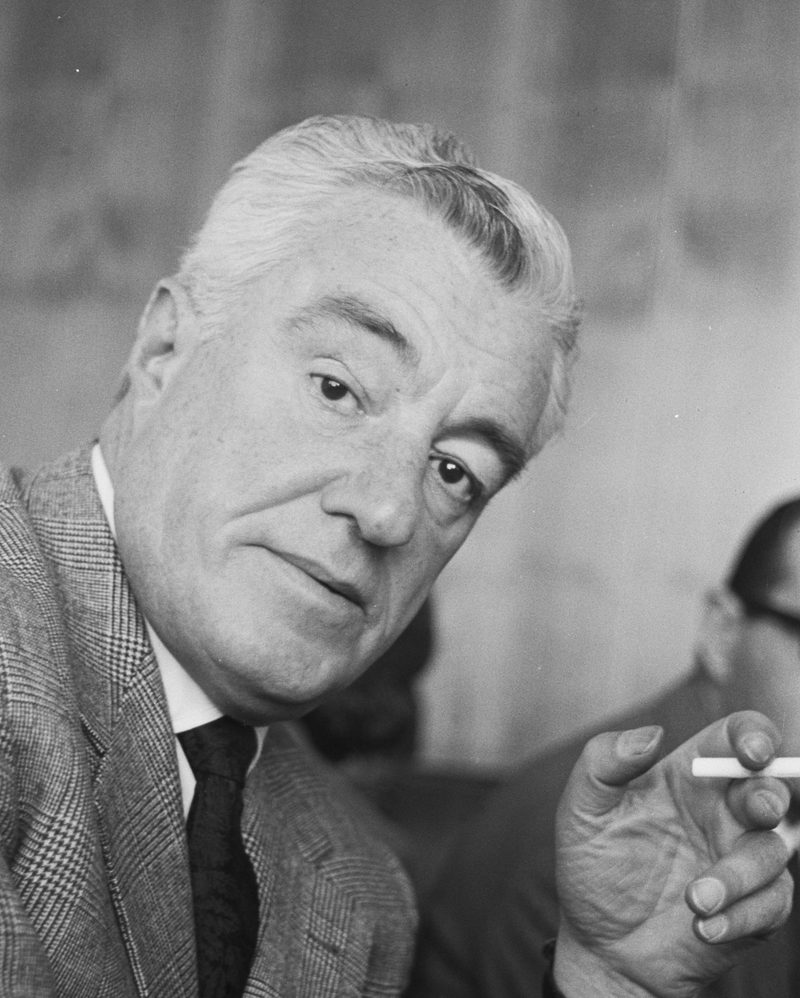
The matinee idol who filmed the poor
There is a paradox at the center of De Sica that his admirers tend to smooth over. He was a matinee idol — a theatre actor from 1923, a screen heartthrob through the 1930s, and, to the end of his life, a working performer for hire in other people's pictures. Yet the films that make him permanent are the ones with no stars, no glamour, and often no professional actors at all: a boy, a bicycle, an old man and his dog. The neorealist argument was that cinema should point its camera at the street and let ordinary suffering fill the frame. De Sica is the movement's proof precisely because he had every reason not to make those films and made them anyway.
Sora to the street
Born in Sora on July 7, 1901, he came to directing through acting rather than criticism or the studio floor. The decisive encounter was with the screenwriter Cesare Zavattini, whom he met in Verona in 1934; their partnership became one of the most productive author-director pairings in film history. After a directorial debut in 1940 and the wartime The Children Are Watching Us (1944), the collaboration produced the run that changed cinema: Shoeshine (1946), Bicycle Thieves (1948), Miracle in Milan (1951), and Umberto D. (1952). Shoeshine and Bicycle Thieves each took honorary Academy Awards for foreign-language film before that category formally existed — De Sica helped invent the reason for its creation. When the neorealist moment passed he did not vanish; he directed Sophia Loren to a Best Actress Oscar in Two Women (1960), and won the Academy Award for Best Foreign Language Film again with The Garden of the Finzi-Continis (1970), which also took the Golden Bear at Berlin. He died in Neuilly-sur-Seine on November 13, 1974.
What the numbers say
Our library ranks De Sica #52 among all directors at a composite 13.17 — a few slots behind his neorealist contemporary Roberto Rossellini at #47, and well below Federico Fellini at #14. The internal order is stark. Bicycle Thieves carries almost everything: #24 overall at 4.94, cited on 14 of our source lists, more than a third of his entire directorial composite in one film. Miracle in Milan follows at #231, then a cliff — and, revealingly, Umberto D. down at #495 (1.70) despite nine appearances, with The Garden of the Finzi-Continis at #760. That gap between Umberto D.'s critical stature and its aggregate score is the composite disagreeing with the connoisseurs: it is the neorealist's neorealist film, austere to the point of self-denial, and breadth of citation does not reward austerity.
Where to start
Bicycle Thieves, without argument — the film that taught two generations what a camera in the street could do. Then Umberto D. for the same method turned inward and unbearable, and Miracle in Milan to see De Sica let the fable in. Save Two Women for proof that the man who filmed the poor could also direct a star to the top of her craft.
Films in our library, ranked
Ranked by composite canon score across 20+ authoritative lists, awards and polls — our ordering, with every placement citing its evidence on the film's page.
- 1
1948 · Italy · drama
BAFTA Best Film winner 1950 · Kinema Junpo Best Ten (International) 1950 #1 · Sight & Sound 2022 directors' poll #20
4.9414 citations - 2
1951 · Italy · fantasy, drama, comedy
Palme d'Or winner 1951 · Cahiers du Cinéma annual top 10 1951 #3 · Kinema Junpo Best Ten (International) 1952 #5
2.554 citations - 3
1952 · Italy · drama
Kinema Junpo Best Ten (International) 1962 #7 · TIME All-TIME 100 · Scorsese's 39 essential foreign films
1.709 citations - 4The Garden of the Finzi-ContinisIl giardino dei Finzi-Contini
1970 · Italy / West Germany / France · drama
Berlin Golden Bear winner 1971 · NYT Best 1,000 Movies · Ebert's annual top 10 1972 #7
1.333 citations - 5ShoeshineSciuscià
1946 · Italy · crime, drama
Kinema Junpo Best Ten (International) 1950 #7 · NYT Best 1,000 Movies · Criterion Collection spine #1272
0.774 citations - 6
1953 · Italy / United States · drama, romance
Kinema Junpo Best Ten (International) 1953 #5 · Criterion Collection spine #202
0.552 citations - 7Two WomenLa ciociara
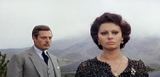
1960 · France / Italy · drama, war
Kinema Junpo Best Ten (International) 1961 #6 · NYT Best 1,000 Movies
0.522 citations - 8The RoofIl tetto
1956 · France / Italy · romance, drama
Kinema Junpo Best Ten (International) 1957 #10
0.291 citation - 90.181 citation
- 10Marriage Italian-StyleMatrimonio all'italiana
1964 · Italy / France · comedy, romance, drama
NYT Best 1,000 Movies
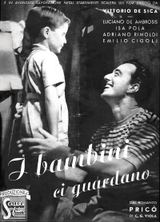
0.171 citation - 11The Children Are Watching UsI bambini ci guardano
1944 · Italy · drama
Criterion Collection spine #323
0.161 citation

Complete filmography
All 36 directorial credits recorded on Wikidata, in chronological order; films in our library link to their canon-score page.
- 1940Maddalena, zero in condotta
- 1940Rose scarlatte
- 1941Teresa Venerdì
- 1942Un garibaldino al convento
- 1944The Children Are Watching Us
- 1945La porta del cielo
- 1946Shoeshine
- 1948Bicycle Thieves
- 1948Heart
- 1951Miracle in Milan
- 1952Umberto D.
- 1953It Happened in the Park
- 1953Terminal Station
- 1954The Gold of Naples
- 1956The Roof
- 1958Anna of Brooklyn
- 1958Bread, Love and Andalusia
- 1960Two Women
- 1961The Last Judgement
- 1962Boccaccio '70
- 1962The Condemned of Altona
- 1962The Raffle
- 1963Il Boom
- 1963Yesterday, Today and Tomorrow
- 1964Marriage Italian-Style
- 1966After the Fox
- 1966Un monde nouveau
- 1967The Witches
- 1967Woman Times Seven
- 1968A Place for Lovers
- 1970Man and Wife
- 1970Sunflower
- 1970The Garden of the Finzi-Continis
- 1972Lo chiameremo Andrea
- 1973A Brief Vacation
- 1974The Voyage