Billy Wilder
Austrian-born American filmmaker and screenwriter (1906-2002)
A director's score is the sum of their films' composite canon scores — methodology.
- Born
- June 22, 1906 · Sucha Beskidzka
- Died
- March 27, 2002 · Beverly Hills
- Nationality
- United States, Austria, Cisleithania
- Directing career
- 27 directorial credits, 1934–1981 · first: Mauvaise Graine (1934) · last: Buddy Buddy (1981)
- Work
- screenwriter, film director, film producer, writer
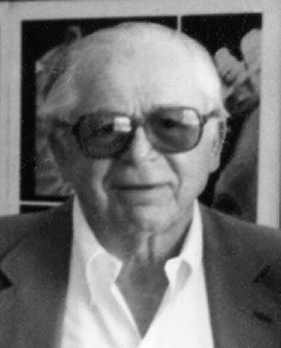
The screenwriter who seized the camera
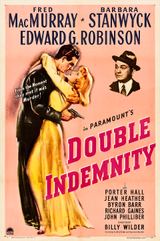
Wilder is the great argument that the pen outranks the lens. He directed, by most accounts, to protect his scripts — and the paradox is that this defensive impulse produced some of the most durable pictures in American movies. He is the rare figure equally canonical in noir and in farce, and the through-line between Double Indemnity (1944) and Some Like It Hot (1959) is not tone but appetite — a Viennese émigré's conviction that every institution, romantic or criminal or corporate, runs on a hustle. His own motto was blunter: don't be boring.
Vienna to Paramount
Born Samuel Wilder on June 22, 1906 in Sucha Beskidzka, then in Austria-Hungary, to a Polish-Jewish family, he became a journalist in Vienna rather than a student, then a Berlin screenwriter — and, by his own account, a taxi dancer — in the mid-1920s. When Hitler took power he fled to Paris, directed his debut Mauvaise Graine (1934) there, and reached Hollywood the same year, naturalizing as a U.S. citizen in 1939. His mother, stepfather, and grandmother were later murdered in the Holocaust, a fact that sits under the cynicism of everything he made.
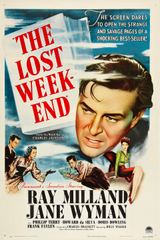
The writing partnerships are the spine. Charles Brackett co-wrote his films from 1938 to 1950; Raymond Chandler helped him adapt Double Indemnity; and I.A.L. Diamond became his other half beginning with Love in the Afternoon (1957). Across five Hollywood decades Wilder collected seven Academy Awards from twenty-one nominations — winning Best Director twice, for The Lost Weekend (1945) and The Apartment (1960), both of which also took Best Picture — plus the top prize at Cannes for The Lost Weekend.
What the numbers say
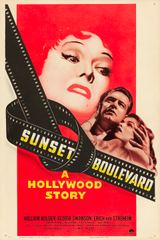
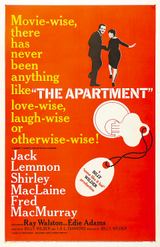
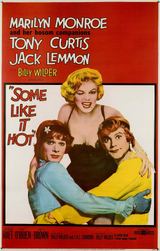
Our library ranks Wilder #13 among all directors at a composite 23.00 across twenty films — and the internal order is a lesson in how our score works. The top film is Sunset Boulevard (1950) at #34 (4.54), which is also the most-cited Wilder film, on fourteen of our source lists; The Apartment sits one rung behind at #36 (4.38) on eleven mentions. The instructive line is further down: The Lost Weekend, his first Best Picture winner, falls to #179 (2.82) on just six appearances, while the films the Academy never crowned keep rising — Some Like It Hot, AFI's number-one comedy, at #98 (3.47), Double Indemnity, the foundational noir, at #142 (3.11) on thirteen appearances. Decades of steady citation, not a good night at the ceremony, are what the score now rewards — and by that measure the poison-pen Wilder and the structural master both outrank the awards darling. Like William Wyler, he was long filed as a professional rather than an artist; the distribution says the filing was lazy.
Where to start
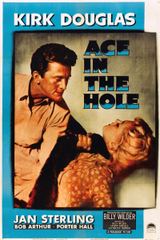
The Apartment for the whole man — heartbreak and corporate rot in one elevator. Then Sunset Boulevard for the poison, Double Indemnity for the machinery, and Some Like It Hot for the proof that the same intelligence could be weightless. Save Ace in the Hole (1951), his cruelest and our #973, for when you can take it.
Films in our library, ranked
Ranked by composite canon score across 20+ authoritative lists, awards and polls — our ordering, with every placement citing its evidence on the film's page.
- 1
1950 · United States · drama, film-noir
Kinema Junpo Best Ten (International) 1951 #2 · Sight & Sound 2022 directors' poll #62 · AFI 100 (2007) #16
4.5414 citations - 2
1960 · United States · comedy, romance, drama
Oscar Best Picture winner 1960 · BAFTA Best Film winner 1961 · Sight & Sound 2022 critics' poll #54
4.3811 citations - 3
1959 · United States · comedy, romance, crime
Sight & Sound 2022 critics' poll #38 · Sight & Sound 2022 directors' poll #62 · AFI 100 (2007) #22
3.4712 citations - 4
1944 · United States · crime, film-noir, drama
Oscar Best Picture nominee 1944 · AFI 100 (2007) #29 · Sight & Sound 2022 critics' poll #196
3.1113 citations - 5
1945 · United States · drama, film-noir
Palme d'Or winner 1946 · Oscar Best Picture winner 1945 · Kinema Junpo Best Ten (International) 1948 #8
2.826 citations - 6
1951 · United States · drama, film-noir
National Film Registry (inducted 2017) · Letterboxd Top 250 #191 · Empire 500 (2008) #385
1.127 citations - 7
1957 · United States · crime
Oscar Best Picture nominee 1957 · Letterboxd Top 250 #56
0.712 citations - 8
1957 · United States · biography, drama
Kinema Junpo Best Ten (International) 1957 #3
0.501 citation - 9
1974 · United States · comedy, drama, romance
Kinema Junpo Best Ten (International) 1975 #9 · Sarris's annual top 10 1974 #9
0.452 citations - 10
1972 · United States / Italy · drama, comedy, romance
Sarris's annual top 10 1972 #12 · Rosenbaum's Essential Cinema
0.252 citations - 110.231 citation
- 120.171 citation
- 130.171 citation
- 140.171 citation
- 150.171 citation
- 160.171 citation
- 170.171 citation
- 180.171 citation
- 190.151 citation
- 20
1970 · United Kingdom / United States · comedy, thriller, mystery
Rosenbaum's Essential Cinema
0.111 citation

Complete filmography
All 27 directorial credits recorded on Wikidata, in chronological order; films in our library link to their canon-score page.
- 1934Mauvaise Graine
- 1942The Major and the Minor
- 1943Five Graves to Cairo
- 1944Double Indemnity
- 1945Death Mills
- 1945The Lost Weekend
- 1948A Foreign Affair
- 1948The Emperor Waltz
- 1950Sunset Boulevard
- 1951Ace in the Hole
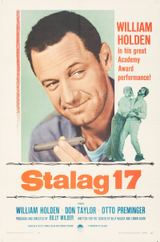
- 1953Stalag 17
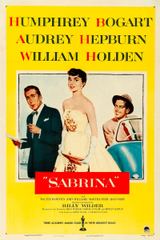
- 1954Sabrina
- 1955The Seven Year Itch
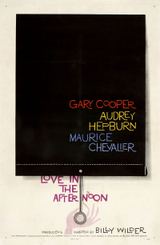
- 1957Love in the Afternoon
- 1957The Spirit of St. Louis
- 1957Witness for the Prosecution
- 1959Some Like It Hot
- 1960The Apartment
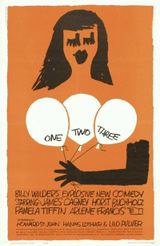
- 1961One, Two, Three
- 1963Irma la Douce
- 1964Kiss Me, Stupid
- 1966The Fortune Cookie
- 1970The Private Life of Sherlock Holmes
- 1972Avanti!
- 1974The Front Page
- 1978Fedora
- 1981Buddy Buddy