The Best Polish Films
Wajda's war trilogy, Kieślowski's moral tales, Polański's debut — Polish cinema ranked by our composite score across the world's canons.
Man of Iron (1981) leads with a composite score of 1.80.
- 1Man of Iron1981 · Andrzej Wajda · Poland · drama1.80
Palme d'Or winner 1981 · Sarris's annual top 10 1981 #8 · Hoberman's annual top 10 1981 #null
- 2EO2022 · Jerzy Skolimowski · Poland / Italy · drama1.49
Film Comment year-end poll 2022 #2 · Cahiers du Cinéma annual top 10 2022 #4 · Kinema Junpo Best Ten (International) 2023 #4
- 3A Short Film About Killing1988 · Krzysztof Kieślowski · Poland · drama1.25
Cahiers du Cinéma annual top 10 1988 #1 · Hoberman's annual top 10 1995 #3
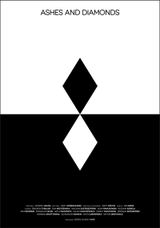
- 4Ashes and Diamonds1958 · Andrzej Wajda · Poland · drama, war1.18
Kinema Junpo Best Ten (International) 1959 #2 · NYT Best 1,000 Movies · Criterion Collection spine #285
- 5A Year of the Quiet Sun1984 · Krzysztof Zanussi · Poland / Italy / West Germany · war, romance, drama1.13
Venice Golden Lion winner 1984 · Roger Ebert's Great Movies
- 6
- 7Znaki na drodze1970 · Andrzej Jerzy Piotrowski · Poland · drama0.75
Locarno Golden Leopard winner 1971
- 8
- 9The Orchestra Conductor1980 · Andrzej Wajda · Poland · drama0.75
San Sebastián Golden Shell winner 1980
- 10
- 11
- 12
- 13Cold War2018 · Paweł Pawlikowski · Poland / France / United Kingdom · drama, romance0.61
Kinema Junpo Best Ten (International) 2019 #7 · Criterion Collection spine #1005 · Edgar Wright's 1,000 favorite movies
- 14Man of Marble1977 · Andrzej Wajda · Poland · drama0.58
Kinema Junpo Best Ten (International) 1980 #4 · Hoberman's annual top 10 1981 #null
- 15Ida2013 · Paweł Pawlikowski · Poland / Denmark / France · drama0.54
Film Comment year-end poll 2014 #4 · Edgar Wright's 1,000 favorite movies
- 16Knife in the Water1962 · Roman Polanski · Poland · drama0.44
NYT Best 1,000 Movies · Criterion Collection spine #215 · Edgar Wright's 1,000 favorite movies
- 17The Promised Land1975 · Andrzej Wajda · Poland · drama0.43
Kinema Junpo Best Ten (International) 1981 #4
- 18A Woman's Decision1975 · Krzysztof Zanussi · Poland · drama0.39
Ebert's annual top 10 1977 #4 · Sarris's annual top 10 1977 #6
- 19Mother Joan of the Angels1961 · Jerzy Kawalerowicz · Poland · drama0.36
Kinema Junpo Best Ten (International) 1962 #6
- 20
- 21Four Nights with Anna2008 · Jerzy Skolimowski · Poland / France · drama0.33
Kinema Junpo Best Ten (International) 2009 #7
- 22Canal1957 · Andrzej Wajda · Poland · drama, war0.27
Criterion Collection spine #284 · Edgar Wright's 1,000 favorite movies
- 23
- 24
- 25
- 26
- 27
- 28The Lure2015 · Agnieszka Smoczyńska · Poland · musical, horror, drama0.16
Criterion Collection spine #896
- 29The Mill and the Cross2011 · Lech Majewski · Poland / Sweden · drama, biography0.12
Ebert's annual top 10 2011 #19







Polish cinema is a cinema of moral pressure. More than any other national tradition, it grew up inside a century of occupation, war and censorship, and its greatest films are less interested in whether a man survives than in what survival costs him. That inheritance runs unbroken from the rubble melodramas of the 1950s to the ash-grey art films of the present, which is why a list ranked by cold composite score still reads, top to bottom, like a single long argument about dignity.
The Polish Film School and its war
The tradition crystallised in the mid-1950s, when the end of Stalinism loosened the grip on what a Polish film could say and a new generation of filmmakers began working in earnest. Andrzej Wajda gave the movement its spine with a war trilogy that our list keeps intact: A Generation (1955), Canal (1957) and Ashes and Diamonds (1958), the last of these his most durable, sitting at score 1.18. These are not victory pictures. Their subject is the impossible arithmetic of loyalty and defeat under an occupier — the same theme Wajda would carry, decades later, into the strike halls of Man of Marble (1977).
Moral tales and the cinema after Wajda
If the Film School asked how a nation endures history, the directors who followed narrowed the question to the individual conscience. Roman Polanski made his feature debut here with Knife in the Water (1962) before leaving Poland for the West. Krzysztof Kieślowski turned the moral chamber piece into a life's work: A Short Film About Killing (1988), which took the Jury Prize at Cannes, and Blind Chance (1987), an early touchstone for the metaphysics of his later French films. Alongside them Krzysztof Zanussi built a cooler, more philosophical cinema, and Jerzy Skolimowski a wilder one, restless enough decades on to make the fable EO (2022).
How to read our list
Membership is drawn from Wikidata's country-of-origin field, with the historical Polish states folded in, and then re-ranked entirely by our composite score — so the order is ours, not any festival's. The interesting result is at the very top. Our highest-scored Polish film is not the textbook masterpiece Ashes and Diamonds but Wajda's Man of Iron (1981), at score 1.80 — the Gdańsk-shipyard sequel to Man of Marble that dramatised the Solidarity movement, won the Palme d'Or, and was banned at home when martial law came. Reputation and data agree less often than you would think: Zanussi's A Year of the Quiet Sun (1984) scores 1.13, within a breath of Ashes and Diamonds itself, while the newest wave — Paweł Pawlikowski's Oscar-winning Ida (2013) and Cold War (2018) — sits lower than its acclaim would predict, still accumulating the canonical weight the older films have had fifty years to earn.