The Best Samurai Movies
Jidaigeki and the sword-film canon: every samurai and period-Japan film in our library, ranked by our composite score.
The samurai film (and the broader jidaigeki period drama around it) is Japan's western — a genre where a vanishing warrior code meets modernity — and Akira Kurosawa made it world cinema: Rashomon took the Golden Lion in 1951 and opened the West to Japanese film, and Seven Samurai became one of the most remade and imitated films ever. The canon's severe wing belongs to Kobayashi's Harakiri and Mizoguchi's period tragedies; its genre-craft wing to Inagaki, Gosha and the sword-film studios Hollywood and Leone borrowed from openly.
Seven Samurai (1954) leads with a composite score of 3.60.
Masters of the genre
- Akira Kurosawa
4 films · Seven Samurai
- Kenji Mizoguchi
2 films · Sansho the Bailiff
- Tadashi Imai
2 films · Bushido, Samurai Saga
- Mansaku Itami
2 films · Akanishi Kakita
- Tomu Uchida
2 films · Chikamatsu's Love in Osaka
- Hideo Gosha
2 films · Three Outlaw Samurai
- 1Seven Samurai1954 · Akira Kurosawa · Japan · drama, action, adventure3.60
Sight & Sound 2022 directors' poll #14 · Sight & Sound 2022 critics' poll #20 · Letterboxd Top 250 #5
- 2Rashomon1950 · Akira Kurosawa · Japan · drama, crime3.38
Venice Golden Lion winner 1951 · Sight & Sound 2022 directors' poll #20 · Sight & Sound 2022 critics' poll #41
- 3Sansho the Bailiff1954 · Kenji Mizoguchi · Japan · drama3.00
Cahiers du Cinéma annual top 10 1960 #1 · Sight & Sound 2022 critics' poll #75 · Sarris's annual top 10 1969 #2
- 4Harakiri1962 · Masaki Kobayashi · Japan · action, drama2.29
Letterboxd Top 250 #1 · Kinema Junpo Best Ten (Japanese) 1962 #3 · Criterion Collection spine #302
- 5Red Beard1965 · Akira Kurosawa · Japan · drama1.56
Kinema Junpo Best Ten (Japanese) 1965 #1 · Letterboxd Top 250 #52 · Criterion Collection spine #159
- 6Throne of Blood1957 · Akira Kurosawa · Japan · drama1.52
Sight & Sound 2022 directors' poll #93 · Kinema Junpo Best Ten (Japanese) 1957 #4 · Letterboxd Top 250 #201
- 7Bushido, Samurai Saga1963 · Tadashi Imai · Japan · action, drama1.39
Berlin Golden Bear winner 1963 · Kinema Junpo Best Ten (Japanese) 1963 #5
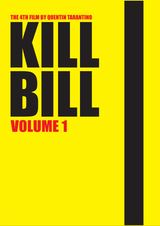
- 8Kill Bill: Volume 12003 · Quentin Tarantino · United States · action, thriller, crime1.29
Film Comment year-end poll 2003 #4 · Kinema Junpo Best Ten (International) 2003 #10 · Kehr's annual top 10 2003 #4
- 9After the Rain1999 · Takashi Koizumi · Japan / France · drama1.05
Japan Academy Prize winner 2001 · Kinema Junpo Best Ten (Japanese) 2000 #9
- 10Okiku and the World2023 · Junji Sakamoto · Japan · drama1.00
Kinema Junpo Best Ten (Japanese) 2023 #1
- 11
- 12Akanishi Kakita1936 · Mansaku Itami · Japan0.56
Kinema Junpo Best Ten (Japanese) 1936 #5 · Kurosawa's 100 favorite films
- 13
- 1413 Assassins2010 · Takashi Miike · Japan / United Kingdom · action, drama0.43
Kinema Junpo Best Ten (Japanese) 2010 #4
- 15The Hidden Blade2004 · Yōji Yamada · Japan · action, drama0.39
Kinema Junpo Best Ten (Japanese) 2004 #5
- 16
- 17
- 18
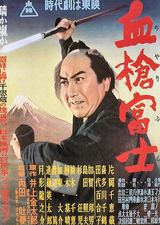
- 19Bloody Spear at Mount Fuji1955 · Tomu Uchida · Japan · drama0.32
Kinema Junpo Best Ten (Japanese) 1955 #8
- 20
- 21
- 22
- 23Samurai II: Duel at Ichijoji Temple1955 · Hiroshi Inagaki, Jun Fukuda · Japan · drama0.16
Criterion Collection spine #15
- 24Samurai III: Duel at Ganryu Island1956 · Hiroshi Inagaki · Japan · action, adventure, biography0.16
Criterion Collection spine #16
- 25
- 26
- 27
- 28Aerograd1935 · Oleksandr Dovzhenko · Soviet Union · sci-fi, adventure0.11
Rosenbaum's Essential Cinema
- 29
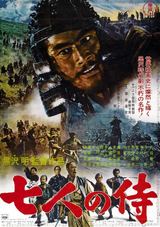
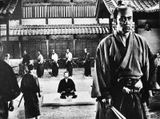
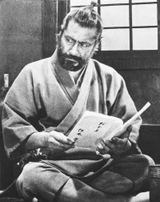
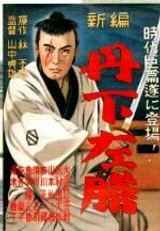
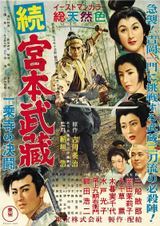
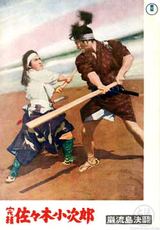
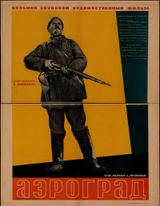
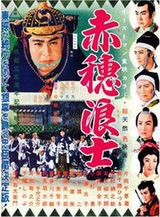
The word most people reach for is chanbara — the sword-clash film — but that names only the loud wing of a wider tradition. The genre that actually sits above this list is jidaigeki, the period drama set in feudal Japan, most often inside the long Tokugawa peace of 1600 to 1868. A jidaigeki need not draw a blade at all; the samurai picture is the branch where the vanishing warrior code collides with a modernity that no longer has any use for it, and that collision is what our top entries keep circling.
Kurosawa sets the terms
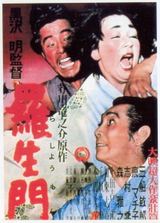
Our composite score, drawn across 20-plus lists and polls, puts Akira Kurosawa at the head of the genre twice over before anyone else appears. Seven Samurai (1954) leads at #82 in the full library — the most imitated of them all, later reworked as a Hollywood western and a science-fiction picture besides. Rashomon (1950) follows at #109, the film that carried its Golden Lion from Venice in 1951 and, in doing so, made the West notice Japanese cinema for the first time. Two more Kurosawa films sit high on the page: Red Beard (1965) and the Macbeth transplant Throne of Blood (1957). That his own Yojimbo — the film Leone lifted wholesale for A Fistful of Dollars — falls outside our subgenre tag entirely is the first sign that the list's membership and its reputation don't always keep step.
The severe wing and the studio wing
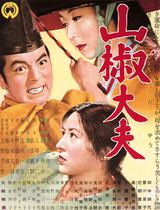
Just behind the two Kurosawas comes Kenji Mizoguchi's Sansho the Bailiff (1954) at #159, a period tragedy that trades swordplay for a slower, crueler kind of ruin. The genre's most concentrated act of moral fury, Masaki Kobayashi's Harakiri (1962), lands at #286 — a film that turns a ritual suicide into an indictment of the clan loyalty the samurai were supposed to die for. Below the acknowledged classics runs the craft wing the West borrowed from more quietly: Hideo Gosha's Three Outlaw Samurai (1964), all immediacy and motion, and Hiroshi Inagaki's Musashi serials, whose Samurai III: Duel at Ganryu Island (1956) closes a trilogy Hollywood studied closely.
How to read our list
The page is assembled from Wikidata-derived subgenre tags, then re-ranked by our own composite — never by any outside chart. That method is honest but noisy at the edges: Tarantino's Kill Bill: Volume 1 (2003) earns a place by open homage, while at least one entry, Dovzhenko's Soviet Aerograd (1935), is a plain mislabel that no reading of the genre would defend. Read the top of the list as the real spine — the Kurosawas, one Mizoguchi, one Kobayashi — and treat the long tail as the archive doing its rougher work: the sword-studio programmers, the postwar rōnin who came back psychologically scarred, and the occasional tag that simply wandered in.