Luis Buñuel
Spanish-Mexican filmmaker (1900–1983)
A director's score is the sum of their films' composite canon scores — methodology.
- Born
- February 22, 1900 · Calanda
- Died
- July 29, 1983 · Mexico City
- Nationality
- Spain, Mexico
- Directing career
- 35 directorial credits, 1929–1977 · first: Un Chien Andalou (1929) · last: That Obscure Object of Desire (1977)
- Work
- film director, screenwriter, actor, film editor
- Movement
- surrealism
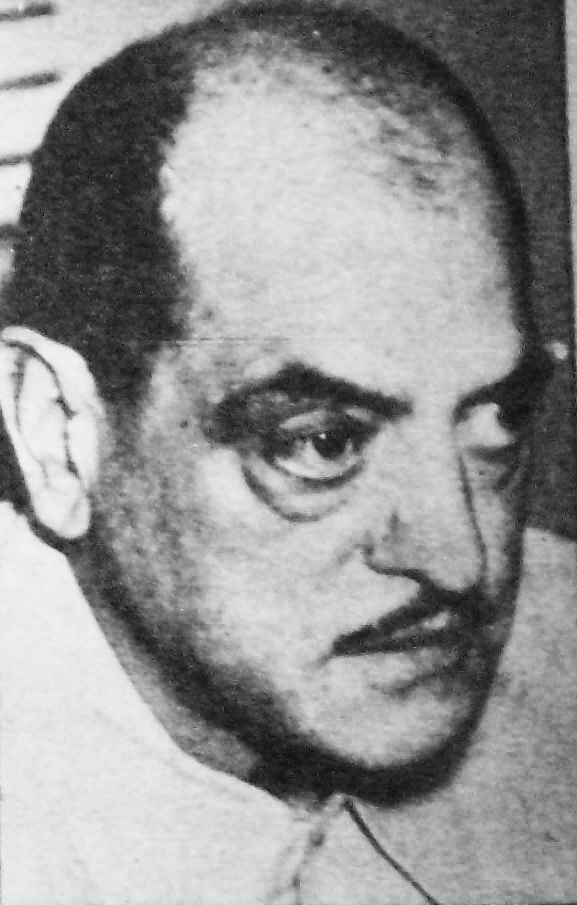
The surrealist who outlasted surrealism
Most of the Paris avant-garde burned bright and short; the movements that shocked the 1920s were museum pieces by the 1950s. Buñuel is the exception who refused the timeline. He opened his career in 1929 by slitting an eye in Un Chien Andalou and closed it in 1977 with the double-cast heroine of That Obscure Object of Desire — nearly half a century of the same argument, pursued until the industry mistook subversion for a house style and gave him its prizes. The scandal never mellowed; it just learned to smile. That is the achievement: he made the irrational respectable without making it safe.
Calanda to Mexico City, by way of exile
Born February 22, 1900 in Calanda and raised in Zaragoza on a strict Jesuit education, he entered the University of Madrid in 1917 — studying agronomy and engineering before turning to philosophy — and there fell in with Salvador Dalí and Federico García Lorca at the Residencia de Estudiantes. He moved to Paris in 1925, apprenticed under Jean Epstein, and financed Un Chien Andalou with his mother's money. L’Age d’Or (1930) followed and detonated: fascist groups hurled ink at the screen, the prints were withdrawn in 1934, and the film went effectively unseen until 1981. Land Without Bread (1933), his mock-travelogue documentary, was banned by Republic and dictatorship alike.
Then history scattered him. Lorca was executed in 1936; Buñuel spent the war years working for the Republican government and the exile that followed passing through New York — where Archbishop Spellman reportedly branded him "the Antichrist" — before landing in Mexico, where he became a naturalized citizen in 1949 and rebuilt a career in commercial cinema. Los Olvidados (1950), his brutal portrait of Mexico City street children, won him Best Director at Cannes in 1951. The late run is the miracle: Viridiana (1961) took the Palme d'Or, The Discreet Charm of the Bourgeoisie (1972) won the Academy Award for Best Foreign Language Film, and he worked to the last. He died in Mexico City on July 29, 1983.
What the numbers say
Our library holds 20 Buñuel films and ranks him #16 among all directors at a composite 22.03 — a body of work broad enough to place him among the elect, but with a curve that quietly rebukes the textbooks. The peak is Viridiana at #84 (3.59), and it earns its lead honestly: with 10 source citations it is also his most-cited film, the rare case where the aggregate and the canon shake hands. Belle de Jour (1967) is next at #182 (2.82). After that the drop is steep — The Discreet Charm of the Bourgeoisie, his Oscar winner, sits at only #454 (1.80), a hair ahead of The Exterminating Angel (1962) at #477 and That Obscure Object of Desire at #524.
The real provocation is at the bottom. Un Chien Andalou, called the most famous short film ever made, lands at #974 (1.11), and L’Age d’Or all the way down at #3047 (0.39). The founding documents of screen surrealism rank below many of the Mexican and French features they made possible. To my eye that is the score being fair rather than reverent: influence and achievement are different currencies, and these two shorts are worth more as history than as films you sit down to watch.
Where to start
Viridiana for the full blasphemous machine, Belle de Jour for the cool erotic dream-logic, The Exterminating Angel for the trap that has no lock. Then Un Chien Andalou — sixteen minutes — to see where the whole fifty-year argument began.
Films in our library, ranked
Ranked by composite canon score across 20+ authoritative lists, awards and polls — our ordering, with every placement citing its evidence on the film's page.
- 1
1961 · Mexico / Spain · comedy, drama
Palme d'Or winner 1961 · Sight & Sound 2022 directors' poll #52 · Cahiers du Cinéma annual top 10 1962 #4
3.5910 citations - 2
1967 · France / Italy · drama
Venice Golden Lion winner 1967 · Cahiers du Cinéma annual top 10 1967 #2 · Sarris's annual top 10 1968 #1
2.828 citations - 3
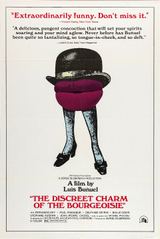
1972 · France / Italy / Spain · drama, comedy, fantasy
Sarris's annual top 10 1972 #1 · Kinema Junpo Best Ten (International) 1974 #6 · TIME All-TIME 100
1.808 citations - 4
1962 · Mexico · fantasy, comedy, drama
Cahiers du Cinéma annual top 10 1963 #3 · Sight & Sound 2022 critics' poll #169 · NYT Best 1,000 Movies
1.758 citations - 5That Obscure Object of DesireCet obscur objet du désir
1977 · France / Spain · comedy, drama
Sarris's annual top 10 1977 #1 · Kehr's annual top 10 1978 #2 · Kinema Junpo Best Ten (International) 1984 #10
1.667 citations - 6
1950 · Mexico · drama
Cahiers du Cinéma annual top 10 1951 #4 · Sight & Sound 2022 critics' poll #157 · Kinema Junpo Best Ten (International) 1953 #9
1.646 citations - 7The Phantom of LibertyLe Fantôme de la liberté
1974 · France / Italy · comedy, drama
Kinema Junpo Best Ten (International) 1977 #3 · Ebert's annual top 10 1975 #5 · Kehr's annual top 10 1974 #7
1.246 citations - 81.162 citations
- 9
1929 · France · silent, horror, fantasy
Sight & Sound 2022 critics' poll #169 · Empire 500 (2008) #354 · Kurosawa's 100 favorite films
1.116 citations - 10
1970 · France / Spain / Italy · drama
Kinema Junpo Best Ten (International) 1971 #7 · Sarris's annual top 10 1970 #3 · NYT Best 1,000 Movies
1.025 citations - 11
1959 · Mexico · drama
Cahiers du Cinéma annual top 10 1960 #6 · Vatican film list · Sarris's annual top 10 1968 #5
0.884 citations - 12Simon of the DesertSimón del desierto
1965 · Mexico · comedy
Sarris's annual top 10 1969 #4 · Siskel's annual top 10 1969 #4 · Criterion Collection spine #460
0.704 citations - 13Diary of a ChambermaidLe Journal d'une femme de chambre
1964 · France / Italy · drama, crime
Kinema Junpo Best Ten (International) 1966 #8 · NYT Best 1,000 Movies · Criterion Collection spine #117
0.643 citations - 14The Criminal Life of Archibaldo de la CruzEnsayo de un crimen
1955 · Mexico · crime, thriller
Cahiers du Cinéma annual top 10 1957 #5 · Sarris's annual top 10 1960 #10
0.532 citations - 15
1930 · France · drama
NYT Best 1,000 Movies · Edgar Wright's 1,000 favorite movies · Rosenbaum's Essential Cinema
0.393 citations - 160.302 citations
- 17
1954 · Mexico / United States · adventure, drama
Cahiers du Cinéma annual top 10 1954 #9
0.301 citation - 180.221 citation
- 19The Milky WayLa Voie lactée
1969 · France / Germany / Italy · drama, comedy
Criterion Collection spine #402
0.161 citation - 20Land Without BreadTerre sans pain
1933 · Spain / France · documentary, silent
Rosenbaum's Essential Cinema
0.111 citation



Complete filmography
All 35 directorial credits recorded on Wikidata, in chronological order; films in our library link to their canon-score page.
- 1929Un Chien Andalou
- 1930L’Age d’Or
- 1933Land Without Bread
- 1936¿Quién me quiere a mí?
- 1937¡Centinela, alerta!
- 1947Gran Casino
- 1949The Great Madcap
- 1950Los Olvidados
- 1950Susana
- 1951La hija del engaño
- 1952A Woman Without Love
- 1952Mexican Bus Ride
- 1953Él
- 1953El Bruto
- 1954La ilusión viaja en tranvía
- 1954Robinson Crusoe
- 1954Wuthering Heights
- 1955El río y la muerte
- 1955The Criminal Life of Archibaldo de la Cruz
- 1956Cela s'appelle l'aurore
- 1956Death in the Garden
- 1959La Fièvre Monte à El Pao
- 1959Nazarín
- 1960The Young One
- 1961Viridiana
- 1962The Exterminating Angel
- 1964Diary of a Chambermaid
- 1965Simon of the Desert
- 1967Belle de Jour
- 1969The Milky Way
- 1970Tristana
- 1972The Discreet Charm of the Bourgeoisie
- 1974The Phantom of Liberty
- 1977That Obscure Object of Desire
- —Menjant garotes