Carol Reed
English film director (1906–1976)
A director's score is the sum of their films' composite canon scores — methodology.
- Born
- December 30, 1906 · Putney
- Died
- April 25, 1976 · Chelsea
- Nationality
- United Kingdom
- Directing career
- 35 directorial credits, 1935–1972 · last: Follow Me! (1972)
- Work
- film director, film producer, stage actor, screenwriter
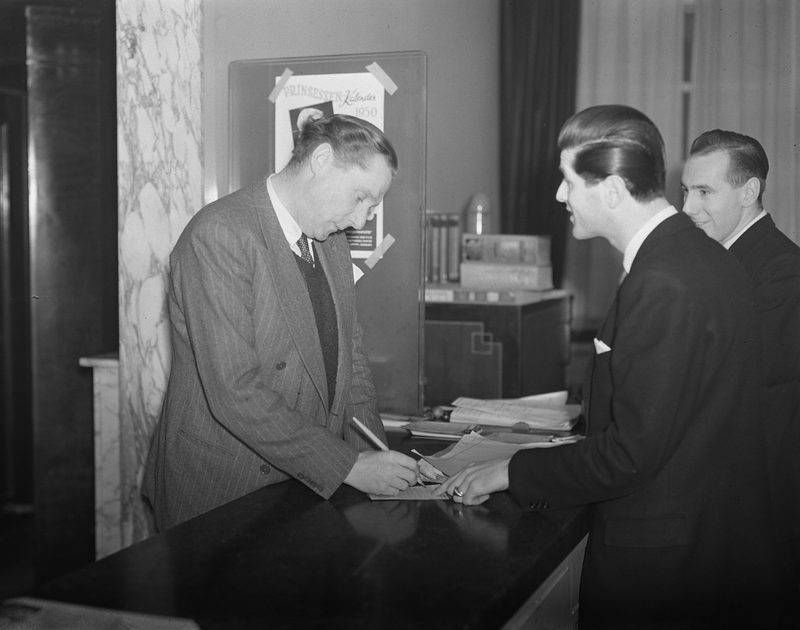
The greatest director in the world, for about three years
Carol Reed is the strongest case in British cinema for the proposition that a career can be justified by a single decade — even a single film. Screenonline's verdict, that for a brief stretch in the late 1940s Reed was "perhaps what some earlier critics had claimed him to be: the greatest director in the world," is not hyperbole so much as an accurate description of a very narrow window. Before it he was a reliable studio hand; after it, a for-hire craftsman on other people's spectacles. Inside it he made three films that still define what the British thriller could be when it took its own moral shadows seriously.
Putney to the quota quickies
Born in Putney on December 30, 1906, the son of the actor-manager Sir Herbert Beerbohm Tree, Reed came to film the long way round — through the theatre. He acted on stage in his late teens, joined the thriller writer Edgar Wallace's company in 1927 as his personal assistant, and after Wallace's death in 1932 apprenticed under Basil Dean at Associated Talking Pictures as dialogue and second-unit director. He began directing in 1935 with quota quickies like Midshipman Easy (1935); Graham Greene, then reviewing for The Spectator, judged that Reed "has more sense of the cinema than most veteran British directors." The Stars Look Down (1940) proved the point on a serious subject.
Then the peak. Odd Man Out (1947), The Fallen Idol (1948) — the last two from Greene screenplays, the beginning of one of the great writer-director partnerships — and The Third Man (1949), which took the Grand Prix at Cannes and which the British Film Institute later voted the greatest British film of the 20th century. He was knighted in 1952, only the second British film director so honoured. The Academy Award for Best Director came late and for a different kind of film entirely: the musical Oliver! (1968), after earlier nominations for The Fallen Idol and The Third Man had gone unrewarded.
What the numbers say
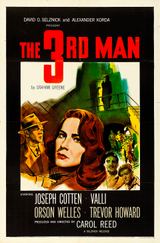
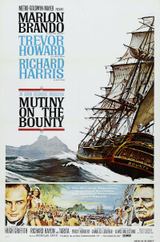
Our library ranks Reed #64 among all directors, composite 11.36 across ten films — and that figure is almost entirely one film's doing. The Third Man sits at #9 overall (6.08, cited by 14 of our sources), one of the highest single-film placements in the whole database. Everything else falls off a cliff: Oliver! is next at #425 (1.91), and after that nothing cracks the top thousand — Odd Man Out at #1294, The Fallen Idol at #1873, Mutiny on the Bounty (1962) down at #2762. The shape is unmistakable and, to my eye, fair: Reed is a director the aggregate treats as the author of one imperishable masterpiece and a long tail of competent professional work. The reputation and the arithmetic agree.
Where to start
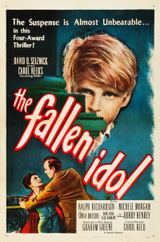
The Third Man, obviously — the one film here that carries the greatest-British-film title without argument. Then The Fallen Idol, the quieter of the Greene collaborations, for proof that the peak was a body of work and not a fluke.
Films in our library, ranked
Ranked by composite canon score across 20+ authoritative lists, awards and polls — our ordering, with every placement citing its evidence on the film's page.
- 1
1949 · United Kingdom · film-noir, mystery, drama
BFI Top 100 British films #1 · Palme d'Or winner 1949 · Cannes Grand Prix winner 1949
6.0814 citations - 2
1968 · United Kingdom · musical, drama, crime
Oscar Best Picture winner 1968 · BFI Top 100 British films #77 · Ebert's annual top 10 1968 #7
1.913 citations - 3
1947 · United Kingdom · drama, film-noir
Kinema Junpo Best Ten (International) 1951 #5 · NYT Best 1,000 Movies · Criterion Collection spine #754
0.945 citations - 4
1948 · United Kingdom · drama, film-noir, mystery
Kinema Junpo Best Ten (International) 1953 #4 · Criterion Collection spine #357 · Edgar Wright's 1,000 favorite movies
0.703 citations - 50.451 citation
- 60.331 citation
- 7
1958 · United Kingdom · drama, romance, film-noir
Kinema Junpo Best Ten (International) 1958 #8
0.321 citation - 8
1955 · United Kingdom · fantasy, drama
Kinema Junpo Best Ten (International) 1955 #9
0.301 citation - 90.171 citation
- 10
1940 · United Kingdom / United States · thriller, war, drama
Criterion Collection spine #523
0.161 citation

Complete filmography
All 35 directorial credits recorded on Wikidata, in chronological order; films in our library link to their canon-score page.
- 1935It Happened in Paris
- 1935Midshipman Easy
- 1936Laburnum Grove
- 1936Talk of the Devil
- 1937Who's Your Lady Friend?
- 1938Bank Holiday
- 1938Climbing High
- 1938Penny Paradise
- 1939A Girl Must Live
- 1940Girl in the News
- 1940Night Train to Munich
- 1940The Stars Look Down
- 1941A Letter from Home
- 1941Kipps
- 1942The Young Mr Pitt
- 1942We Serve
- 1943The New Lot
- 1944The Way Ahead
- 1945The True Glory
- 1947Odd Man Out
- 1948The Fallen Idol
- 1949The Third Man
- 1951Outcast of the Islands
- 1953The Man Between
- 1955A Kid for Two Farthings
- 1956Trapeze
- 1958The Key
- 1959Our Man in Havana
- 1962Mutiny on the Bounty
- 1963The Running Man
- 1965The Agony and the Ecstasy
- 1968Oliver
- 1968Oliver!
- 1970Flap
- 1972Follow Me!