Shohei Imamura
Japanese film director (1926-2006)
A director's score is the sum of their films' composite canon scores — methodology.
- Born
- September 15, 1926 · Tokyo
- Died
- May 30, 2006 · Tokyo
- Nationality
- Japan, Empire of Japan
- Directing career
- 21 directorial credits, 1958–2002 · last: 11'09"01 September 11 (2002)
- Work
- screenwriter, film director, film producer, teacher
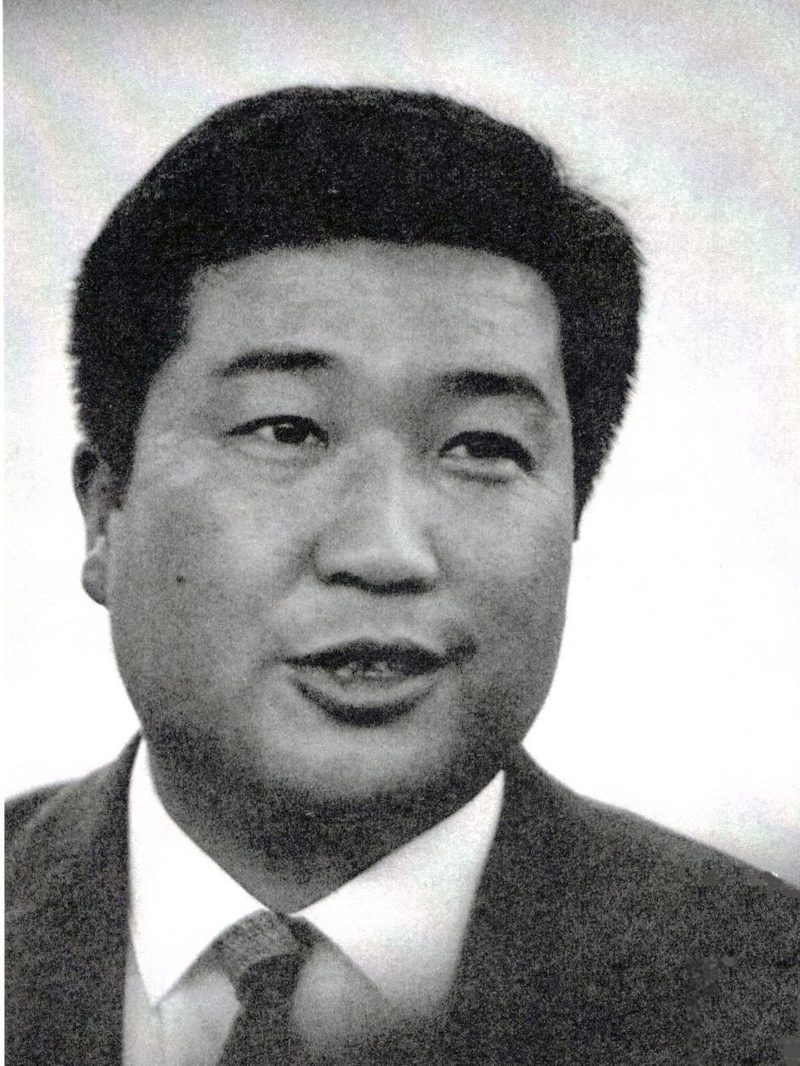
The anthropologist of the lower body
If Ozu filmed the Japan that wished to be admired, Imamura filmed the one it kept in the back room. He apprenticed under Ozu at Shochiku in 1951, worked on Tokyo Story, and came away actively repelled by the master's serene, idealized households — a rebellion that became a whole career. His stated interest was the lower strata of Japanese society, and he pursued it with the cold curiosity of a field researcher, calling himself a cultural anthropologist and preferring, in his own phrase, to make messy films. His heroines are bar hostesses, prostitutes, insect-women who survive everything; against Mizoguchi's and Naruse's exquisite martyrs he insisted his were the ones that actually existed. He is the great corrective to the polite image of the Japanese cinema — and the only director from Japan to win two Palme d'Or.
Waseda to two Palmes
Born in Tokyo on September 15, 1926, he studied Western history at Waseda, graduated in 1951, and entered film under Ozu before defecting to Nikkatsu in 1954 to work with Yūzō Kawashima, whose taste for amoral protagonists suited him better. He debuted in 1958. Pigs and Battleships (1961), his satire of the American-base black market, so overran its budget that Nikkatsu benched him for two years; he answered with the ferocious The Insect Woman (1963) and Unholy Desire (1964). After founding his own production company in 1965 he pushed into pseudo-documentary — A Man Vanishes (1967) dissolves the line between staged and found entirely — and when The Profound Desire of the Gods (1968) failed commercially he retreated to television documentary for most of the 1970s. The comeback was total: Vengeance Is Mine (1979), then The Ballad of Narayama (1983), which took the Palme d'Or at Cannes, and The Eel (1997), which took a second, shared that year with Kiarostami's Taste of Cherry. In between he founded the film school now called the Japan Institute of the Moving Image, and gave Takashi Miike his first credit as an assistant director on Zegen (1987).
What the numbers say
Our library ranks Imamura #33 among all directors, composite 16.53 across fifteen films — and the two Palme films sit exactly where you would hope, at the top of his curve: The Eel at #154 (3.00) and The Ballad of Narayama at #256 (2.39). The order is the interesting part. The Eel draws the most citations of any Imamura film in our sources — it appears on five lists to Narayama's three — and here the aggregate agrees, placing it clearly ahead. Breadth of mention and depth of regard, so often at odds, for once point the same way. Below the peaks the fall is steep: Black Rain (1989) at #357, Vengeance Is Mine at #372, then a long tail down to Pigs and Battleships at #2599 and The Pornographers (1966), his best-known film in the West, stranded at #5501 on a single citation. A ranking this back-loaded describes a director the West met late, through Cannes, and is still catching up on.
Where to start
The Ballad of Narayama for the anthropology at full, unsparing scale. Then The Eel for the quieter, redemptive late manner, and Vengeance Is Mine for the cold procedural nerve in between. Save The Insect Woman for when you want the early ferocity undiluted.
Films in our library, ranked
Ranked by composite canon score across 20+ authoritative lists, awards and polls — our ordering, with every placement citing its evidence on the film's page.
- 1
1997 · Japan · drama
Palme d'Or winner 1997 · Kinema Junpo Best Ten (Japanese) 1997 #1 · Cahiers du Cinéma annual top 10 1997 #4
3.005 citations - 2
1983 · Japan · comedy, drama
Palme d'Or winner 1983 · Japan Academy Prize winner 1984 · Kinema Junpo Best Ten (Japanese) 1983 #5
2.393 citations - 3
1989 · Japan · drama
Kinema Junpo Best Ten (Japanese) 1989 #1 · Japan Academy Prize winner 1990 · Cahiers du Cinéma annual top 10 1989 #7
2.083 citations - 4
1979 · Japan · drama, crime
Kinema Junpo Best Ten (Japanese) 1979 #1 · Japan Academy Prize winner 1980 · Criterion Collection spine #384
2.044 citations - 5The Insect Womanにっぽん昆虫記
1963 · Japan · drama
Kinema Junpo Best Ten (Japanese) 1963 #1 · Criterion Collection spine #473
1.162 citations - 6Dr. Akagiカンゾー先生
1998 · Japan / France · comedy, drama
Cahiers du Cinéma annual top 10 1998 #2 · Kinema Junpo Best Ten (Japanese) 1998 #4
1.062 citations - 71.001 citation
- 8A Man Vanishes人間蒸発
1967 · Japan · documentary
Kinema Junpo Best Ten (Japanese) 1967 #2 · Film Comment year-end poll 2012 #31
0.832 citations - 9Unholy Desire赤い殺意
1964 · Japan · drama
Kinema Junpo Best Ten (Japanese) 1964 #4 · Criterion Collection spine #474
0.592 citations - 100.501 citation
- 11
1961 · Japan · drama, crime
Kinema Junpo Best Ten (Japanese) 1960 #7 · Criterion Collection spine #472
0.492 citations - 12Eijanaikaええじゃないか
1981 · Japan · drama
Kinema Junpo Best Ten (Japanese) 1981 #9 · Kehr's annual top 10 1982 #null
0.452 citations - 13Warm Water Under a Red Bridge赤い橋の下のぬるい水
2001 · Japan · comedy, romance, drama
Kinema Junpo Best Ten (Japanese) 2001 #10 · Kehr's annual top 10 2002 #10
0.432 citations - 140.331 citation
- 150.161 citation

Complete filmography
All 21 directorial credits recorded on Wikidata, in chronological order; films in our library link to their canon-score page.
- 1958Endless Desire
- 1958Nishi Ginza Station
- 1958Stolen Desire
- 1959My Second Brother
- 1961Pigs and Battleships
- 1963The Insect Woman
- 1964Unholy Desire
- 1966The Pornographers
- 1967A Man Vanishes
- 1968The Profound Desire of the Gods
- 1970History of Postwar Japan as Told by a Bar Hostess
- 1975Karayuki-san, the Making of a Prostitute
- 1979Vengeance Is Mine
- 1981Eijanaika
- 1983The Ballad of Narayama
- 1987Zegen
- 1989Black Rain
- 1997The Eel
- 1998Dr. Akagi
- 2001Warm Water Under a Red Bridge
- 200211'09"01 September 11