Soviet Montage: Essential Films
Editing as argument, 1924–1935: the essential Soviet Montage films, ranked by our composite score across the world's canons.
Soviet Montage was the movement that discovered cinema's native grammar: working with scarce film stock after the Revolution, Lev Kuleshov's workshop found that two shots spliced together produce a meaning present in neither, and a generation built a whole theory of film on it. Sergei Eisenstein made collision itself the subject — the Odessa Steps sequence in Battleship Potemkin (1925) remains the most quoted five minutes in film history — while Dziga Vertov pushed the logic to its limit in Man with a Movie Camera (1929), a city symphony with no actors, sets or story. The films were state-funded agitprop and are studied as pure form; the tension between those two facts is the movement. Stalin's imposition of Socialist Realism closed it in the mid-1930s.
Man with a Movie Camera (1929) leads with a composite score of 2.13.
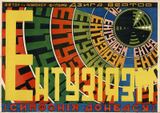
- 1Man with a Movie Camera1929 · Dziga Vertov · Soviet Union · documentary, silent2.13
Sight & Sound 2022 critics' poll #9 · Sight & Sound 2022 directors' poll #30 · TIME All-TIME 100
- 2Battleship Potemkin1925 · Sergei Eisenstein · Soviet Union · silent, drama1.40
Sight & Sound 2022 critics' poll #54 · Sight & Sound 2022 directors' poll #93 · Empire 500 (2008) #313
- 3Storm over Asia1928 · Vsevolod Pudovkin · Soviet Union · silent, drama, war0.63
Kinema Junpo Best Ten (International) 1930 #2
- 4Earth1930 · Oleksandr Dovzhenko · Soviet Union · silent, drama0.49
Sight & Sound 2022 critics' poll #243 · Rosenbaum's Essential Cinema
- 5The General Line1929 · Sergei Eisenstein, Grigori Aleksandrov · Soviet Union · silent, drama0.47
Kinema Junpo Best Ten (International) 1931 #6 · Rosenbaum's Essential Cinema
- 6Chess Fever1925 · Vsevolod Pudovkin, Mykola Shpykovskyi · Soviet Union · silent, comedy0.11
Rosenbaum's Essential Cinema
- 7
- 8
- 9
- 10October: Ten Days That Shook the World1927 · Grigori Aleksandrov, Sergei Eisenstein · Soviet Union · silent, drama0.11
Rosenbaum's Essential Cinema
- 11Arsenal1929 · Oleksandr Dovzhenko · Soviet Union · silent, war, drama0.11
Rosenbaum's Essential Cinema
- 12
- 13
- 14
- 15
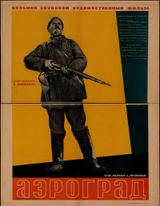
- 16Aerograd1935 · Oleksandr Dovzhenko · Soviet Union · sci-fi, adventure0.11
Rosenbaum's Essential Cinema


Five directors, twelve years
The membership of this page is a rule, not a reading list. Every film below arrives by the same route: a Soviet production released between 1924 and 1935, directed by Sergei Eisenstein, Dziga Vertov, Vsevolod Pudovkin, Oleksandr Dovzhenko or Lev Kuleshov. Wikidata carries no movement claims here at all, so there is no crowd-sourced membership to lean on — the director-and-window rule produced the whole list, and nothing was hand-added or hand-removed.
That 1935 close is a deliberate cut, and it is where the rule does its sharpest work. It clips Eisenstein's Alexander Nevsky (1938) and both parts of Ivan the Terrible (1944–1946) — films that are his best-known work to most viewers and, to my eye, belong to a different project entirely: state commissions built around single heroes and continuity editing, the aesthetic the Party mandated when it imposed Socialist Realism by 1935. Keeping them off the page costs the list two famous titles and buys it coherence.
What the collision was for
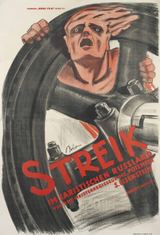
Kuleshov's 1916 experiment is the movement's founding proof: the same shot of the actor Ivan Mosjoukine, intercut with soup, a coffin and a reclining woman, read as hunger, grief and desire. Meaning lived in the join, not the image. From that single result the school split into competing grammars. Eisenstein argued for collision — shots perceived on top of one another rather than in sequence — and sorted it into metric, rhythmic, tonal, overtonal and intellectual montage, that last one licensing the leap in Strike (1925) from striking workers to slaughtered cattle. Pudovkin countered with linkage: images that accumulate rather than detonate. Vertov rejected fiction outright in his 1922 manifesto and built Kino-Eye around unscripted life, which is why Man with a Movie Camera (1929) still looks less like a period piece than like something made last year.
How to read the ranking
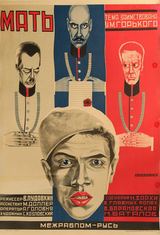
Our composite score puts Man with a Movie Camera at #343 overall with 2.13, well clear of Battleship Potemkin (1925) at #695 and 1.40 — an inversion worth noticing, since Potemkin owns the movement's most-quoted footage and Vertov's film owns its afterlife. Storm over Asia (1928), Earth (1930) and The General Line (1929) follow at 0.63, 0.49 and 0.47, and then the list drops onto a flat shelf: eleven films sharing an identical 0.11, from Chess Fever (1925) and Mother (1926) down to Dovzhenko's Aerograd (1935). That plateau is the honest shape of the movement's reception — a canon that reads two films closely, three occasionally, and the rest as coursework.
Two names appear on the page without anchoring it. Grigori Aleksandrov shares credit on October: Ten Days That Shook the World (1927) and The General Line, and Mykola Shpykovskyi on Chess Fever; both ride in as co-directors of films the five principals brought. The rule admits them, and it should — collaboration was how this cinema was actually made.