Roberto Rossellini
Italian film director (1906–1977)
A director's score is the sum of their films' composite canon scores — methodology.
- Born
- May 8, 1906 · Rome
- Died
- June 3, 1977 · Rome
- Nationality
- Italy, Kingdom of Italy
- Directing career
- 51 directorial credits, 1939–1977
- Work
- film director, actor, film producer, playwright
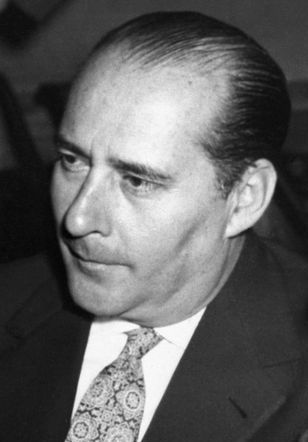
The camera that went outside
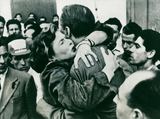
Neorealism has a founding image, and Rossellini shot it: a priest and a Communist tortured in the same building the Nazis had not yet left, in a Rome so freshly liberated that the rubble in the frame is not a set. Rome, Open City (1945) is usually filed as the movement's first masterpiece, but the deeper claim is procedural. Rossellini treated the camera as a recording instrument aimed at the actual world rather than a brush for composing an imagined one — non-professionals, real streets, available light — and in doing so handed the next forty years of art cinema its permission slip. François Truffaut called him, in a 1963 essay, the father of the French New Wave. That is not flattery; it is lineage.
Rome to Rome
He was born in Rome on 8 May 1906 and died there on 3 June 1977, of a heart attack at seventy-one — the whole life bracketed by one city. His father built Rome's first modern cinema, the Corso, which opened in 1918 and gave the boy unlimited free access to the screen. He entered the industry through its technical trades before directing a Fascist-era trilogy for the wartime state — The White Ship (1941), A Pilot Returns (1942), The Man with a Cross (1943) — the compromised apprenticeship out of which the anti-Fascist work erupted. After Rome, Open City, co-written with the young Federico Fellini, came Paisà (1946) and Germany, Year Zero (1948): the War Trilogy, three films that measured a shattered Europe with almost documentary coldness.
Then the second act, which nearly cost him the first. In 1948 Ingrid Bergman wrote offering to work with him; Stromboli (1950) followed, and so did a pregnancy, a Mexican marriage, and an international scandal that briefly made him unemployable in Hollywood terms. The Bergman films — Europe '51 (1952), Journey to Italy (1954), Fear (1954) — were dismissed on release and later canonised by Cahiers du Cinéma as the birth of modern cinema. His third act retreated into television and the long, austere history films, The Taking of Power by Louis XIV (1966) among them; unlike most directors, he grew stranger with age, not safer.
What the numbers say
Our library holds 16 Rossellini films and ranks him #47 among all directors at a composite 13.49 — five slots ahead of his neorealist confrere Vittorio De Sica at #52. Rome, Open City leads at #180 (2.82), cited by 7 of our sources, the founding film also the durable one. But the internal order argues with the textbooks. Second is Paisà at #318 (2.17) — drawing the same 7 citations as Rome, Open City yet trailing on thinner intensity of regard — and third is not Germany, Year Zero but Il generale della Rovere (1959) at #423 (1.91), his commercial comeback. Most striking: Journey to Italy, the film Godard's generation treated as scripture, sits at #446 (1.82), and Stromboli — the scandal picture — collapses to #4199 (0.27). The aggregate honours the war reporter over the metaphysician; the Cahiers revaluation, it turns out, never fully propagated into the wider consensus our sources sample.
Where to start
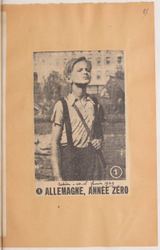
Rome, Open City for the shock of the real, then Germany, Year Zero for how far he would push it into a child's ruined face. Save Journey to Italy for last — the quietest and, to my eye, the most influential thing he made, whatever our ranking says. Martin Scorsese titled a documentary after it for a reason.
Films in our library, ranked
Ranked by composite canon score across 20+ authoritative lists, awards and polls — our ordering, with every placement citing its evidence on the film's page.
- 1
1945 · Kingdom of Italy · drama
Palme d'Or winner 1946 · Kinema Junpo Best Ten (International) 1950 #4 · Scorsese's 39 essential foreign films
2.827 citations - 2
1946 · Italy · drama, war
Kinema Junpo Best Ten (International) 1949 #1 · Sight & Sound 2022 critics' poll #196 · Scorsese's 39 essential foreign films
2.177 citations - 3
1959 · Italy / France · drama
Venice Golden Lion winner 1959 · Kinema Junpo Best Ten (International) 1960 #4 · NYT Best 1,000 Movies
1.915 citations - 4
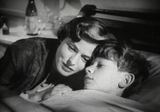
1954 · France / Italy · drama
Cahiers du Cinéma annual top 10 1955 #1 · Sight & Sound 2022 critics' poll #72 · Kurosawa's 100 favorite films
1.824 citations - 5Germany, Year ZeroGermania anno zero
1948 · Italy / Germany / France · drama
Locarno Golden Leopard winner 1948 · Criterion Collection spine #499 · Rosenbaum's Essential Cinema
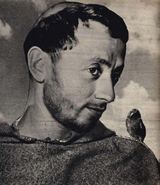
1.023 citations - 6The Flowers of St. FrancisFrancesco, giullare di Dio
1950 · Italy · drama
Cahiers du Cinéma annual top 10 1951 #10 · Vatican film list · Criterion Collection spine #293
0.673 citations - 7Europe '51Europa '51
1952 · Italy · drama
Sight & Sound 2022 critics' poll #225 · Criterion Collection spine #674 · Rosenbaum's Essential Cinema
0.663 citations - 8The Taking of Power by Louis XIVLa Prise de pouvoir par Louis XIV
1966 · France · biography
Cahiers du Cinéma annual top 10 1966 #7 · Criterion Collection spine #456
0.492 citations - 90.321 citation
- 10Escape by NightEra notte a Roma
1960 · Italy / France · drama
Kinema Junpo Best Ten (International) 1961 #8
0.321 citation - 110.291 citation
- 120.291 citation
- 13StromboliStromboli terra di Dio
1950 · Italy / United States · drama
Criterion Collection spine #673 · Rosenbaum's Essential Cinema
0.272 citations - 140.191 citation
- 150.141 citation
- 160.111 citation
Complete filmography
All 51 directorial credits recorded on Wikidata, in chronological order; films in our library link to their canon-score page.
- 1939La Vispa Teresa
- 1939The Bullying Turkey
- 1940Undersea Fantasy
- 1941Il ruscello di Ripasottile
- 1941The White Ship
- 1941Trilogie fasciste
- 1942A Pilot Returns
- 1943The Man with a Cross
- 1945Rome, Open City
- 1946Desire
- 1946Paisà
- 1948Germany, Year Zero
- 1948L'Amore
- 1950Stromboli
- 1950The Flowers of St. Francis
- 1952Europe '51
- 1952Machine to Kill Bad People
- 1952The Seven Deadly Sins
- 1952Where Is Freedom?
- 1953We, the Women
- 1954Fear
- 1954Giovanna d'Arco al rogo
- 1954Journey to Italy
- 1954Mid-Century Loves
- 1954Orient Express
- 1958India: Matri Bhumi
- 1959Il generale della Rovere
- 1959L'India vista da Rossellini
- 1960Escape by Night
- 1961Garibaldi
- 1961Torino nei cent'anni
- 1961Vanina Vanini
- 1962Anima nera
- 1962Benito Mussolini
- 1963Chastity
- 1963Ro.Go.Pa.G.
- 1964L'Âge du fer
- 1966The Taking of Power by Louis XIV
- 1967Idée d'une île
- 1969Acts of the Apostles
- 1971Interview with Salvador Allende: Power and Reason
- 1971Rice University
- 1971Socrates
- 1972Agostino d'Ippona
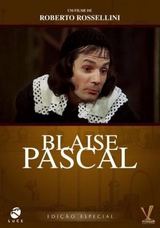
- 1972Blaise Pascal
- 1974Anno uno
- 1974Cartesius
- 1975The Messiah
- 1977Beaubourg, centre d'art et de culture Georges Pompidou
- 1977Concerto per Michelangelo
- —The Philosophers