The Best Soviet Films
From Eisenstein's montage experiments to Tarkovsky's long takes: the cinema of the USSR — its own tradition, not folded into modern Russia — ranked by our composite score.
Stalker (1979) leads with a composite score of 2.42.
- 1Stalker1979 · Andrei Tarkovsky · Soviet Union · sci-fi, drama2.42
Sight & Sound 2022 directors' poll #14 · Sight & Sound 2022 critics' poll #43 · Cahiers du Cinéma annual top 10 1981 #7
- 2The Ascent1977 · Larisa Shepitko · Soviet Union · drama, war2.36
Berlin Golden Bear winner 1977 · Sight & Sound 2022 directors' poll #72 · Sight & Sound 2022 critics' poll #128
- 3Come and See1985 · Elem Klimov · Soviet Union · drama, war, thriller2.31
Letterboxd Top 250 #4 · Sight & Sound 2022 directors' poll #41 · Sight & Sound 2022 critics' poll #104
- 4Andrei Rublev1966 · Andrei Tarkovsky · Soviet Union · biography2.30
Sight & Sound 2022 directors' poll #26 · Sight & Sound 2022 critics' poll #67 · Empire 500 (2008) #36
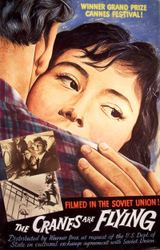
- 5The Cranes Are Flying1957 · Mikhail Kalatozov · Soviet Union · romance, drama, war2.24
Palme d'Or winner 1958 · Letterboxd Top 250 #31 · NYT Best 1,000 Movies
- 6The Mirror1975 · Andrei Tarkovsky · Soviet Union · drama, biography2.17
Sight & Sound 2022 directors' poll #8 · Sight & Sound 2022 critics' poll #31 · Hoberman's annual top 10 1983 #3
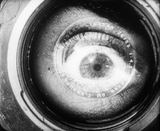
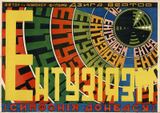
- 7Man with a Movie Camera1929 · Dziga Vertov · Soviet Union · documentary, silent2.13
Sight & Sound 2022 critics' poll #9 · Sight & Sound 2022 directors' poll #30 · TIME All-TIME 100
- 8The Color of Pomegranates1969 · Sergei Parajanov · Soviet Union · biography, drama2.05
Hoberman's annual top 10 1980 #1 · Sight & Sound 2022 directors' poll #93 · Sight & Sound 2022 critics' poll #122
- 9Solaris1972 · Andrei Tarkovsky · Soviet Union · sci-fi, adventure, drama1.90
Cannes Grand Prix winner 1972 · Kinema Junpo Best Ten (International) 1977 #5 · Empire 500 (2008) #285
- 10
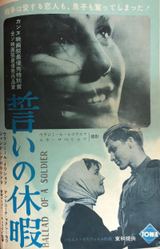
- 11Ballad of a Soldier1959 · Grigori Chukhrai · Soviet Union · drama, war, romance1.45
BAFTA Best Film winner 1962 · Kinema Junpo Best Ten (International) 1960 #10 · Criterion Collection spine #148
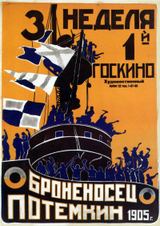
- 12Battleship Potemkin1925 · Sergei Eisenstein · Soviet Union · silent, drama1.40
Sight & Sound 2022 critics' poll #54 · Sight & Sound 2022 directors' poll #93 · Empire 500 (2008) #313
- 13Close to Eden1991 · Nikita Mikhalkov · Soviet Union / France · drama, adventure, romance1.36
Venice Golden Lion winner 1991 · Kinema Junpo Best Ten (International) 1992 #6
- 14Ivan's Childhood1962 · Andrei Tarkovsky · Soviet Union · drama, war1.16
Venice Golden Lion winner 1962 · Criterion Collection spine #397
- 15
- 16Freeze Die Come to Life1990 · Vitali Kanevsky · Soviet Union · drama1.00
Cahiers du Cinéma annual top 10 1990 #1
- 17An Unfinished Piece for Mechanical Piano1977 · Nikita Mikhalkov · Soviet Union / West Germany · drama0.93
San Sebastián Golden Shell winner 1977 · Kurosawa's 100 favorite films
- 18The Legend of Suram Fortress1985 · Sergei Parajanov, Dodo Abashidze · Soviet Union · drama0.85
Cahiers du Cinéma annual top 10 1986 #2 · Hoberman's annual top 10 1987 #4
- 19Ivan the Terrible. Part II1958 · Sergei Eisenstein · Soviet Union · biography, drama0.83
Cahiers du Cinéma annual top 10 1959 #3 · Sarris's annual top 10 1959 #5 · Roger Ebert's Great Movies
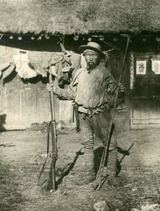
- 20Dersu Uzala1975 · Akira Kurosawa · Japan / Soviet Union · drama, adventure, biography0.81
Kinema Junpo Best Ten (International) 1975 #5 · Vatican film list · Letterboxd Top 250 #161
- 21Composer Glinka1952 · Grigori Aleksandrov · Soviet Union · drama, biography0.75
Locarno Golden Leopard winner 1953
- 22No Path Through Fire1968 · Gleb Panfilov · Soviet Union · drama, war0.75
Locarno Golden Leopard winner 1969
- 23Queen of the Gypsies1976 · Emil Loteanu · Soviet Union · drama, romance, musical0.75
San Sebastián Golden Shell winner 1976
- 24Autumn Marathon1979 · Georgiy Daneliya · Soviet Union · comedy, drama, romance0.75
San Sebastián Golden Shell winner 1979
- 25Siberiade1979 · Andrei Konchalovsky · Soviet Union · drama, war, romance0.75
Cannes Grand Prix winner 1979
- 26
- 27Accidental Waltz1990 · Svetlana Proskurina · Soviet Union · drama, romance0.75
Locarno Golden Leopard winner 1990
- 28Storm over Asia1928 · Vsevolod Pudovkin · Soviet Union · silent, drama, war0.63
Kinema Junpo Best Ten (International) 1930 #2
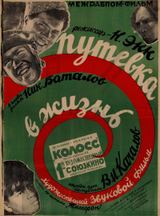
- 29Road to Life1931 · Nikolai Ekk · Soviet Union · drama, crime0.63
Kinema Junpo Best Ten (International) 1932 #2
- 30Little Vera1988 · Vasili Pichul · Soviet Union · drama, romance0.50
Cahiers du Cinéma annual top 10 1989 #7 · NYT Best 1,000 Movies
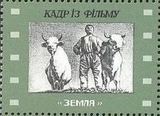
- 31Earth1930 · Oleksandr Dovzhenko · Soviet Union · silent, drama0.49
Sight & Sound 2022 critics' poll #243 · Rosenbaum's Essential Cinema
- 32The General Line1929 · Sergei Eisenstein, Grigori Aleksandrov · Soviet Union · silent, drama0.47
Kinema Junpo Best Ten (International) 1931 #6 · Rosenbaum's Essential Cinema
- 33Alexander Nevsky1938 · Sergei Eisenstein, Dmitri Vasilyev · Soviet Union · drama, biography, war0.44
NYT Best 1,000 Movies · Criterion Collection spine #87 · Rosenbaum's Essential Cinema
- 34By the Bluest of Seas1936 · Boris Barnet · Soviet Union · comedy, drama, romance0.39
Sight & Sound 2022 critics' poll #211
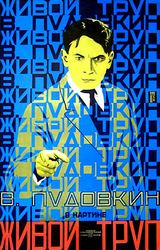
- 35The Living Corpse1929 · Fedor Ozep · Germany / Soviet Union · silent, drama0.39
Kinema Junpo Best Ten (International) 1929 #5
- 36Poem of the Sea1958 · Yuliya Solntseva · Soviet Union · drama0.39
Cahiers du Cinéma annual top 10 1960 #5
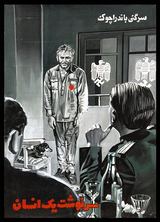
- 37Destiny of a Man1959 · Sergei Bondarchuk · Soviet Union · war, drama0.33
Kinema Junpo Best Ten (International) 1960 #7
- 38The Stone Flower1946 · Aleksandr Ptushko · Soviet Union · fantasy, adventure, romance0.30
Kinema Junpo Best Ten (International) 1947 #9
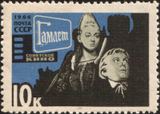
- 39Hamlet1964 · Grigori Kozintsev · Soviet Union · drama0.29
Kinema Junpo Best Ten (International) 1964 #10
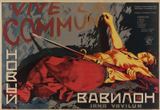
- 40The New Babylon1929 · Grigori Kozintsev, Leonid Trauberg · Soviet Union · silent, drama, war0.27
Hoberman's annual top 10 1977 #8 · Rosenbaum's Essential Cinema
- 41My Friend Ivan Lapshin1985 · Aleksei Yuryevich German · Soviet Union · crime, drama0.17
Hoberman's annual top 10 1987 #7
- 42Letter Never Sent1960 · Mikhail Kalatozov · Soviet Union · drama, adventure0.16
Criterion Collection spine #601
- 43
- 44
- 45Ivan the Terrible. Part I1944 · Sergei Eisenstein · Soviet Union · biography, drama0.13
Roger Ebert's Great Movies
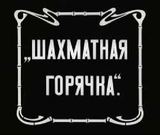
- 46Chess Fever1925 · Vsevolod Pudovkin, Mykola Shpykovskyi · Soviet Union · silent, comedy0.11
Rosenbaum's Essential Cinema
- 47
- 48
- 49
- 50October: Ten Days That Shook the World1927 · Grigori Aleksandrov, Sergei Eisenstein · Soviet Union · silent, drama0.11
Rosenbaum's Essential Cinema
- 51Arsenal1929 · Oleksandr Dovzhenko · Soviet Union · silent, war, drama0.11
Rosenbaum's Essential Cinema
- 52
- 53
- 54
- 55
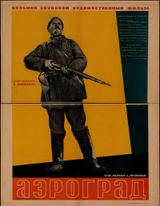
- 56Aerograd1935 · Oleksandr Dovzhenko · Soviet Union · sci-fi, adventure0.11
Rosenbaum's Essential Cinema
- 57The Childhood of Maxim Gorky1938 · Mark Donskoy · Soviet Union · biography, drama0.11
Rosenbaum's Essential Cinema
- 58Shadows of Forgotten Ancestors1964 · Sergei Parajanov · Soviet Union · drama, romance0.11
Rosenbaum's Essential Cinema
- 59The Enchanted Desna1964 · Yuliya Solntseva · Soviet Union · fantasy, biography, drama0.11
Rosenbaum's Essential Cinema
- 60Viy1967 · Konstantin Yershov, Georgy Kropachyov · Soviet Union · horror, fantasy0.11
Edgar Wright's 1,000 favorite movies
- 61The Asthenic Syndrome1989 · Kira Muratova · Soviet Union · drama, crime0.11
Rosenbaum's Essential Cinema


A state, not a nationality
A caution before the list: this is the cinema of the Soviet Union, not of Russia. The USSR existed as a single state from 1922 to its dissolution in 1991, and its film industry drew on many of its republics — Armenia, Georgia, Ukraine, Azerbaijan, Lithuania — each carrying its own pre-Soviet language and culture into the frame. So Sergei Parajanov's The Color of Pomegranates (1969) is an Armenian film, Oleksandr Dovzhenko's Earth (1930) a Ukrainian one, and Tengiz Abuladze's Repentance (1984) a Georgian one — Soviet by state, not Russian by nation. Membership here is decided by country of origin: films whose registered country was the USSR fold into this modern grouping, then get re-ranked by our composite score rather than by any external canon. It is why Dersu Uzala (1975), a Mosfilm production directed by Akira Kurosawa, counts as Soviet cinema here, and why "best Russian movies" is the search that leads you here but the wrong name for what you find.
The revolution and its long echo
Soviet film's first world-historical contribution was montage — the theory, argued in the 1920s by Sergei Eisenstein, Dziga Vertov, Vsevolod Pudovkin and Dovzhenko, that meaning lives in the collision between shots rather than inside any one of them. Eisenstein's Battleship Potemkin (1925) built the grammar every propagandist and every action editor has borrowed since; Vertov's Man with a Movie Camera (1929) pushed the same logic to a delirious, self-documenting extreme. That radical decade did not last: from the early 1930s the state imposed Socialist Realism as doctrine — positive heroes, Party-approved scripts, annual output cut by more than half — and the montage experiment gave way to bureaucratic caution. The second great flowering came only after Stalin's death, when the Khrushchev Thaw loosened the reins and let the poetic auteurs through: Andrei Tarkovsky's long, patient takes, Mikhail Kalatozov's swooping camera, Parajanov's tableaux.
How to read our list
The ranking is by composite score, and the gap between it and the textbooks is the point. Tarkovsky's Stalker (1979) and Larisa Shepitko's harrowing The Ascent (1977) sit at the top of the page, separated by hundredths at 2.42 and 2.36, with Kalatozov's The Cranes Are Flying (1957) — the Thaw's breakthrough, and the Soviet Union's only Palme d'Or winner — close behind at 2.24. Tarkovsky posts the deepest bench, from Stalker down through Andrei Rublev, The Mirror and Solaris (1972) at 1.90. What is striking is how far the founding monuments sit below the Thaw: Battleship Potemkin, the most written-about Soviet film of all, ranks only 1.40 by our numbers, and Dovzhenko's Earth trails at 0.49 — a clean measure of the distance between historical primacy and accumulated canonical weight. The war films score high where the poets do — Elem Klimov's Come and See (1985) at 2.31 — while Eisenstein's later state commissions, Alexander Nevsky (1938) and Ivan the Terrible, drift down the list, admired more than they are loved.