Orson Welles
American actor and filmmaker (1915–1985)
A director's score is the sum of their films' composite canon scores — methodology.
- Born
- May 6, 1915 · Kenosha
- Died
- October 10, 1985 · Los Angeles
- Nationality
- United States
- Directing career
- 34 directorial credits, 1933–2018 · first: Twelfth Night (1933) · last: The Other Side of the Wind (2018)
- Work
- film director, actor, screenwriter, film producer
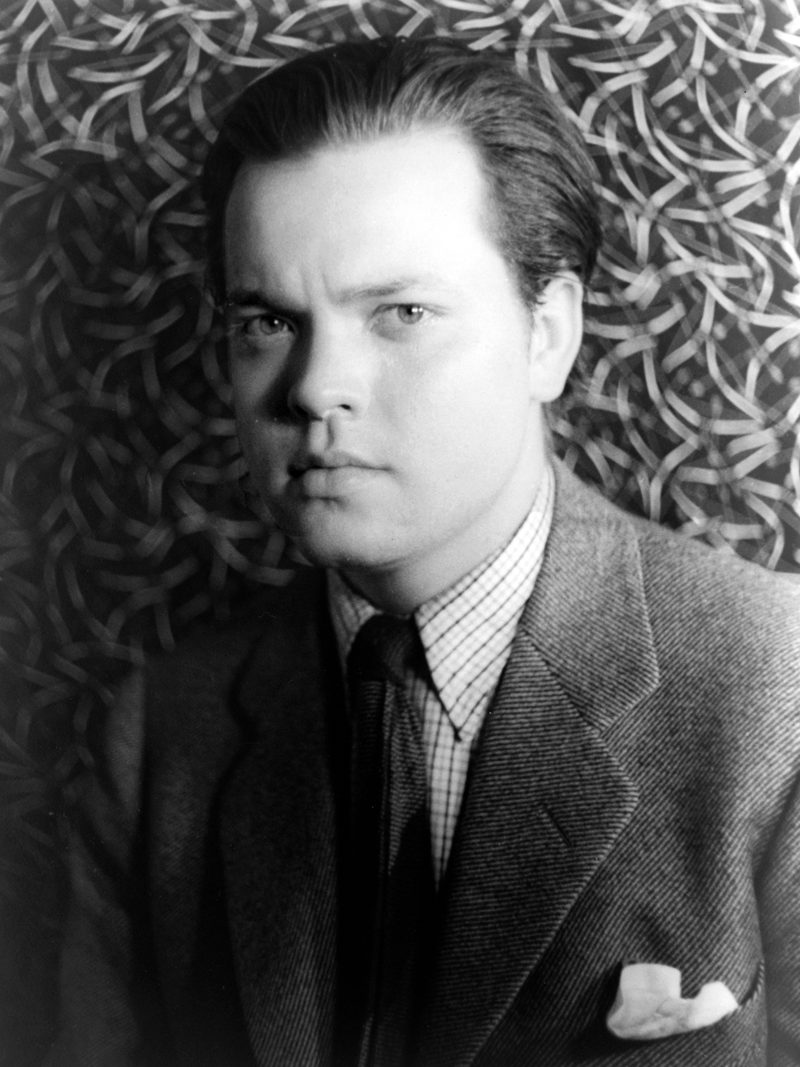
The prodigy who peaked first
Most careers build toward a masterpiece; Welles opened with one and spent forty years being measured against it. He was twenty-six when Citizen Kane (1941) arrived, and no first film in the medium's history has cast so long a shadow over the work that followed — including its maker's own. The cruel reading is that everything after Kenosha's wonder boy left RKO was decline. The truer one is that Welles simply refused, for the rest of his life, to make the safe career that his talent had earned him, and paid for that refusal in butchered cuts, foreign financing, and unfinished films. He is the great cautionary case of what the studio system did to an artist it could not control.
Kenosha to exile
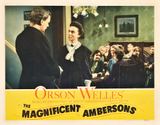
Born in Kenosha, Wisconsin on May 6, 1915, Welles was a theatre and radio phenomenon before Hollywood knew his name — a Harlem Voodoo Macbeth in 1936, the Mercury Theatre founded with John Houseman in 1937, and the War of the Worlds broadcast of October 30, 1938 that reportedly convinced listeners the Martians had landed. RKO signed him in 1939 on what is generally called the most generous contract ever handed a filmmaker, granting final cut. He used it exactly once. Citizen Kane won him a shared Oscar for its original screenplay and made him permanently dangerous. The studio then took The Magnificent Ambersons (1942) away from him, cutting it from 131 minutes to 88 over his opposition. He never held that kind of control again. The rest is a European itinerary of self-financed and interrupted work — Othello (1951), rewarded with the Palme d'Or; a brief, poisoned Hollywood return for Touch of Evil (1958); the Kafka adaptation The Trial (1962); the Falstaff film Chimes at Midnight (1965); the essay-film F for Fake (1973). Hollywood gave him its Honorary Award in 1970 and the AFI's Life Achievement Award in 1975, the industry's way of honouring a man it had spent decades starving.
What the numbers say
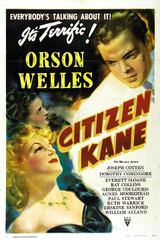
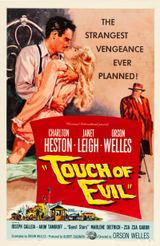
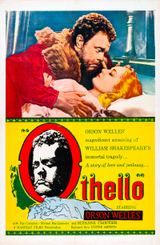
Our library ranks Welles #21 among all directors, composite 19.65 across 13 films — and that placement is almost entirely one film's doing. Citizen Kane sits at #2 overall (9.21), cited by 15 of our sources, the single most-decorated title in his corpus and the second-highest-ranked film in the entire database. Then the floor drops away: Touch of Evil at #253 (2.41), Othello at #273 (2.33), The Magnificent Ambersons at #574 (1.53), and everything else below #1000 — Chimes at Midnight down at #1851, The Other Side of the Wind (2018), finished decades after his death, at #3773. This is the opposite of a Scorsese, whose #1 rank is built from breadth. Welles's aggregate is a spike and a long tail. The composite is honest about it: the reputation of the whole career is being carried, statistically, by a twenty-six-year-old's debut — which is exactly the tragedy his admirers keep protesting against.
Where to start
Citizen Kane, obviously, and then immediately The Magnificent Ambersons, to feel what the ending should have been. Touch of Evil for the opening tracking shot every film student steals; Chimes at Midnight for the warmest thing he made; F for Fake to watch him turn his whole broken career into a magic trick about forgery.
Films in our library, ranked
Ranked by composite canon score across 20+ authoritative lists, awards and polls — our ordering, with every placement citing its evidence on the film's page.
- 1
1941 · United States · drama, biography, mystery
AFI 100 (2007) #1 · Sight & Sound 2022 directors' poll #2 · AFI 100 (1998) #1
9.2115 citations - 2
1958 · United States · crime, drama, film-noir
Cahiers du Cinéma annual top 10 1958 #1 · Sight & Sound 2022 critics' poll #108 · National Film Registry (inducted 1993)
2.418 citations - 3
1951 · United States · drama
Palme d'Or winner 1952 · Hoberman's annual top 10 1987 #3 · NYT Best 1,000 Movies
2.336 citations - 4
1942 · United States · drama
Oscar Best Picture nominee 1942 · Sight & Sound 2022 critics' poll #169 · National Film Registry (inducted 1991)
1.536 citations - 5
1955 · France / Spain / United Kingdom · thriller, crime
Cahiers du Cinéma annual top 10 1956 #4 · Sarris's annual top 10 1962 #2 · Criterion Collection spine #322
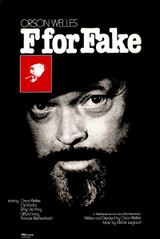
1.024 citations - 6F for FakeVérités et Mensonges
1973 · France / Germany / United States
Kehr's annual top 10 1977 #1 · Criterion Collection spine #288 · Rosenbaum's Essential Cinema
0.773 citations - 7
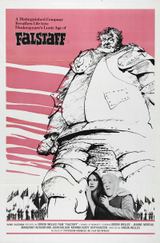
1965 · Spain / Switzerland / France · drama, comedy, war
Ebert's annual top 10 1968 #3 · Sarris's annual top 10 1967 #6 · Criterion Collection spine #830
0.724 citations - 8
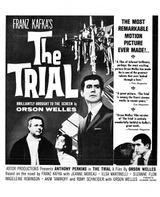
1962 · France / West Germany / Italy
Cahiers du Cinéma annual top 10 1962 #7 · Criterion Collection spine #1191 · Rosenbaum's Essential Cinema
0.613 citations - 9
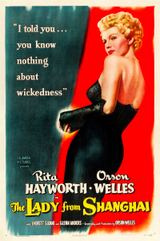
1947 · United States · drama, film-noir
National Film Registry (inducted 2018) · Rosenbaum's Essential Cinema
0.342 citations - 100.321 citation
- 11The Immortal StoryUne histoire immortelle
1968 · France / United States · drama
Criterion Collection spine #831
0.161 citation - 120.111 citation
- 130.111 citation
Complete filmography
All 34 directorial credits recorded on Wikidata, in chronological order; films in our library link to their canon-score page.
- 1933Twelfth Night
- 1934The Hearts of Age
- 1938Too Much Johnson
- 1941Citizen Kane
- 1942The Magnificent Ambersons
- 1943Journey into Fear
- 1946The Stranger
- 1947The Lady from Shanghai
- 1948Macbeth
- 1950Black Magic
- 1950The Miracle of St. Anne
- 1951Othello
- 1953Magic Trick
- 1955Around the World with Orson Welles
- 1955Madrid Bullfight
- 1955Moby Dick—Rehearsed
- 1955Mr. Arkadin
- 1955Three Cases of Murder
- 1956Orson Welles and People
- 1958Portrait of Gina
- 1958The Fountain of Youth
- 1958Touch of Evil
- 1962The Trial
- 1964In the Land of Don Quixote
- 1965Chimes at Midnight
- 1968The Immortal Story
- 1968Vienna
- 1970An Evening with Orson Welles
- 1971One Man Band
- 1973F for Fake
- 1973La Grande Bretèche
- 1978Filming Othello
- 1984The Spirit of Charles Lindbergh
- 2018The Other Side of the Wind