Paul Thomas Anderson
American filmmaker (born 1970)
A director's score is the sum of their films' composite canon scores — methodology.
- Born
- June 26, 1970 · Studio City
- Nationality
- United States
- Directing career
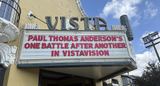
- 16 directorial credits, 1988–2025 · latest: One Battle After Another (2025)
- Work
- film director, screenwriter, film producer, cinematographer

The Valley auteur
Anderson is the rare American who talked his way into the front rank without ever pretending to be anything but a movie-drunk kid from the San Fernando Valley. He made his first film at eight, shot a thirty-minute mockumentary about a porn star as a high-school senior in 1988 with money earned cleaning cages at a pet store, and then, enrolled at New York University, dropped out of film school after two days as counterproductive. Everything since has argued that the instinct was right. He is now the only person to have won the Academy Award for Best Director and directorial prizes at all three of Europe's major festivals — Cannes, Venice, and Berlin — a spread of taste no textbook could have coached.
Studio City to the sweep
Born June 26, 1970 in Studio City, Los Angeles, he was the son of Ernie Anderson, ABC's staff announcer and, in Cleveland, the horror host "Ghoulardi" — the name Anderson later gave his production company. His debut, Hard Eight (1996), screened in Cannes' Un Certain Regard; Boogie Nights (1997) and Magnolia (1999) established him as the Altman-scaled maximalist of his generation, three-hour ensembles pitched at operatic sincerity. Then the reversal: Punch-Drunk Love (2002), a ninety-minute chamber piece, won him Best Director at Cannes. There Will Be Blood (2007) is the pivot most critics treat as his summit, and it delivered Daniel Day-Lewis his Best Actor Oscar. He kept narrowing and hardening — The Master (2012), Inherent Vice (2014), his first Thomas Pynchon adaptation, Phantom Thread (2017), Licorice Pizza (2021) — before One Battle After Another (2025) swept Best Director, Best Picture, and Best Adapted Screenplay at the 98th Academy Awards, the recognition three decades of near-misses had withheld.
The instrument
His signature is control that never reads as coldness. Long, gliding takes; a camera that stalks rather than observes; and, from The Master onward, the abrasive orchestral dread of Jonny Greenwood's scores replacing Jon Brion's romanticism. He is a director of faces held past comfort and rooms staged so that dread and tenderness occupy the same frame. To my eye the throughline from Boogie Nights to There Will Be Blood is not subject but appetite — men who want too much, filmed by someone who understands the wanting.
What the numbers say
Our library ranks Anderson #25 among all directors at a composite 18.53 across nine films — but the internal order is the story. There Will Be Blood, cited more than any other Anderson film at eight appearances, leads at #45 (4.26), while his newest film, One Battle After Another, already sits at #95 (3.50) on only five source appearances. That closing gap is the composite catching an award sweep in real time — a months-old film climbing toward the consensus summit. Below them the curve drops hard: Magnolia at #264 (2.37, seven citations), Boogie Nights down at #787 (1.30) despite the same seven, The Master at #858 and Inherent Vice at #1298. A body of work this decorated scattering this widely suggests the sources still can't agree on which Anderson is the real one.
Where to start
There Will Be Blood for the ambition at full, monstrous scale; Boogie Nights for the warmth before the cold set in; Phantom Thread for the most controlled thing he has made. Then One Battle After Another, to see what the establishment finally decided it had been resisting.
Films in our library, ranked
Ranked by composite canon score across 20+ authoritative lists, awards and polls — our ordering, with every placement citing its evidence on the film's page.
- 1
2007 · United States · drama, western, thriller
Rolling Stone 100 Best of the 21st Century #1 · Film Comment year-end poll 2007 #2 · Kinema Junpo Best Ten (International) 2008 #2
4.268 citations - 2
2025 · United States · drama, thriller, action
Oscar Best Picture winner 2025 · BAFTA Best Film winner 2026 · Film Comment year-end poll 2025 #1
3.505 citations - 3
1999 · United States · drama
Berlin Golden Bear winner 2000 · Sight & Sound 2022 critics' poll #185 · Ebert's annual top 10 1999 #2
2.377 citations - 4
2021 · United States · drama, comedy
Kinema Junpo Best Ten (International) 2022 #1 · Cahiers du Cinéma annual top 10 2022 #2 · Oscar Best Picture nominee 2021
1.954 citations - 5
2017 · United States / United Kingdom · drama, romance
Cahiers du Cinéma annual top 10 2018 #3 · Oscar Best Picture nominee 2017 · Kinema Junpo Best Ten (International) 2018 #4
1.925 citations - 6
1997 · United States · drama
Kinema Junpo Best Ten (International) 1998 #10 · Ebert's annual top 10 1997 #3 · Empire 500 (2008) #152
1.307 citations - 7
2012 · United States · drama
Film Comment year-end poll 2012 #2 · Kinema Junpo Best Ten (International) 2013 #8 · Rolling Stone 100 Best of the 21st Century #44
1.223 citations - 8
2002 · United States · comedy, romance, drama
Film Comment year-end poll 2002 #8 · Rolling Stone 100 Best of the 21st Century #78 · Kehr's annual top 10 2002 #4
1.085 citations - 9
2014 · United States · crime, comedy, drama
Cahiers du Cinéma annual top 10 2015 #7 · Film Comment year-end poll 2014 #9 · Kinema Junpo Best Ten (International) 2015 #9
0.943 citations

Complete filmography
All 16 directorial credits recorded on Wikidata, in chronological order; films in our library link to their canon-score page.
- 1988Cigarettes & Coffee
- 1988The Dirk Diggler Story
- 1996Hard Eight
- 1997Boogie Nights
- 1999Magnolia
- 2002Punch-Drunk Love
- 2003Couch
- 2007There Will Be Blood
- 2012The Master
- 2013Back Beyond
- 2014Inherent Vice
- 2015Junun
- 2017Phantom Thread
- 2019ANIMA
- 2021Licorice Pizza
- 2025One Battle After Another