Elia Kazan
American director and actor (1909–2003)
A director's score is the sum of their films' composite canon scores — methodology.
- Born
- September 7, 1909 · Constantinople
- Died
- September 28, 2003 · New York City
- Nationality
- United States, Greece
- Directing career
- 21 directorial credits, 1937–1976 · first: People of the Cumberland (1937) · last: The Last Tycoon (1976)
- Work
- film director, screenwriter, film producer, writer
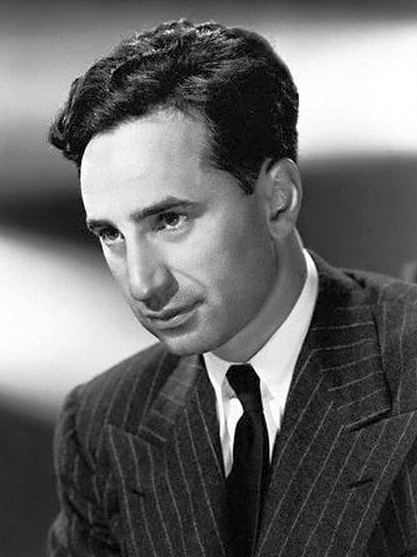
The actor's director, and the informer
No American filmmaker is harder to hold in a single thought. Kazan built the bridge that carried Method acting from the New York stage into the movies, and the performances he pulled — Brando on the waterfront, James Dean at his breakthrough — are the ones every later actor studies. He also, in April 1952, sat before the House Un-American Activities Committee and named eight former colleagues, then took out a newspaper advertisement urging others to do the same. The two facts do not cancel; they cohabit. To watch his films is to reckon with a man who understood human loyalty and betrayal on screen with more precision than almost anyone, and enacted the same drama offscreen on the losing moral side.
Constantinople to the Group Theatre
He was born Elias Kazantzoglou on September 7, 1909, in Chalcedon, Constantinople, to Cappadocian Greek parents, and arrived in the United States as a small child; the family settled in New Rochelle, New York. He studied at Williams College and the Yale School of Drama, joined the socially minded Group Theatre in 1932, and in 1947 co-founded the Actors Studio with Robert Lewis and Cheryl Crawford — the workshop where, under Lee Strasberg, Method acting became the postwar American style. His Broadway record alone would secure him: he directed the premieres of A Streetcar Named Desire and Arthur Miller's Death of a Salesman (1949), the latter winning him a Tony. Hollywood was almost a second career. He won the Academy Award for Best Director twice, for Gentleman's Agreement (1947), a frontal attack on antisemitism, and for On the Waterfront (1954). His last directing nomination came for America America (1963), adapted from his own semi-autobiographical novel about a young Greek's escape to America. He died in Manhattan on September 28, 2003, at 94.
What the actors gave him
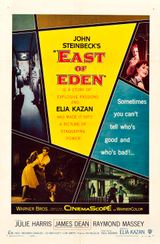
The Kazan signature is not a camera move; it is a face caught mid-collapse. He directed Brando in A Streetcar Named Desire (1951) and Viva Zapata! (1952) before On the Waterfront, and he gave James Dean his breakthrough role in East of Eden (1955). To my eye his real subject was always the individual crushed between institution and conscience — the longshoreman, the drifter, the Greek boy — which makes the HUAC testimony read, uncomfortably, as autobiography he could not stop filming. Martin Scorsese, who apprenticed himself to that legacy, co-directed the 2010 tribute documentary A Letter to Elia.
What the numbers say
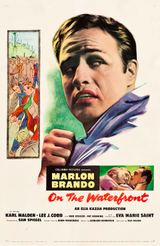
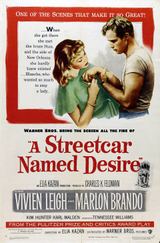
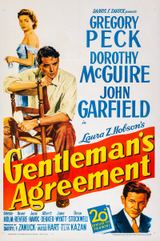
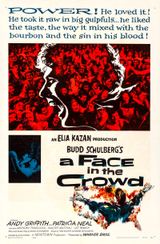
Our library holds 13 Kazan films and ranks him #38 among all directors at a composite 15.60 — respectable, well below his double-Oscar reputation, because his greatness is concentrated in one towering film. On the Waterfront sits at #40 (4.30), cited by 11 of our sources, and nothing else comes close: America America is next at #279 (2.31), well clear of Gentleman's Agreement at #487 (1.73) — the aggregate preferring the personal epic to the Oscar-night winner. A Streetcar Named Desire lands only at #376 (2.02) despite appearing on more of our lists than America America; it is broadly mentioned but rarely topped. A Face in the Crowd (1957), now revered as prophecy, languishes at #1944. The curve says the reputation rests on On the Waterfront far more than his mantelpiece suggests.
Where to start
On the Waterfront, without argument — the film where his method and his moral obsession fuse. Then East of Eden for what he found in Dean, and A Face in the Crowd for the one the sources undervalue and time has vindicated.
Films in our library, ranked
Ranked by composite canon score across 20+ authoritative lists, awards and polls — our ordering, with every placement citing its evidence on the film's page.
- 1
1954 · United States · drama, crime, thriller
Oscar Best Picture winner 1954 · AFI 100 (1998) #8 · AFI 100 (2007) #19
4.3011 citations - 2
1963 · United States · drama
San Sebastián Golden Shell winner 1964 · Oscar Best Picture nominee 1963 · Kinema Junpo Best Ten (International) 1964 #5
2.316 citations - 3
1951 · United States · drama
Oscar Best Picture nominee 1951 · AFI 100 (2007) #47 · AFI 100 (1998) #45
2.028 citations - 4
1955 · United States · drama, romance
Kinema Junpo Best Ten (International) 1955 #1 · BAFTA Best Film nominee 1956 · National Film Registry (inducted 2016)
1.805 citations - 5
1947 · United States · drama
Oscar Best Picture winner 1947 · National Film Registry (inducted 2017)
1.732 citations - 6
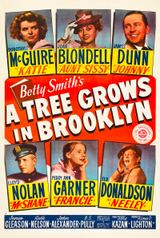
1945 · United States · drama
Kinema Junpo Best Ten (International) 1947 #7 · National Film Registry (inducted 2010) · NYT Best 1,000 Movies
0.733 citations - 7
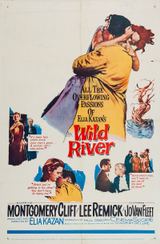
1960 · United States · drama
Cahiers du Cinéma annual top 10 1962 #6 · National Film Registry (inducted 2002) · Rosenbaum's Essential Cinema
0.693 citations - 8
1957 · United States · drama
National Film Registry (inducted 2008) · NYT Best 1,000 Movies · Criterion Collection spine #970
0.674 citations - 9
1961 · United States · romance, drama
Kinema Junpo Best Ten (International) 1961 #9 · NYT Best 1,000 Movies
0.472 citations - 10
1947 · United States · drama, documentary, film-noir
Kinema Junpo Best Ten (International) 1947 #8
0.321 citation - 110.282 citations
- 120.171 citation
- 130.111 citation
Complete filmography
All 21 directorial credits recorded on Wikidata, in chronological order; films in our library link to their canon-score page.
- 1937People of the Cumberland
- 1945A Tree Grows in Brooklyn
- 1947Boomerang
- 1947Gentleman's Agreement
- 1947The Sea of Grass
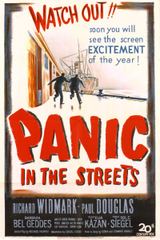
- 1950Panic in the Streets
- 1950Pinky
- 1951A Streetcar Named Desire
- 1952Viva Zapata!
- 1953Man on a Tightrope
- 1954On the Waterfront
- 1955East of Eden
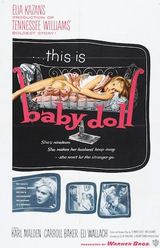
- 1956Baby Doll
- 1957A Face in the Crowd
- 1960Wild River
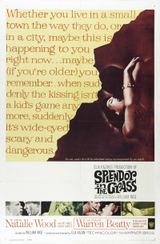
- 1961Splendor in the Grass
- 1963America America
- 1969The Arrangement
- 1972The Visitors
- 1972Whether To Tell The Truth
- 1976The Last Tycoon